
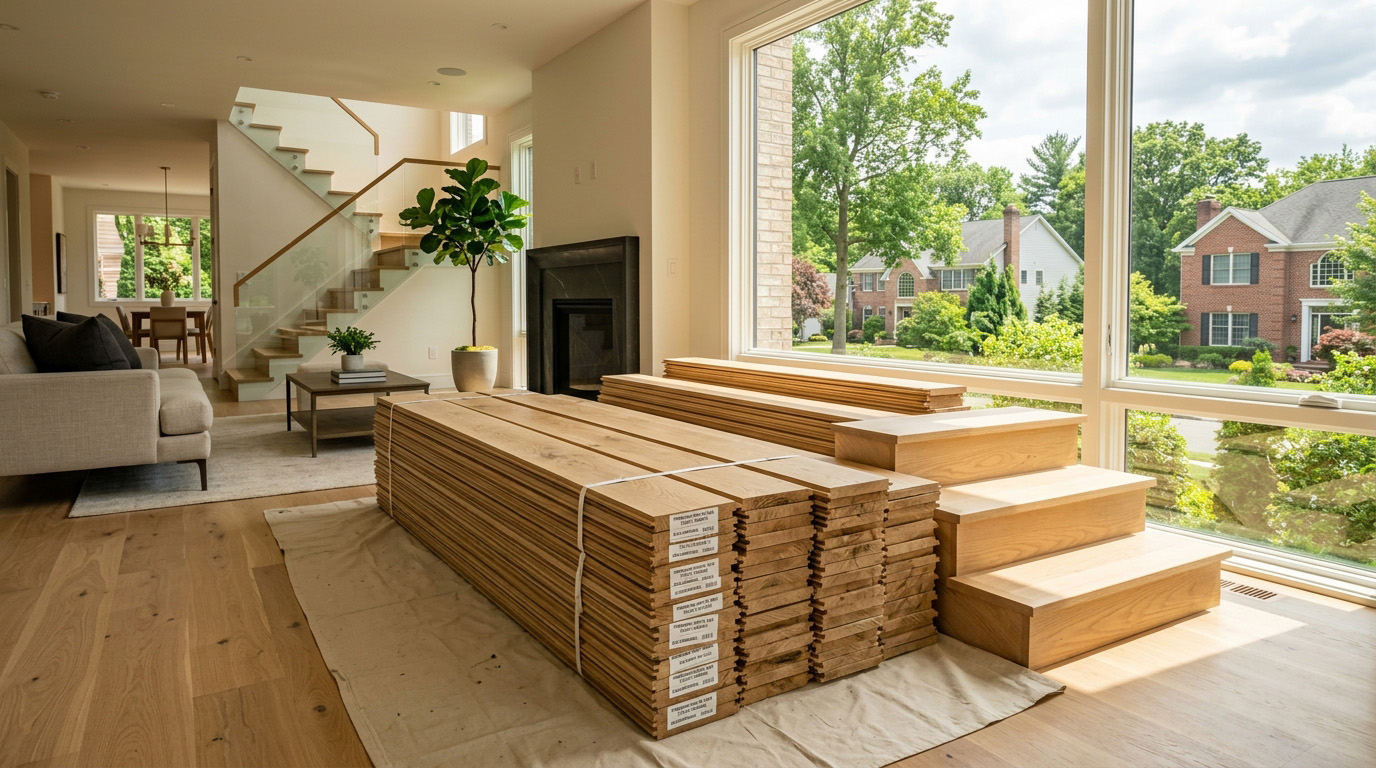
One of the most common pieces of advice homeowners hear before installing hardwood flooring is, “Leave the wood inside for three days before installation.”
While that recommendation has been around for years, it oversimplifies a process that directly affects the long-term performance of your floors and staircases.
In reality, hardwood doesn’t acclimate according to the calendar. It acclimates according to its environment.
For homes in New Jersey, where temperature and humidity fluctuate dramatically throughout the year, three days may be sufficient for one project and completely inadequate for another.
Understanding why can help prevent problems such as gaps, cupping, buckling, and squeaky stair treads months after installation.
Hardwood Is Always Responding to Its Environment
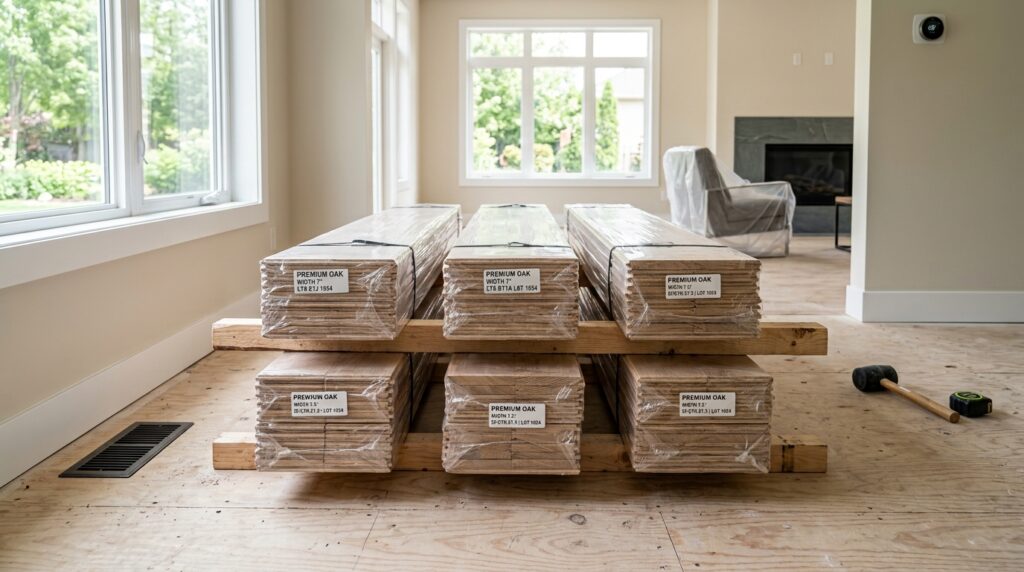
Hardwood is a natural material that continuously absorbs and releases moisture from the surrounding air.
As indoor conditions change, the wood adjusts by expanding or contracting until it reaches equilibrium with its environment.
This movement is completely normal.
The goal before installation is not simply to “wait a few days,” but to allow the flooring to stabilize under the same conditions it will experience once the home is occupied.
Installing hardwood before that happens increases the risk of movement after the project is complete.
Why New Jersey Homes Require Extra Attention

New Jersey experiences significant seasonal changes throughout the year.
Indoor humidity during the winter can be dramatically different from indoor humidity during the summer, especially once heating or air conditioning systems are running.
These fluctuations affect how hardwood behaves.
A floor delivered from a warehouse, delivery truck, or lumber yard is entering a completely different environment than the one where it will ultimately remain.
The larger the difference between those environments, the longer acclimation may take.
The House Must Be Ready Before the Flooring Can Acclimate
One of the biggest misconceptions is that acclimation begins the moment the flooring is delivered.
In reality, hardwood should acclimate under normal living conditions.
If the home is still under construction, that environment may not yet exist.
Fresh concrete, drywall compound, paint, and other building materials release moisture into the air as they cure. If the HVAC system is not operating normally, indoor humidity can fluctuate significantly.
In these situations, the flooring is adapting to temporary conditions rather than the environment it will experience after the project is complete.
For that reason, professional installers typically verify that the home is ready before evaluating whether the flooring is ready.
There Is No Universal Acclimation Timeline
Every installation is different.
The amount of time hardwood needs depends on several variables, including:
● Wood species
● Solid versus engineered hardwood
● Board thickness
● Indoor temperature
● Relative humidity
● Moisture content of the subfloor
● Manufacturer requirements
A thick solid White Oak stair tread will not acclimate at the same rate as a thinner engineered hardwood plank.
This is why experienced installers rely on measurements rather than assumptions.
How Professionals Determine When Hardwood Is Ready
Rather than counting days, professionals evaluate the conditions that actually affect the wood. This typically includes:
● Maintaining the home at its normal living temperature
● Confirming stable indoor relative humidity
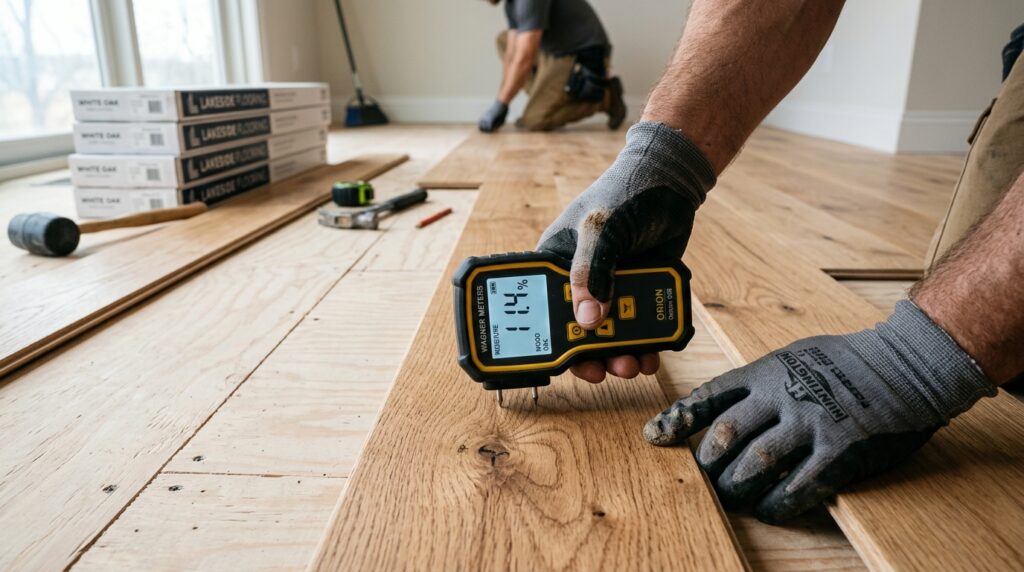
● Measuring the moisture content of the hardwood
● Measuring the moisture content of the subfloor
● Comparing those readings with manufacturer specifications
Installation begins only after those conditions fall within acceptable ranges. Moisture meters provide far more reliable information than a calendar ever can.
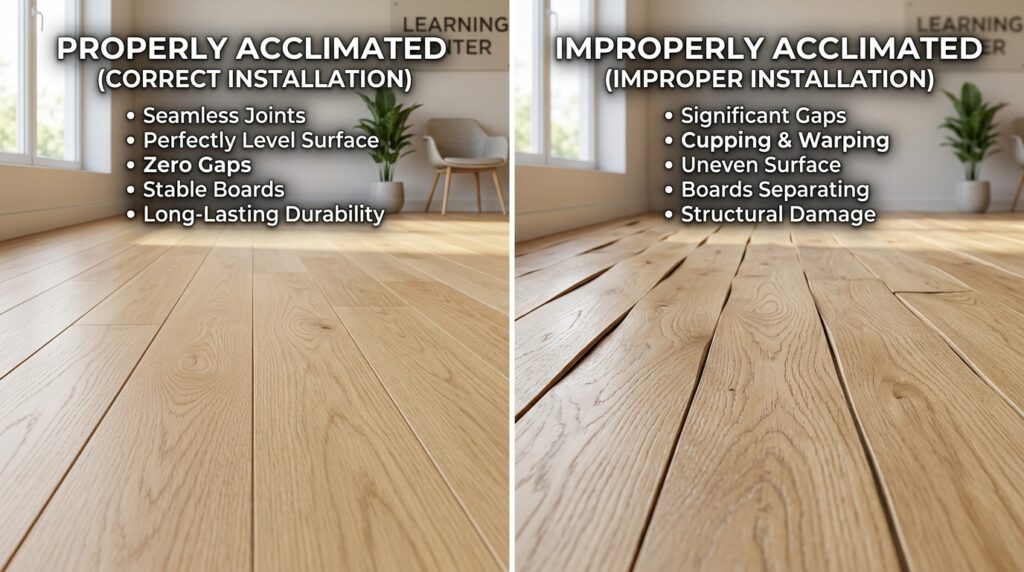
What Can Happen If Hardwood Is Installed Too Soon?
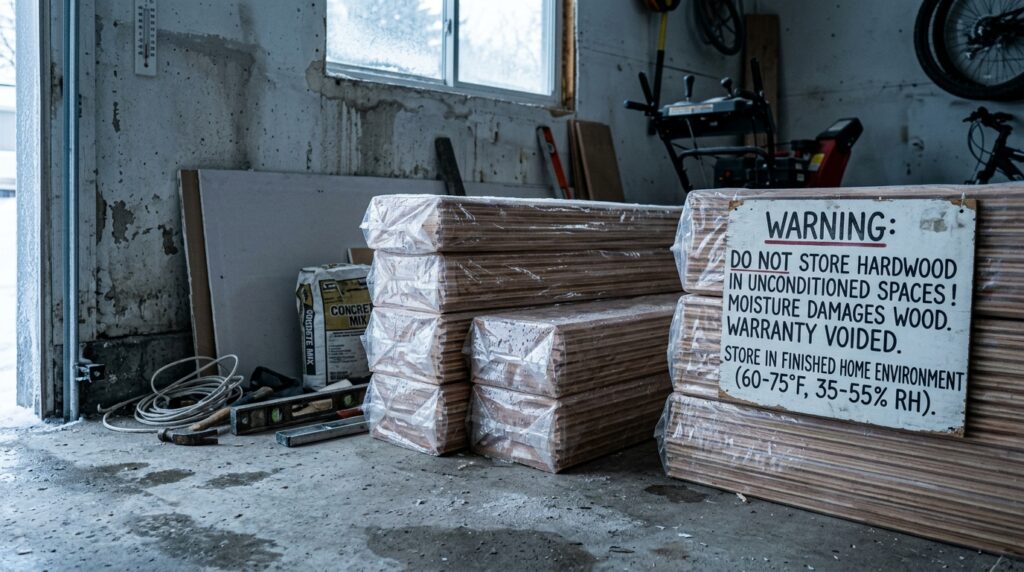
Many moisture-related issues do not appear immediately.
Instead, they often develop weeks or even months after installation.
Common problems include:
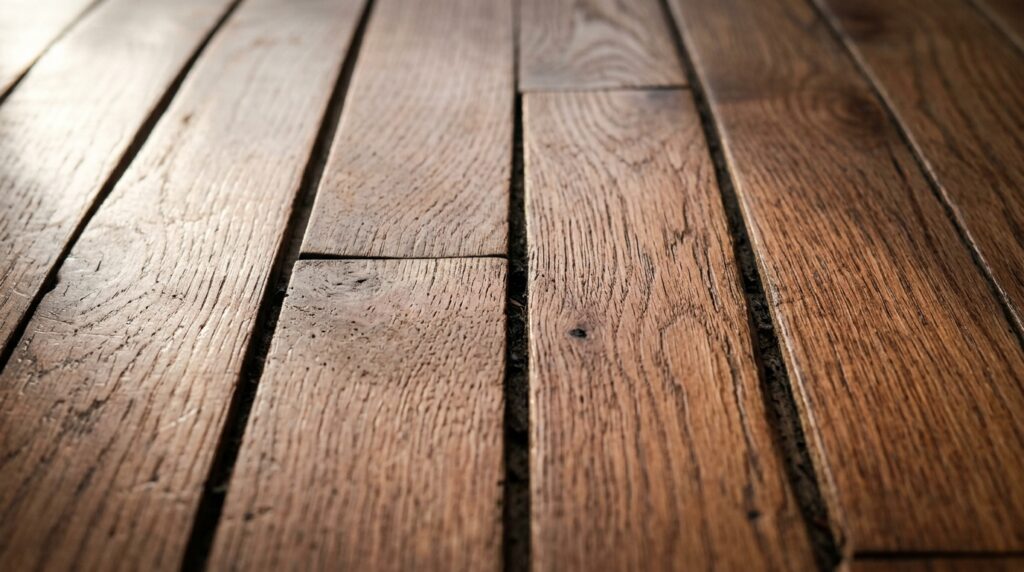
● Gaps between boards
● Cupping or crowning
● Buckling
● Squeaky floors or stair treads
● Finish cracking
● Excessive seasonal movement
We often receive calls from homeowners experiencing these issues long after installation. In many cases, the flooring itself is not defective. The material simply had not fully stabilized before it was installed.
Stair Treads Are Especially Sensitive
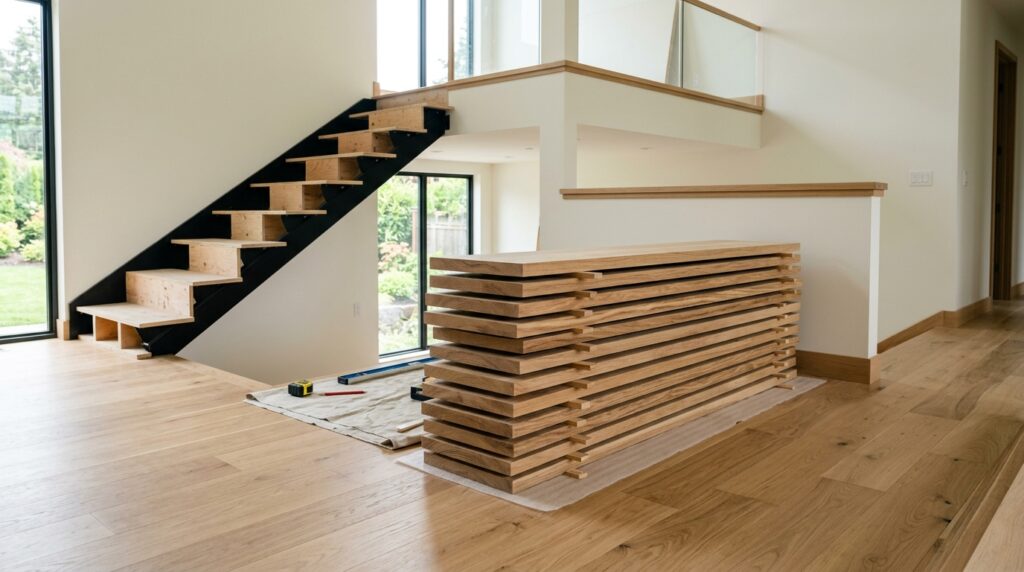
Stair treads experience concentrated impact every day.
If they are installed before reaching moisture equilibrium, seasonal movement can create:
● Developing squeaks
● Small gaps between treads and risers
● Minor movement underfoot
● Finish stress around joints
● Premature wear in high-traffic areas
Because every step applies repeated force to the same locations, even small dimensional changes become more noticeable over time.
Can Hardwood Acclimate for Too Long?
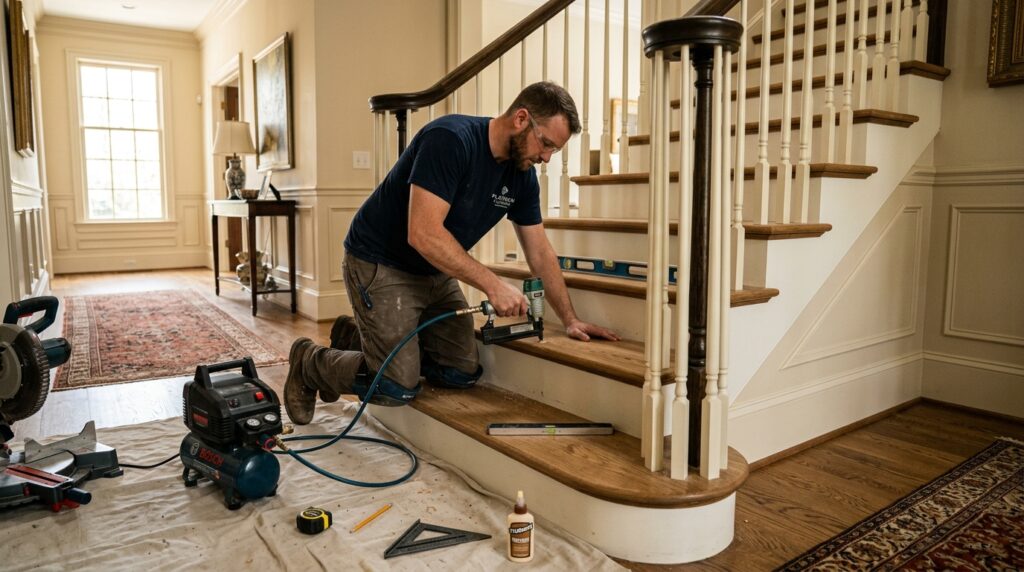
It can.
Leaving hardwood in an uncontrolled environment for extended periods may allow it to absorb excess moisture rather than stabilize.
Proper acclimation is not about waiting as long as possible.
It is about allowing the material to reach equilibrium under stable indoor conditions that reflect how the home will actually be lived in.
Final Thoughts
The idea that hardwood simply needs “three days” before installation is one of the most common misconceptions in the flooring industry.
Successful installations depend on moisture conditions, not a fixed timeline.
Every home, every product, and every season is different. Taking the time to evaluate temperature, humidity, and moisture content before installation helps prevent problems that may not appear until months later.
When hardwood is installed under the right conditions, it performs as intended, delivering the long-term stability, appearance, and durability homeowners expect from a premium floor or staircase.
Request a consultation:
renovaflooring.com
Visit our website for more inspiration and design ideas!