
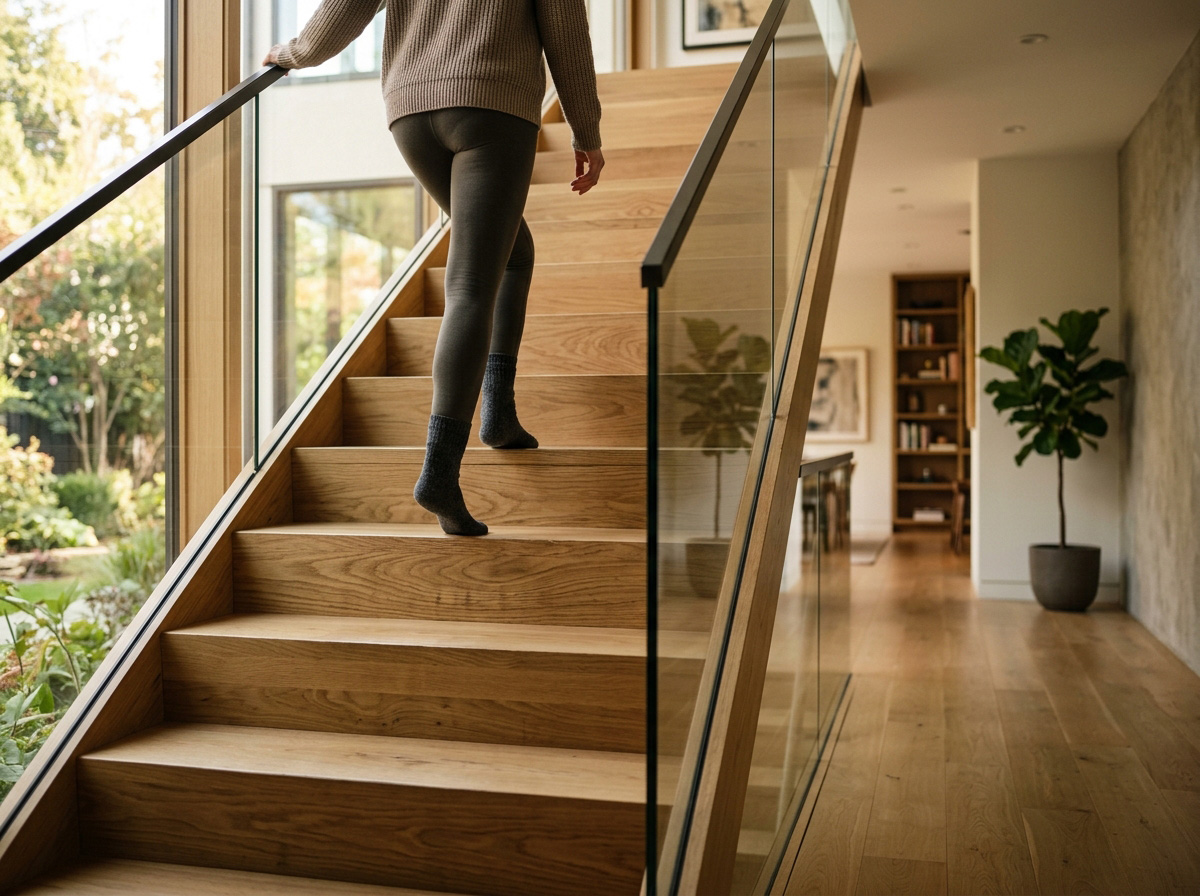
Many homeowners notice the same pattern every year.
As the weather changes, a staircase that was completely quiet suddenly begins to creak, groan, or squeak with almost every step. Then, a few months later, the noise seems to disappear on its own.
While it may feel like the staircase is wearing out, seasonal humidity is often the real cause.
Because hardwood is a natural material, it constantly responds to changes in moisture throughout the year. Understanding how that movement affects your staircase can help you distinguish between normal seasonal changes and signs of a larger structural problem.
Hardwood Never Stops Moving
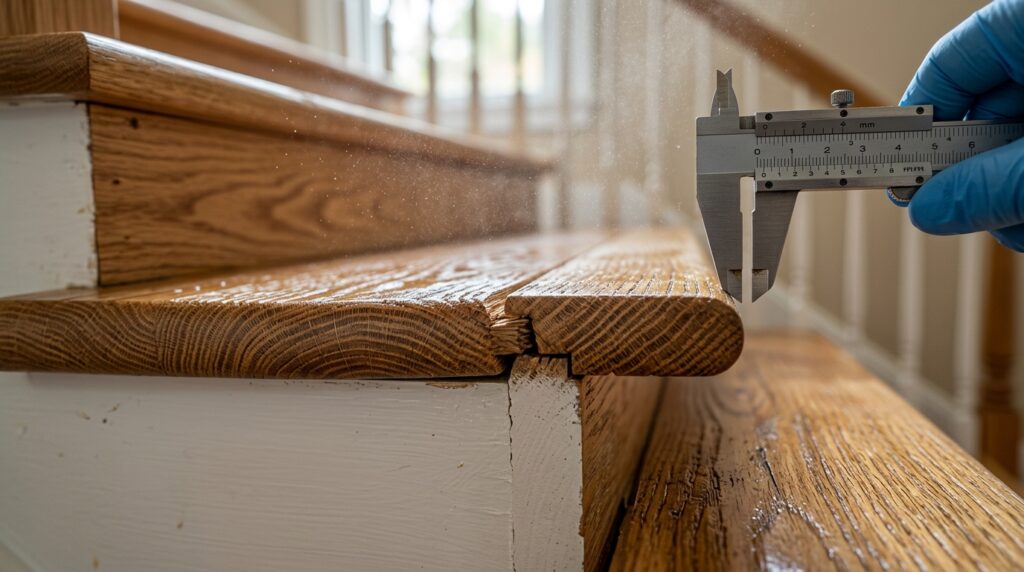
Even after it has been milled, installed, and finished, hardwood continues to absorb and release moisture from the surrounding air.
As humidity rises and falls, the wood expands and contracts.
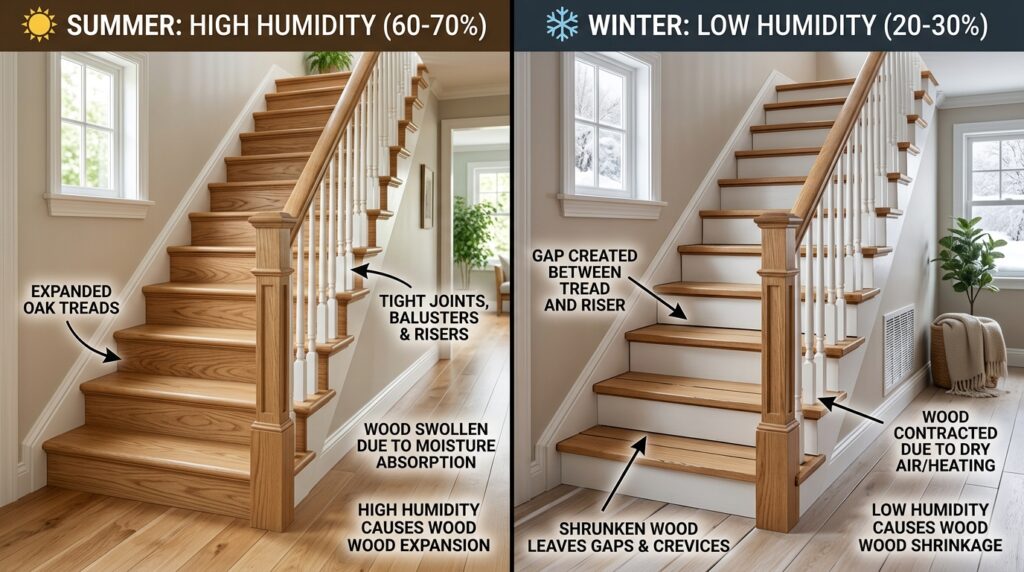
During humid months:
- Stair treads expand
- Risers and stringers absorb moisture
- Joints become tighter
- Pressure increases between connected components
During dry months:
- Wood releases moisture
- Components shrink slightly
- Small gaps may develop
- Connections become looser
This seasonal movement is completely normal, but it can also create the noises many homeowners hear throughout the year.
Why Humidity Makes Stairs Squeak and Groan
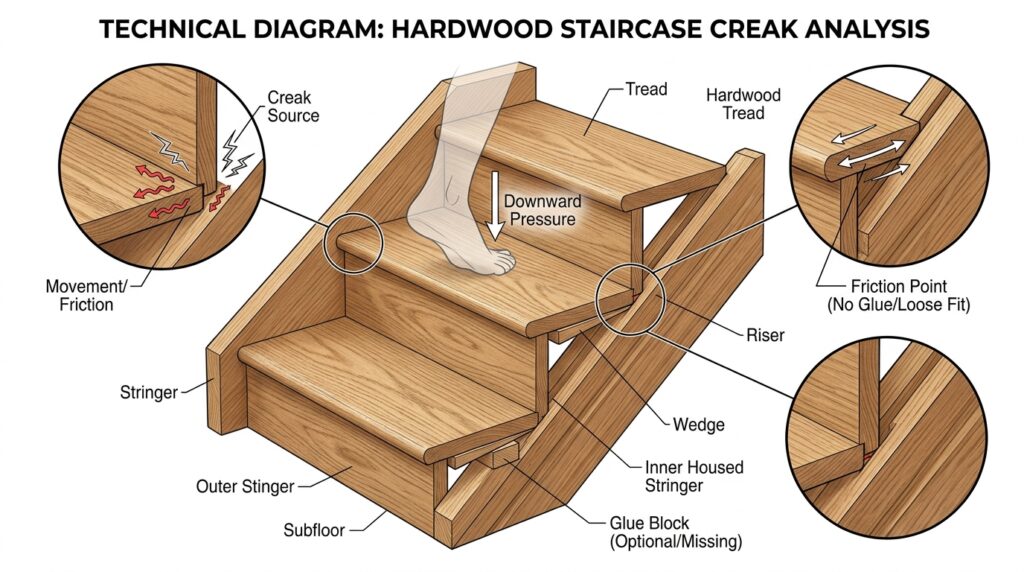
The sounds themselves are usually caused by movement.
As wood expands or contracts, components begin rubbing against one another under the weight of each step.
Common sources of noise include:
- Treads moving against risers
- Slight movement where treads connect to the stringers
- Fasteners shifting within the wood
- Trim expanding against adjacent materials
- Flooring transitions at stair landings
We often inspect staircases where the structure is still solid, but seasonal wood movement is enough to create noticeable squeaks during certain times of the year.
Why Some Staircases Are Noisier Than Others
Not every staircase reacts to seasonal humidity the same way.
Several factors can make movement more noticeable, including:
- Wide solid hardwood treads
- Significant seasonal humidity swings
- Older staircases with natural wear
- Homes with inconsistent indoor humidity
- Staircases that were not properly fastened during installation
In many cases, the staircase itself is not failing. It is simply responding to its environment.

When Seasonal Noise Is Normal—and When It Isn’t
Occasional squeaks that appear during one season and disappear during another are generally considered normal for hardwood.
However, if the noise becomes progressively worse or is accompanied by visible movement, it may indicate a larger issue.
Warning signs include:
- Stairs that feel loose or bouncy
- Visible gaps between treads and risers
- Persistent squeaks that continue year-round
- Cracks around stair trim or adjacent drywall
- Movement that can be felt underfoot
These symptoms may point to loose fasteners, structural movement, damaged stringers, or other conditions that should be evaluated.
Keeping Hardwood Stairs Stable Year-Round
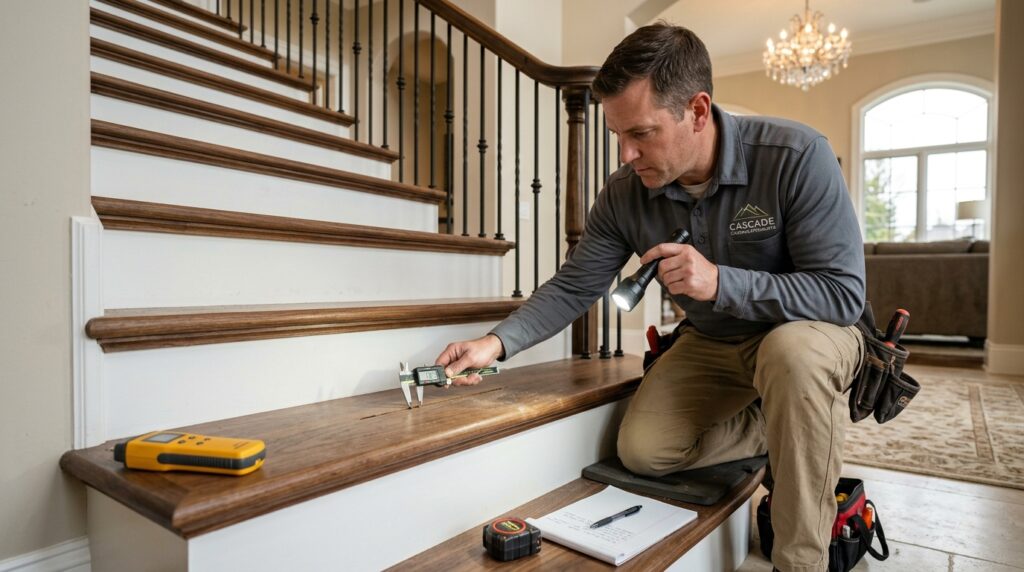
While seasonal wood movement cannot be eliminated completely, it can often be minimized.
The best ways to reduce movement include:
- Maintaining indoor humidity between approximately 35% and 55%
- Using humidifiers during dry winter months when necessary
- Running dehumidifiers during periods of excessive summer humidity
- Repairing water leaks promptly
- Addressing loose stair components before movement becomes more severe
Keeping indoor conditions relatively consistent helps reduce expansion and contraction throughout the year.
Why Professional Diagnosis Matters
Many homeowners try to eliminate stair noise by tightening visible screws or applying lubricants to noisy areas.
While these approaches may temporarily reduce the sound, they often fail to address the actual source of the movement.
We frequently find that recurring squeaks originate deeper within the staircase, where seasonal wood movement interacts with loose fasteners, aging joints, or subtle structural shifts.
Identifying the source of the movement is the first step toward making a repair that lasts.
Final Thoughts
Some seasonal stair noise is simply part of owning a hardwood staircase.
Wood naturally expands and contracts as humidity changes, and minor movement is expected throughout the year.
The key is knowing the difference between normal seasonal behavior and signs of a structural issue.
A properly built staircase should remain solid, safe, and visually consistent even as the seasons change. If your stairs are becoming noticeably louder, developing visible movement, or changing from one season to the next, a professional inspection can determine whether the cause is simply seasonal wood movement or a condition that requires repair.
Request a consultation:
renovaflooring.com
Visit our website for more inspiration and design ideas!