
If you’ve noticed gaps forming between the treads and risers on your staircase, or heard creaking, shifting, or movement when you step, you might be wondering why your stairs suddenly seem to be falling apart. Riser gaps are more than just an eyesore. They can indicate structural issues, moisture problems, installation failures, or long-term wear that requires attention before the damage spreads.
The good news: most staircase failures have clear causes, and the right repair process can stop gaps from growing and restore the stairs to a safe, solid condition.
Here’s what homeowners need to know.
What Is a Riser Gap?
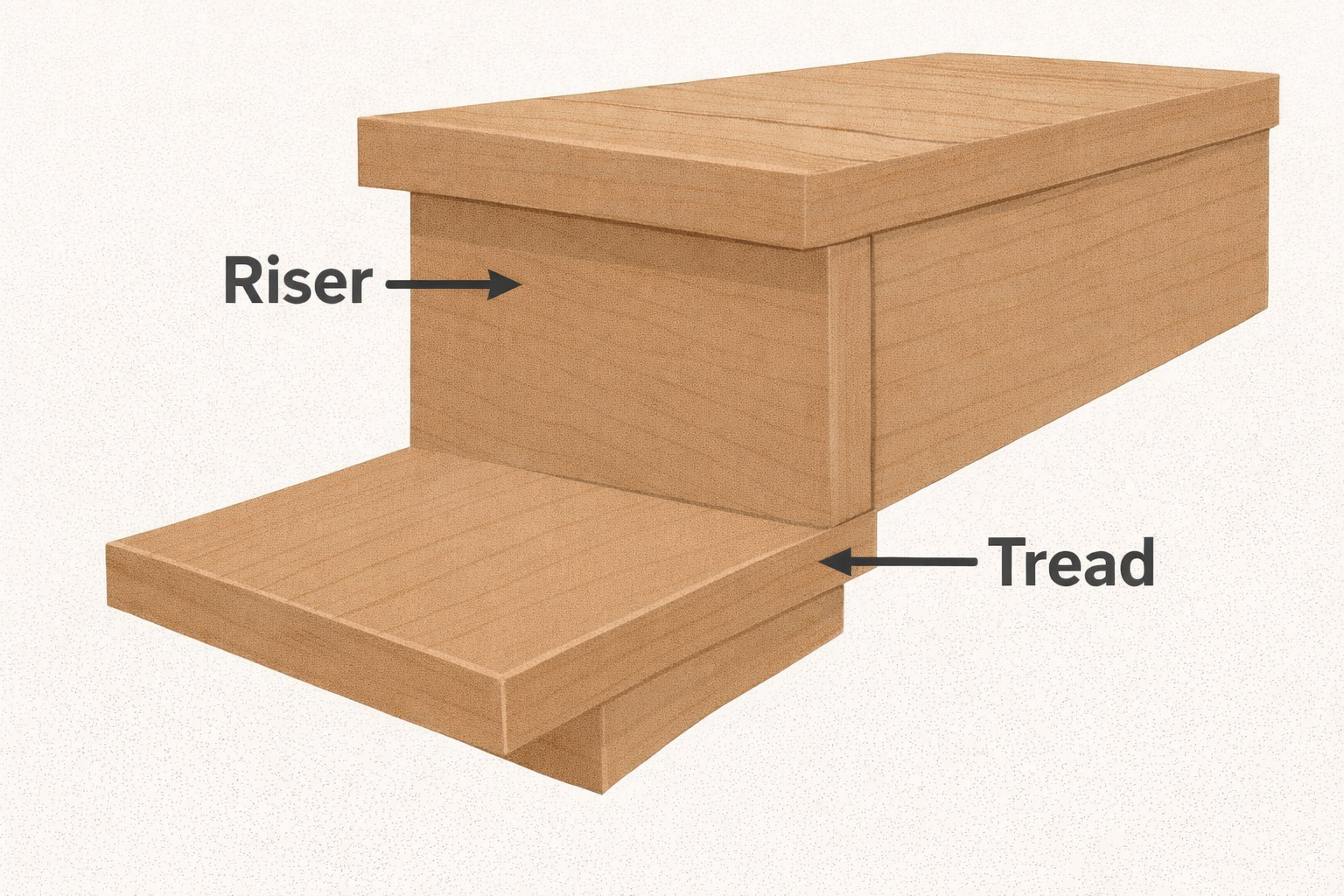
A riser gap occurs when the vertical board (the riser) separates from the horizontal board (the tread). These gaps may appear:
- At the back of the tread
- Along the edges
- Between the riser and the stringer
- Only on certain stairs, or progressively across the entire staircase
If ignored, they can lead to unstable steps, increased movement, and accelerated deterioration.
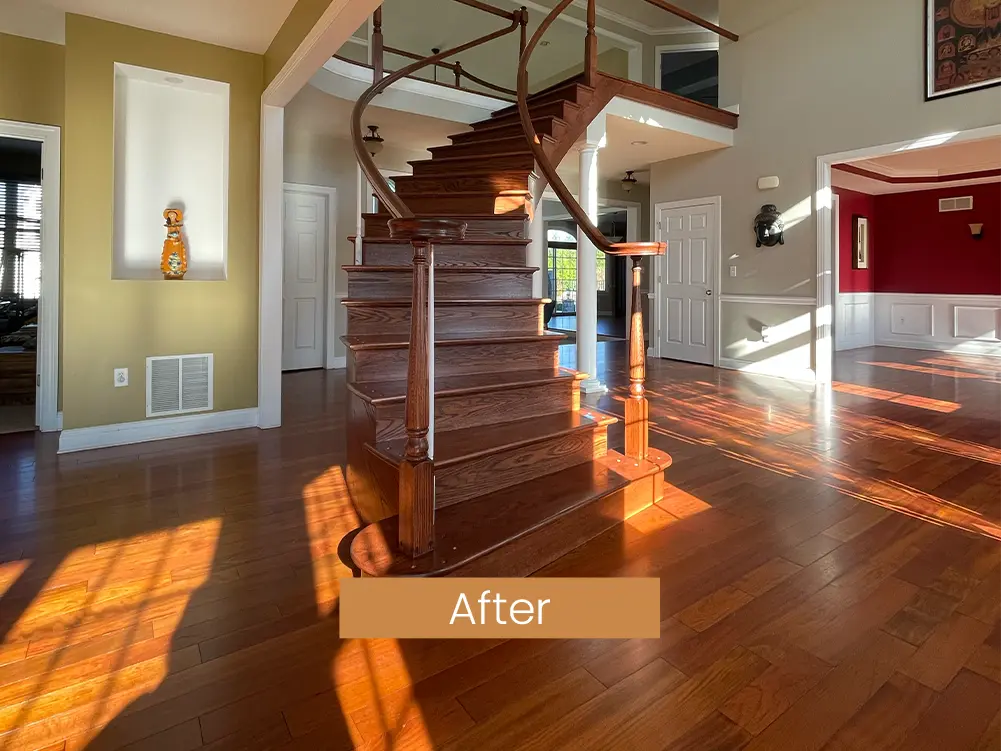
Common Reasons Staircases Start to Separate
1. Natural Expansion and Contraction (Seasonal Movement)
Wood is a living material. Changes in temperature and humidity cause it to expand and contract. Over time, these cycles can loosen nails, pull boards apart, and create visible gaps.
Homes with large humidity swings, especially older houses see this more often.
2. Poor Installation or Inadequate Fastening
Many staircase issues start on day one. Problems include:
- Treads or risers nailed instead of screwed
- Insufficient glue or no adhesive at all
- Incorrect angles or misaligned cuts
- Using softwood materials that compress over time
When the original build is weak, gaps usually start appearing within a few years.
3. Structural Settlement
If the staircase is connected to a shifting floor system, settling framing, or a moving wall, the entire stair structure can start to separate. This often presents as uneven gaps or steps that feel like they “dip” or move under pressure.
4. Loose or Failing Stringers
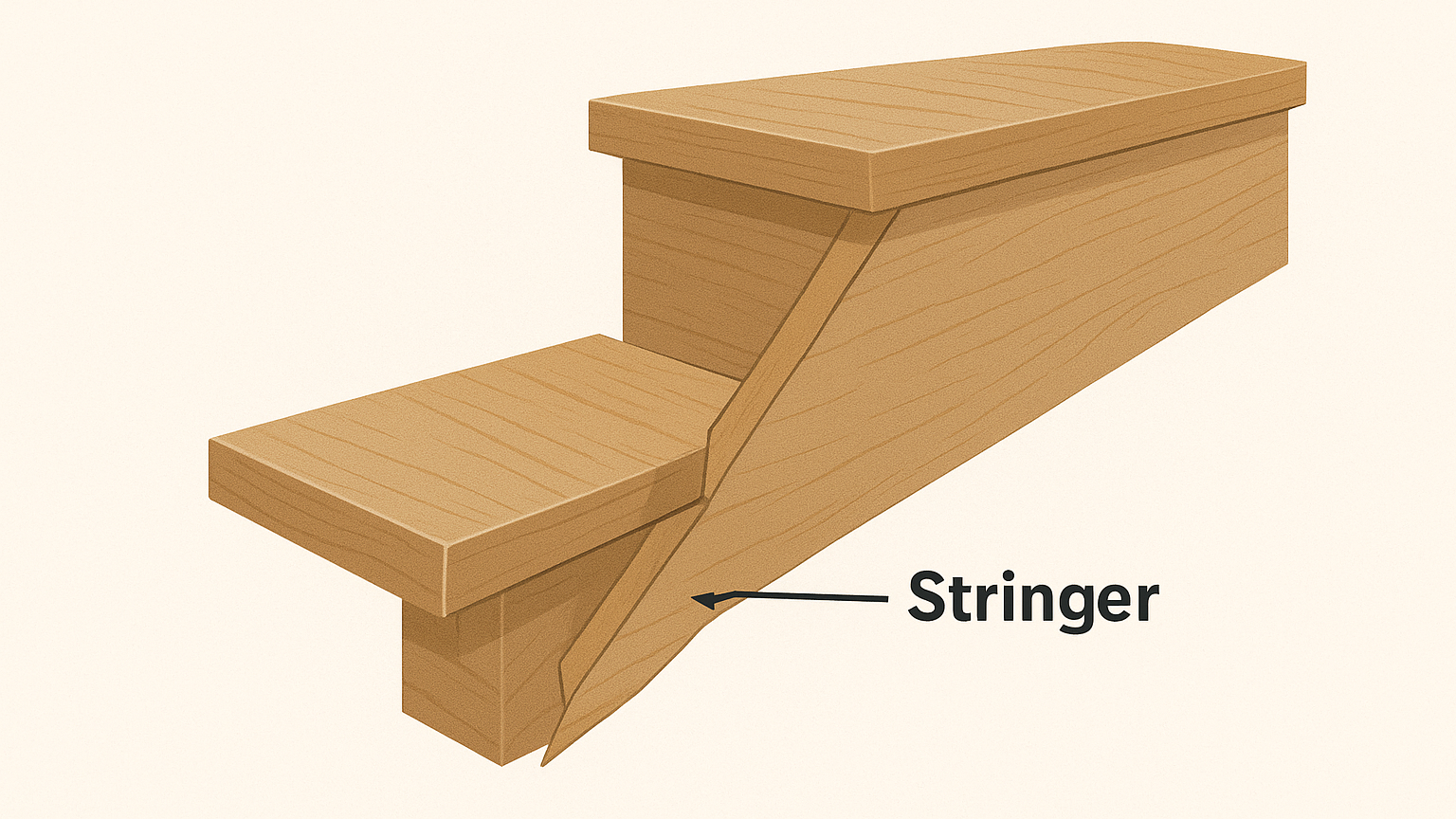
The stringers, the long diagonal boards that hold the staircase together, are the backbone of the system. If they come loose or weaken, the treads and risers begin to separate no matter how well they were installed.
5. Long-Term Wear and Traffic Stress
High-traffic staircases naturally loosen over time. Every step creates micro-movement. After thousands of cycles, fasteners loosen, glue breaks down, and small gaps become obvious.
6. Moisture Damage
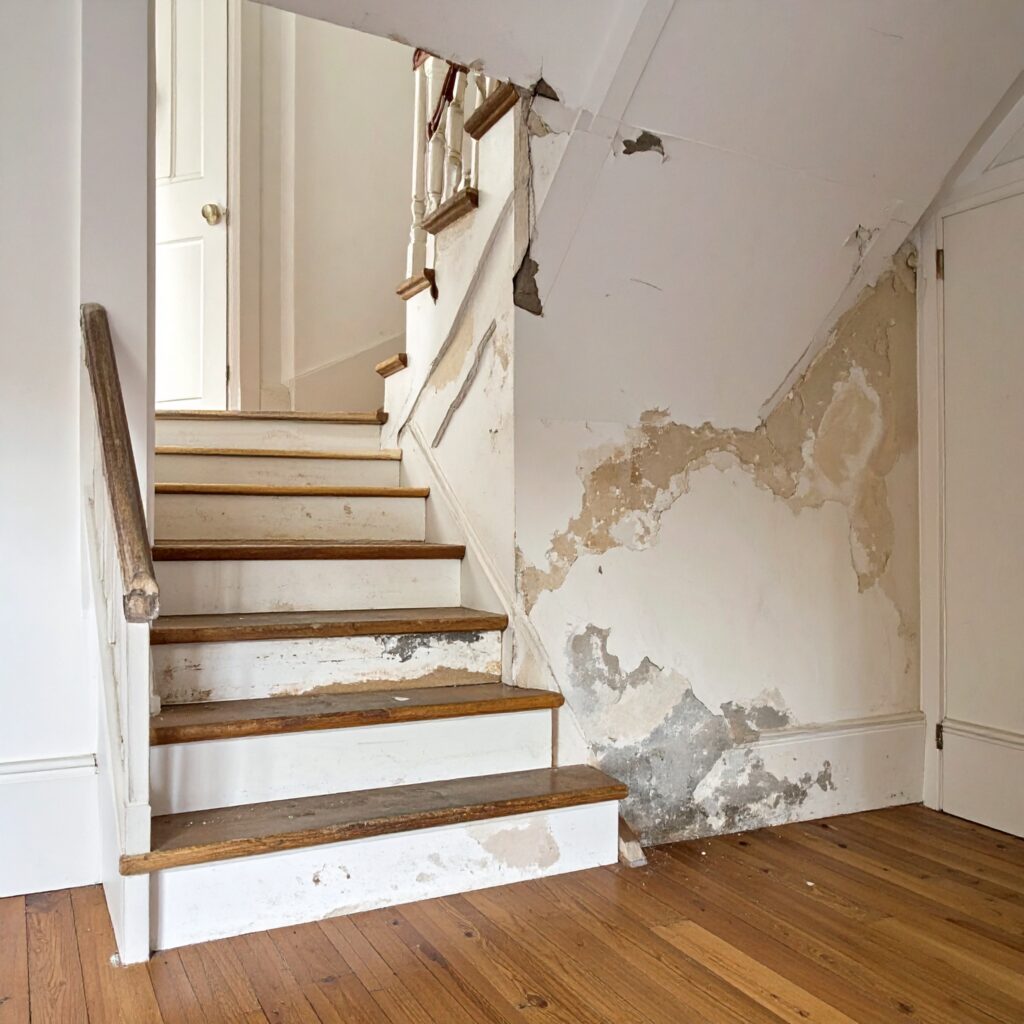
Water leaks, basement humidity, or poor climate control can cause:
- Warping
- Swelling
- Shrinkage
- Separation of boards
Moisture is especially destructive on open or unfinished staircases.
Why You Shouldn’t Ignore Riser Gaps
Small gaps grow. Movement causes more movement.
If left untreated, gaps can lead to:
- Creaking and instability
- Loose or bouncing treads
- Complete tread failure
- Safety hazards
- Higher repair costs down the road
A staircase that is “just noisy” today can require full reconstruction later if the root cause is not addressed.
How Professionals Diagnose the Problem
A qualified flooring or carpentry professional will inspect:
- The tread-to-riser connection
- The condition of the stringers
- Moisture levels in the wood
- Fastener types and failure points
- Framing alignment and settlement
- Gaps that worsen under weight
The goal is to determine whether the issue is cosmetic, structural, or installation-related.
Preventing Riser Gaps in the Future
- Maintain stable indoor humidity (ideally 35–50%).
- Avoid using low-quality materials for repairs.
- Ensure treads and risers are glued and screwed, not simply nailed.
- Have a professional inspect the staircase periodically, especially in older homes.
Proper installation and proactive maintenance are the most effective protections against recurring problems.
Conclusion
A staircase that appears to be deteriorating is typically affected by factors like seasonal wood movement, inadequate fastening, structural settlement, or prolonged wear. Riser gaps are a key indicator of these underlying issues and should be corrected quickly to avoid safety hazards and escalating repair costs.
Understanding the cause is the first step. Repairing the structure correctly is the second. With proper diagnosis and professional work, your staircase can be restored to a safe, stable, and long-lasting condition.
Visit our website for more inspiration and design ideas!