
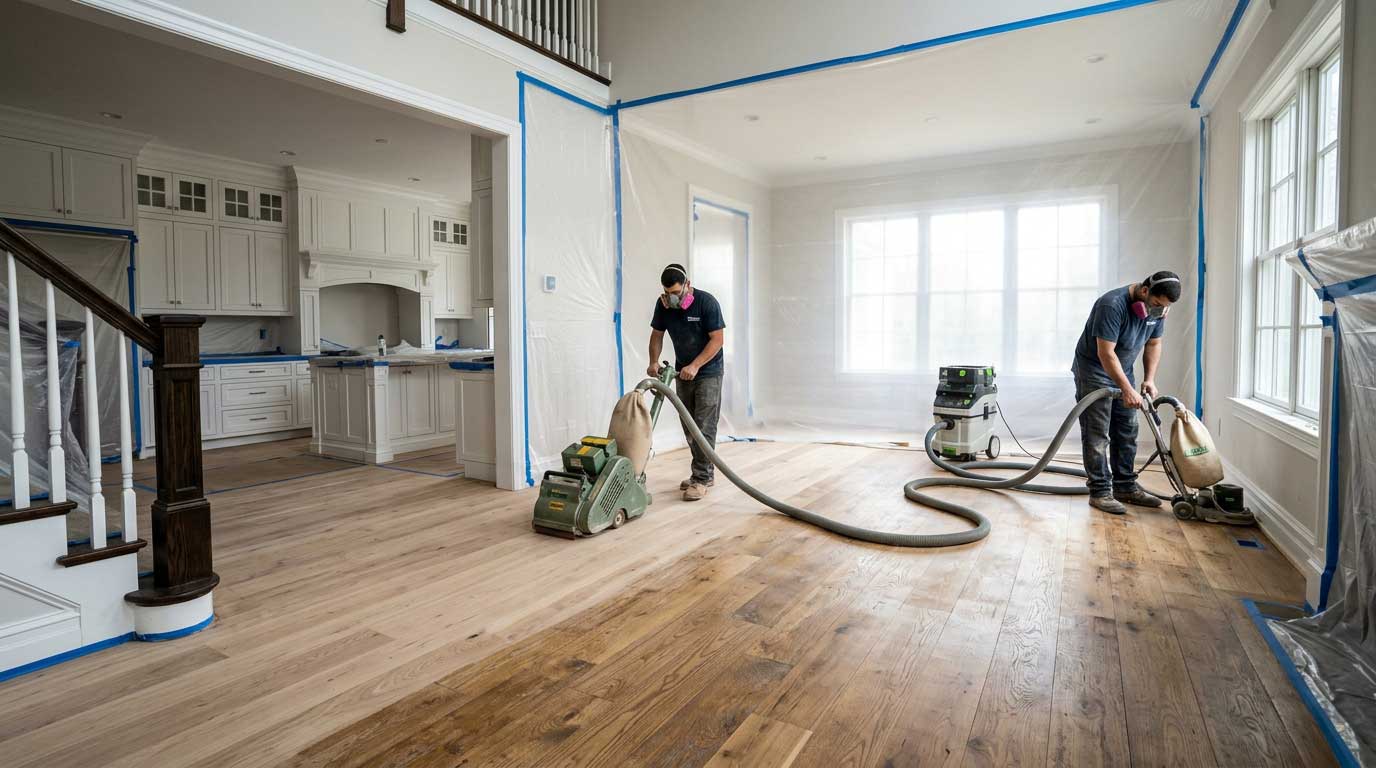
“Dustless hardwood floor refinishing” sounds simple: sand the floors without creating dust.
In reality, no hardwood sanding process should be considered literally 100% dust-free.
Professional dust-containment equipment can capture a significant amount of sanding dust directly at the source, but the equipment is only one part of keeping a home clean during refinishing.
At Renova Flooring, the process also includes isolating work areas, protecting surrounding surfaces, controlling where dust can travel, continuously cleaning during the project, and vacuuming the work area and surrounding areas after the job is complete.
For homeowners comparing hardwood refinishing companies, these details can be just as important as comparing the price per square foot.
What Does “Dustless Floor Refinishing” Actually Mean?
Hardwood sanding machines remove layers of old finish and wood, producing a large amount of fine dust.
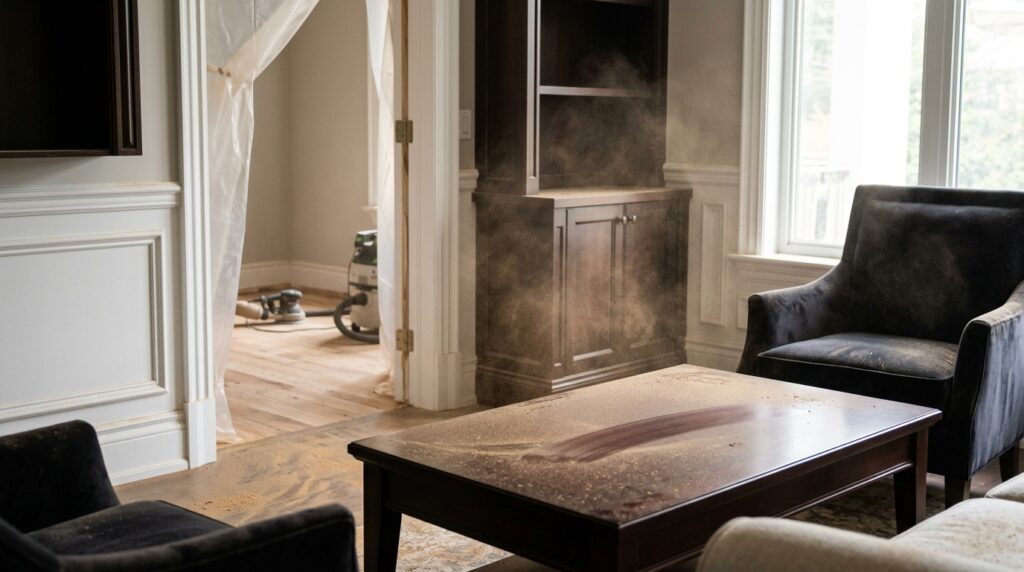
Professional sanding equipment can be connected to dust-extraction systems designed to capture that material as it’s created. This dramatically reduces airborne dust compared with sanding without effective extraction.
However, some dust can still escape during:
- Edging
- Detail sanding
- Hand sanding
- Buffing and screening
- Staircase work
- Transitions between equipment
- Dust handling
- Work around corners and other difficult areas
That’s why professional refinishing shouldn’t rely on the sanding machine alone.
Dust extraction controls dust at the source. Isolation controls where anything that escapes can travel. Final cleanup addresses what remains.
All three matter.
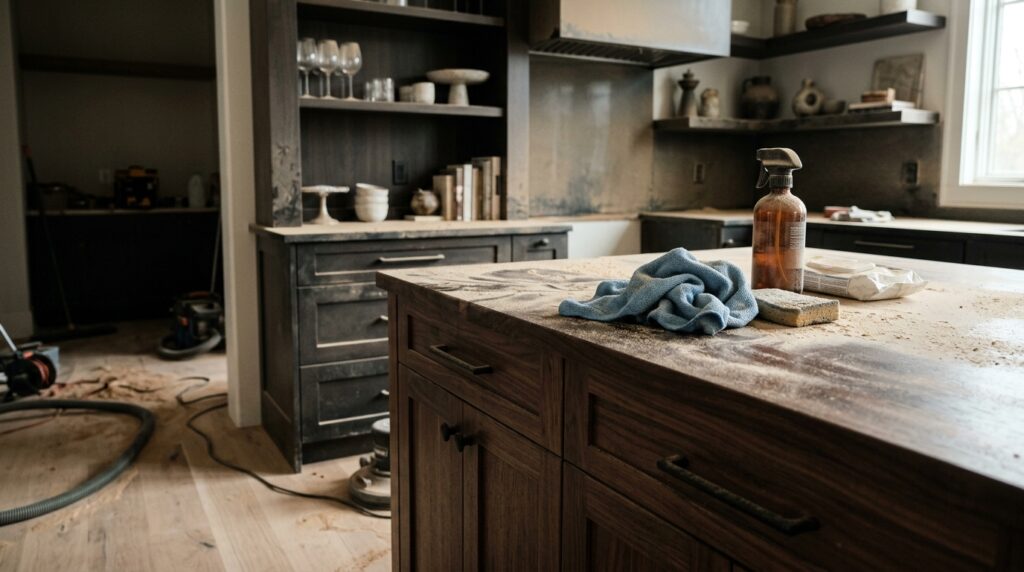
Why Isolation Still Matters With Dust-Containment Equipment
One of the biggest misconceptions about dustless refinishing is that professional extraction eliminates the need to protect the rest of the home.
It doesn’t.
Before sanding begins, the work area should be evaluated to determine how dust could migrate into adjacent spaces.
Depending on the home’s layout and project scope, protection may include:
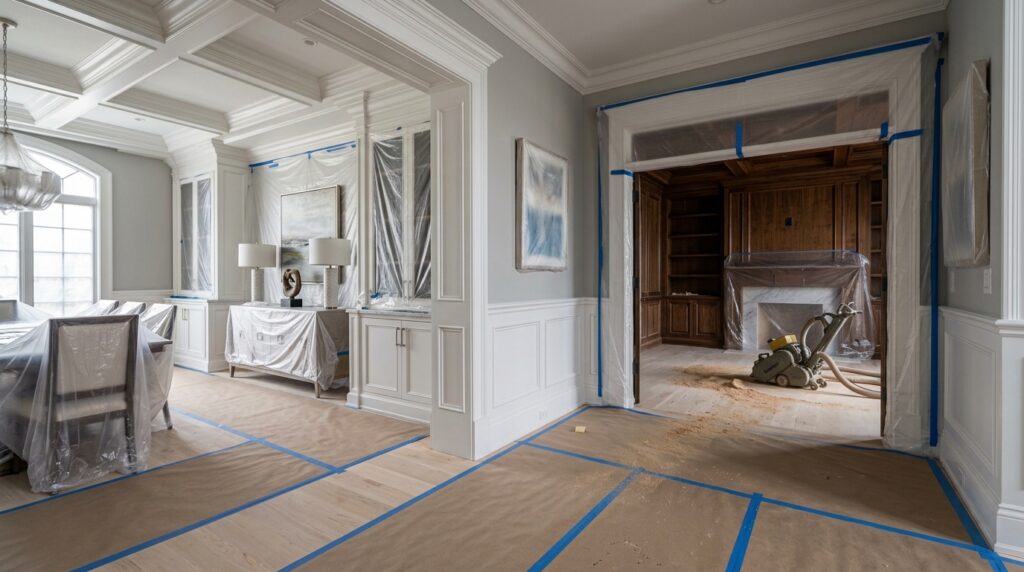
- Plastic barriers and sealed work zones
- Sealed doorways and transitions
- Protection around cabinetry and built-ins
- HVAC vent and return protection when appropriate
- Protection of adjacent finished surfaces
- Controlled ventilation or air management
- Regular vacuuming and cleanup throughout the project
An open-concept home may require a very different setup from a project where the work area can easily be separated from the rest of the house.
Professional dust containment should be planned around the property rather than treated as a one-size-fits-all process.
Why This Matters Even More in High-End Homes
Hardwood refinishing often takes place inside completed homes containing far more than hardwood floors.
Custom cabinetry, millwork, stone countertops, built-ins, lighting, electronics, furniture, and painted surfaces may all be located close to the work area.
In a high-end home, protecting those elements should be considered part of the flooring project.
For us, a beautiful refinished floor isn’t enough if the homeowner is left cleaning sanding dust throughout the house afterward.
How we protect and leave the home is part of the quality of the job.
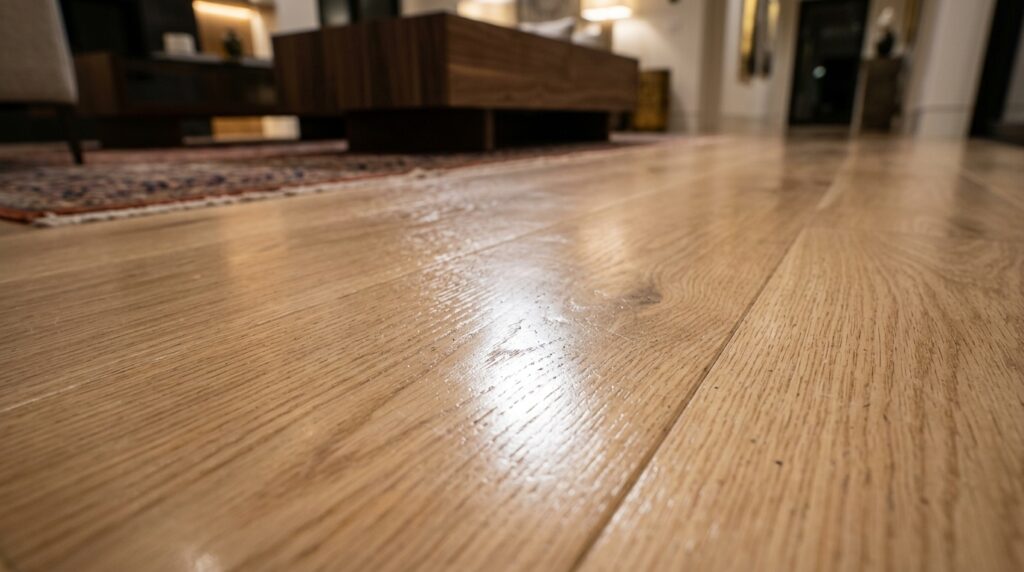
Can Sanding Dust Get Into the HVAC System?
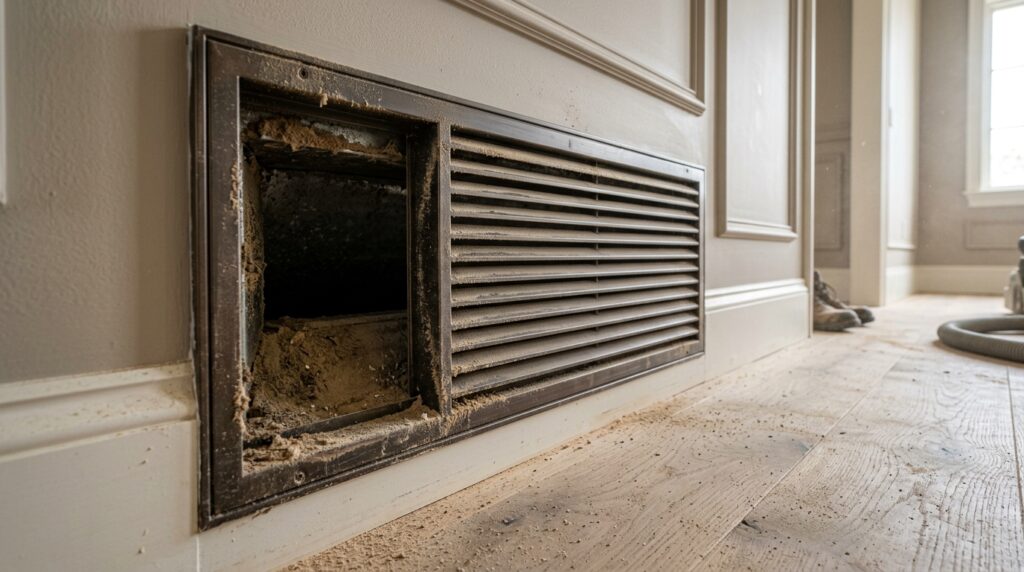
It can if airborne dust reaches open returns or other pathways into the HVAC system.
Once that happens, particles may potentially travel beyond the immediate work area.
That doesn’t mean every hardwood refinishing project contaminates the HVAC system or requires duct cleaning.
The better approach is prevention.
Before work begins, the flooring contractor should consider vents, returns, airflow, and the layout of the work area and determine what needs to be protected during sanding.
Dust Control Doesn’t End When Sanding Ends
Containment during sanding is only part of the process.
Once sanding is complete, the floor needs to be thoroughly cleaned before stain, sealer, or finish is applied.
Airborne particles, debris, hair, and other contamination can settle onto a prepared floor or into a coating while it’s drying.
Professional refinishing therefore requires careful vacuuming and cleaning between stages—not simply sanding the floor and immediately applying finish.
This is particularly important in high-end interiors where large windows, natural sunlight, and architectural lighting can make imperfections easier to see.
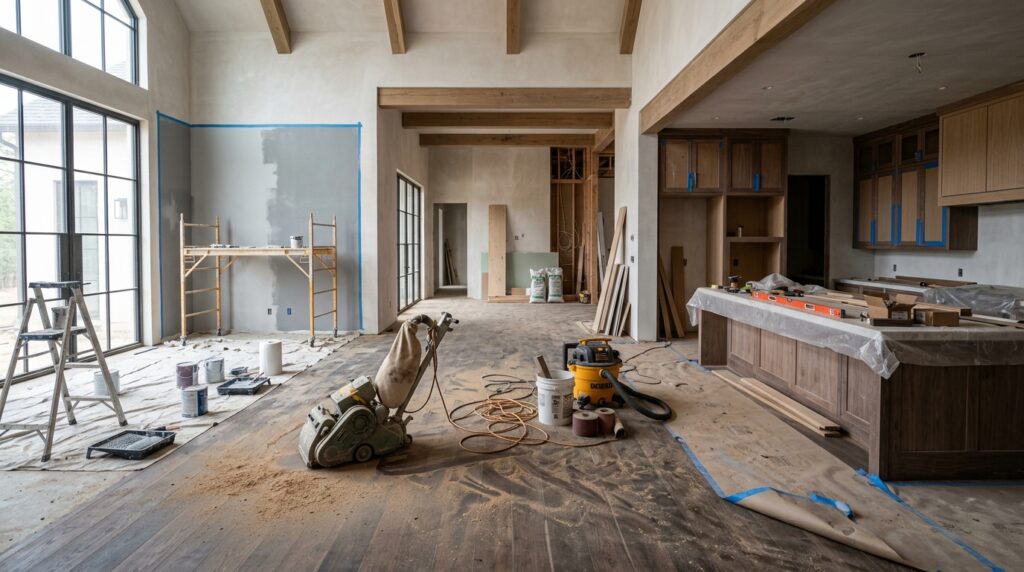
Final Cleanup Is Part of the Job
Even with professional extraction and careful isolation, we don’t assume that every particle of dust has been captured.
That’s why Renova Flooring vacuums extensively after the work is completed.
We vacuum the refinished work areas and also address surrounding areas where residual dust may have settled during the project.
The purpose isn’t to promise an impossible “zero dust” environment. It’s to take responsibility for the entire process—from the first sanding pass through the final cleanup.
For homeowners, that distinction matters.
The flooring contractor shouldn’t simply finish the floor, pack up the sanding machines, and leave the rest of the house for the homeowner to deal with.
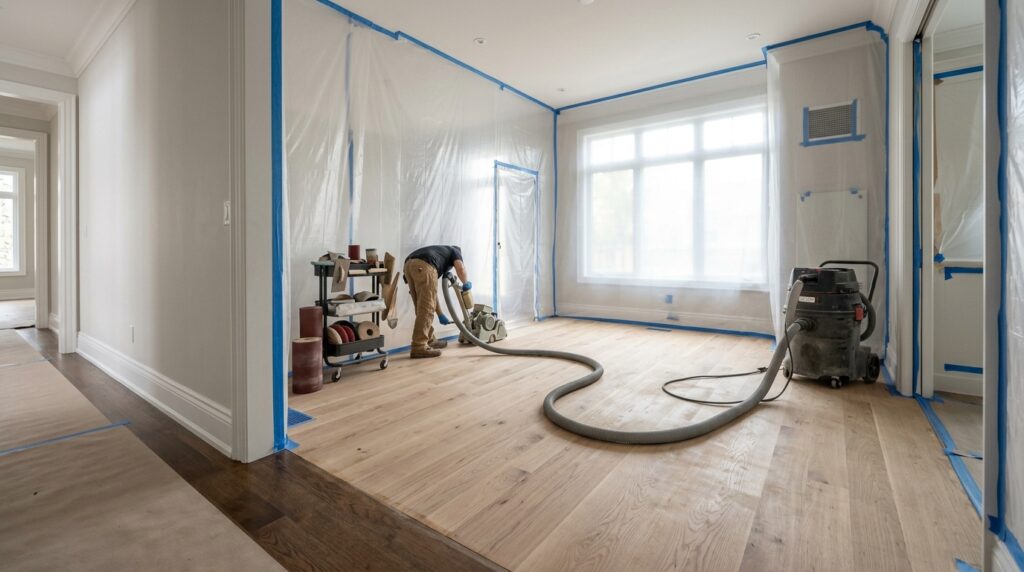
What Should Professional Dust Containment Look Like?
There’s no single setup that’s correct for every project, but a professional refinishing process may combine:
- High-performance dust extraction connected to sanding equipment
- Isolation of the active work area
- Protection of HVAC openings when appropriate
- Masking of adjacent surfaces
- Protection around cabinetry, millwork, and built-ins
- Regular vacuuming throughout sanding
- Careful cleaning between sanding and finishing stages
- Controlled airflow when necessary
- Final vacuuming of the work area and surrounding areas
The objective isn’t to claim that a single particle of dust will never escape.
The objective is to control the environment throughout the project and leave the home properly cared for when the work is finished.
“Dustless” Doesn’t Mean the House Requires No Preparation
Another common misconception is that dustless sanding means everything in the house can stay exactly where it is.
That depends on the project.
Furniture still needs to be removed from rooms being refinished. Certain adjacent areas may require additional protection, and homeowners may receive instructions regarding HVAC operation, pets, access, or other conditions during the work.
A professional contractor should communicate those requirements before the project begins rather than surprising the homeowner on sanding day.
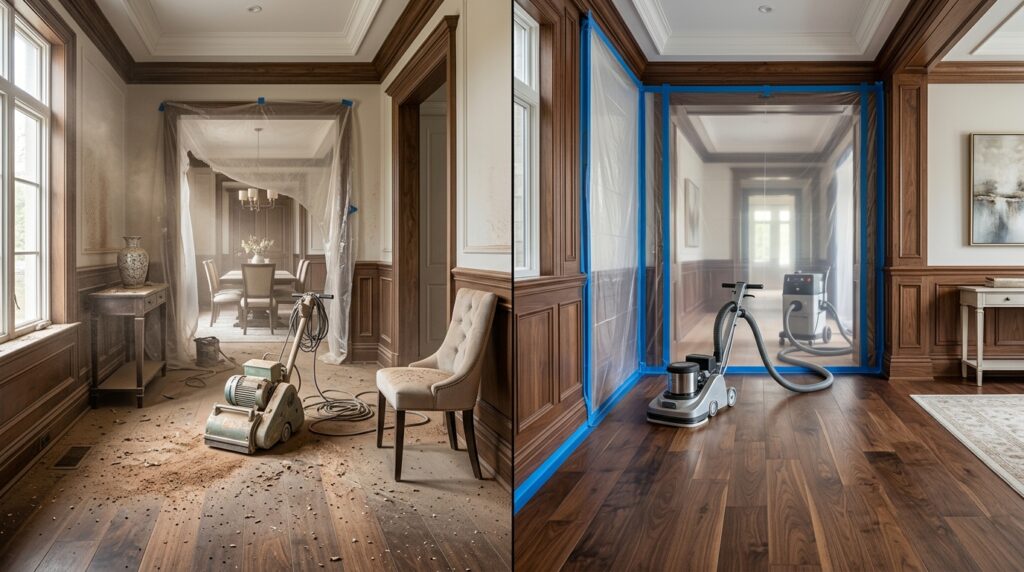
Why Two Refinishing Quotes Can Be Very Different
Homeowners often compare refinishing estimates using one number:
Price per square foot.
But two contractors quoting the same square footage may be providing very different processes.
One quote may cover basic sanding and coating.
Another may include professional dust extraction, extensive protection and masking, detailed floor preparation, premium finishing systems, multiple finish coats, continuous cleanup, and final vacuuming of surrounding areas.
The square footage may be identical.
The service isn’t.
When comparing hardwood refinishing companies, homeowners should also ask:
- What sanding and dust-extraction equipment will be used?
- How will adjacent areas be isolated?
- How will cabinetry and finished surfaces be protected?
- How will HVAC openings be handled?
- What cleaning occurs between sanding and finishing?
- What finish system will be used?
- How many coats are included?
- What cleanup is performed after the project is complete?
Those questions can reveal much more about the quality of a refinishing process than price per square foot alone.
Dust Containment Is Part of Craftsmanship
Dust containment isn’t an optional upgrade used to make a refinishing project sound more premium.
It’s part of executing the work correctly.
Sanding technique matters. Stain application matters. The finish system matters.
But craftsmanship also includes protecting the property, maintaining a controlled work environment, cleaning throughout the process, and leaving the home in the condition a homeowner should expect from a professional contractor.
Especially in a high-end home, the floor isn’t the only thing we’re responsible for protecting.
Final Thoughts
Dustless hardwood floor refinishing doesn’t mean literally zero dust.
It means combining professional dust-extraction equipment with careful isolation, protection, continuous cleaning, and a thorough final cleanup to dramatically reduce dust and control where remaining particles can travel.
For homeowners—especially those refinishing hardwood inside finished or luxury homes—that difference matters.
When comparing hardwood flooring contractors, don’t only ask:
“How much do you charge per square foot?”
Also ask:
“How are you going to protect my home, and how will you leave it when you’re finished?”
A professional refinishing project isn’t complete when the final coat is applied.
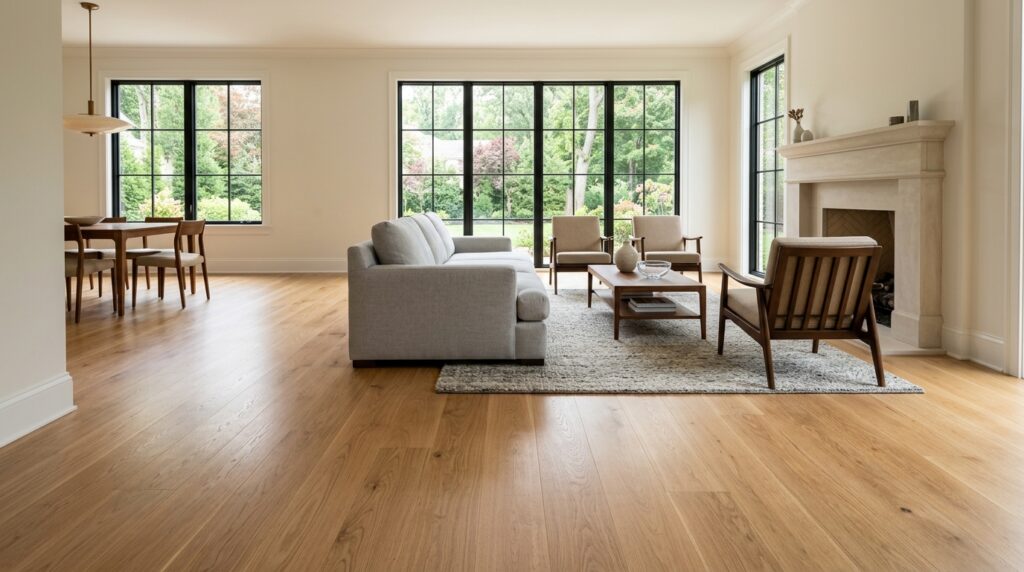
It’s complete when the floors look right, the surrounding areas have been cleaned, and the home has been treated with the same level of care as the hardwood itself.
Request a consultation:
renovaflooring.com
Visit our website for more inspiration and design ideas!