
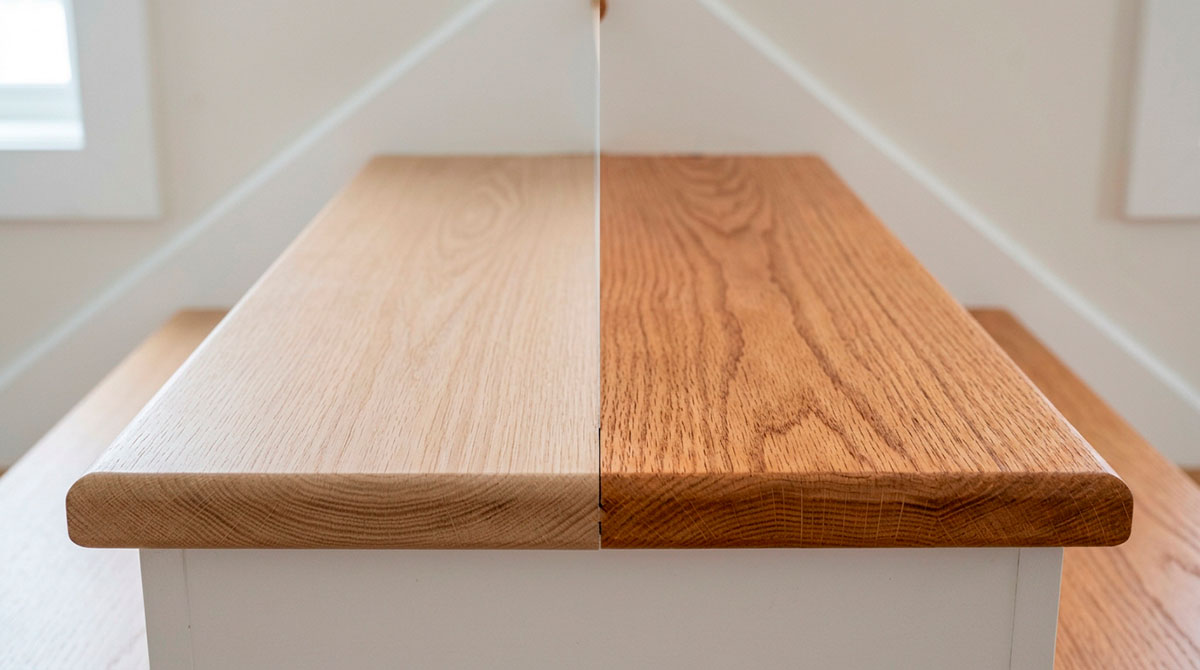
When building or renovating a staircase, selecting the right hardwood is about more than appearance. Stair treads experience concentrated foot traffic every day, making them one of the hardest-working surfaces in any home.
Among the most popular choices, White Oak and Red Oak continue to dominate the market for their strength, versatility, and timeless appeal. While both are excellent hardwoods, they don’t perform exactly the same under years of daily use.
If your staircase is in a busy household with children, pets, or frequent guests, understanding the differences can help you make the right long-term investment.
White Oak and Red Oak: Similar Species, Different Performance
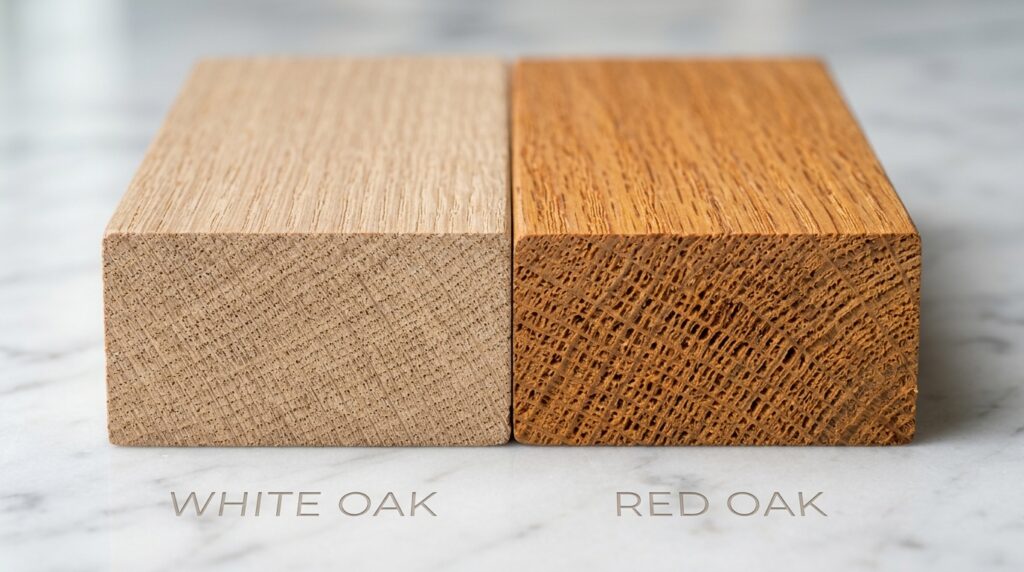
Although both belong to the oak family, they differ in grain structure, density, moisture resistance, and overall appearance.
White Oak
White Oak is known for:
- Tight, closed grain
- Neutral color ranging from light beige to medium brown
- Excellent moisture resistance
- Modern, clean appearance
- Exceptional durability
Red Oak
Red Oak offers:
- More pronounced grain patterns
- Warm reddish undertones
- Traditional hardwood character
- Excellent availability
- Proven long-term performance
Both species produce beautiful staircases, but they age differently under heavy use.
Which Wood Handles Heavy Stair Traffic Better?
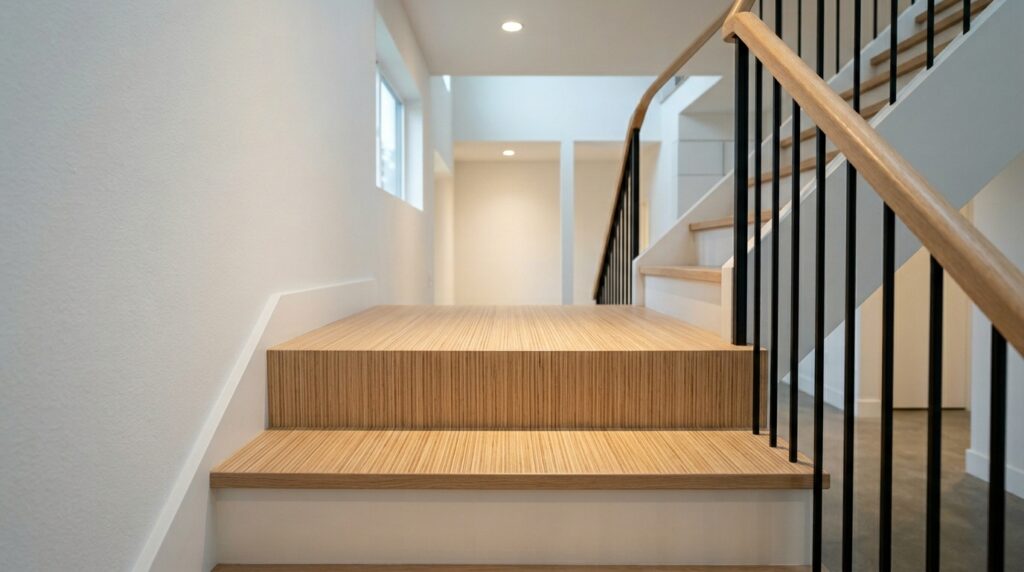
Unlike flooring, stair treads receive repeated impact in the same locations every single day, especially along the front nosing where each step lands.
While the difference in hardness isn’t dramatic, White Oak generally performs better over time.
White Oak has a Janka hardness rating of approximately 1,360 lbf, compared to 1,290 lbf for Red Oak.
That difference may appear small on paper, but over years of daily use it can result in:
- Better resistance to dents
- Fewer visible wear patterns
- Improved resistance to everyday scratches
- Longer-lasting appearance
We often notice that White Oak staircases maintain a cleaner, more consistent appearance in high-traffic homes, particularly where children, pets, and frequent entertaining are part of everyday life.
Grain Structure Makes a Bigger Difference Than Most Homeowners Realize
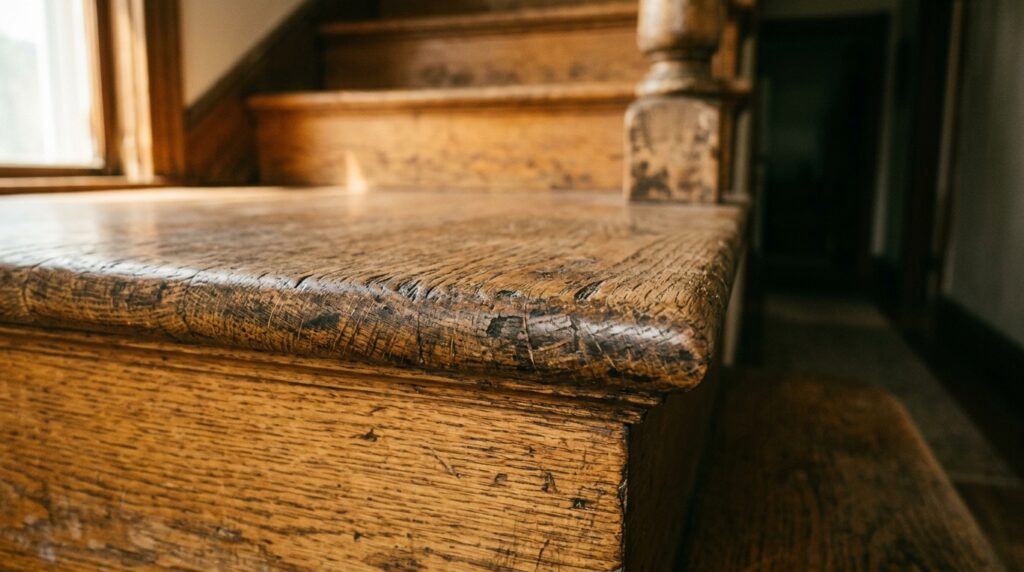
One of White Oak’s biggest advantages is its tighter grain.
This helps:
- Conceal everyday wear
- Reduce the appearance of surface scratches
- Limit dirt buildup within the grain
- Maintain a more refined appearance between refinishing cycles
Red Oak’s more open grain creates beautiful natural character, but it can also make scratches and wear patterns more noticeable over time.
This becomes especially apparent on stair nosings, where foot traffic is concentrated.
Moisture Resistance Matters on Staircases Too

Every hardwood staircase expands and contracts with seasonal humidity changes.
White Oak contains naturally occurring tyloses that make its cellular structure more resistant to moisture intrusion.
As a result, it generally offers:
- Greater dimensional stability
- Less seasonal movement
- Improved resistance to swelling
- Better long-term performance in humid climates
For homeowners in New Jersey and throughout the Mid-Atlantic, where humidity fluctuates significantly throughout the year, this added stability is a meaningful advantage.
Which Hardwood Fits Your Home’s Style?
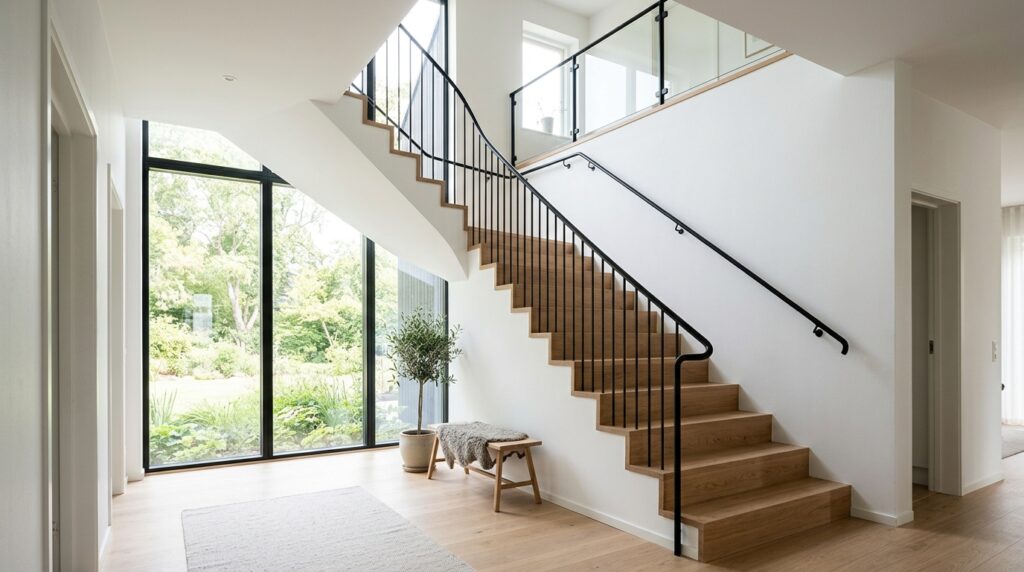
Performance is important, but your staircase should also complement the overall design of your home.
White Oak has become the preferred choice for:
- Contemporary homes
- Transitional interiors
- Scandinavian-inspired spaces
- Luxury custom residences
Its neutral color and subtle grain work well with both natural finishes and modern stain colors.
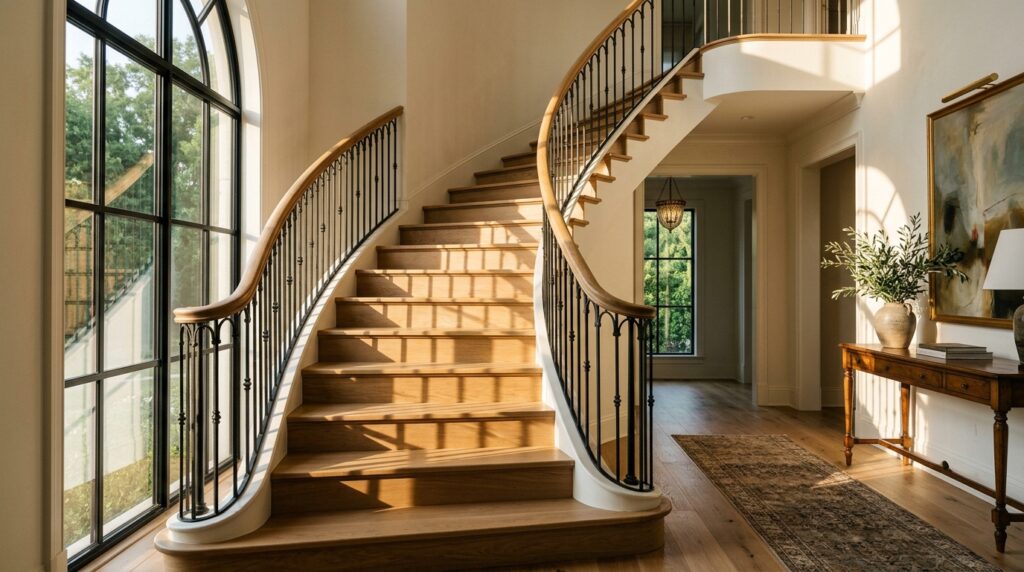
Red Oak remains an excellent choice for:
- Traditional homes
- Colonial architecture
- Classic interior designs
- Warm stain colors
Its distinctive grain and rich undertones continue to appeal to homeowners looking for a more traditional hardwood appearance.
Don’t Overlook Existing Flooring

One factor that’s often overlooked is how the staircase connects with the rest of the home.
If your existing hardwood floors are Red Oak, replacing the staircase with White Oak may require custom stain matching to achieve a consistent appearance.
Likewise, if you’re installing new flooring throughout the home, selecting the same species for both floors and stair treads usually creates the most cohesive result.
Choosing the right species isn’t just about durability—it should also support the overall design of the space.
Which One Is the Better Investment?
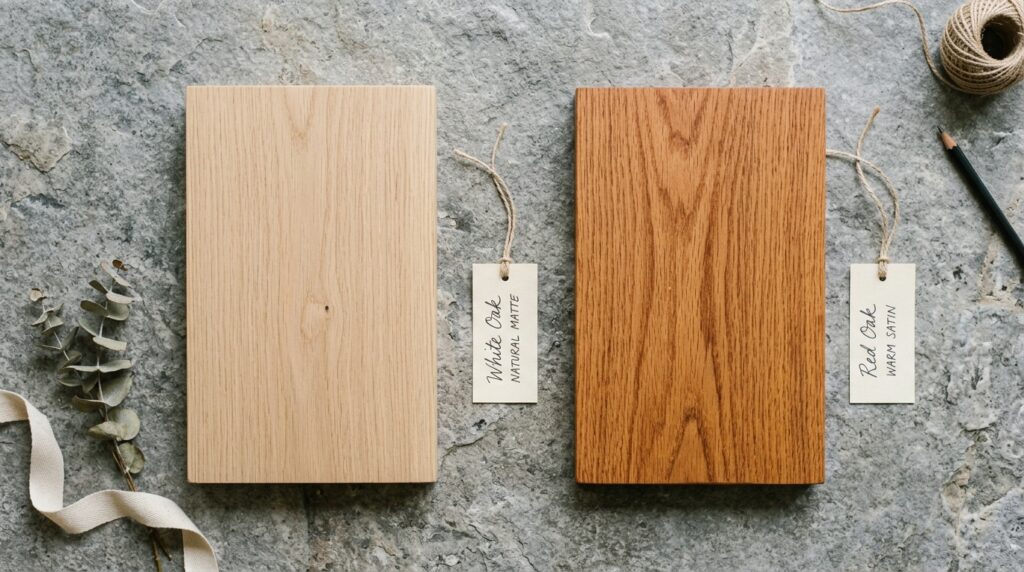
If your priority is maximum durability, lower long-term maintenance, and the ability to withstand years of heavy foot traffic, White Oak is generally the stronger choice.
It offers:
- Greater hardness
- Better resistance to everyday wear
- Improved moisture resistance
- Cleaner long-term appearance
- Excellent compatibility with today’s most popular interior styles
Red Oak, however, remains a dependable and attractive option for homeowners who prefer its traditional character or are matching existing Red Oak flooring.
Final Thoughts
Both White Oak and Red Oak can produce beautiful, long-lasting staircases when properly installed and finished.
The best choice depends on more than hardness ratings alone. Existing flooring, expected traffic, design preferences, and long-term maintenance should all be considered before making a decision.
A well-built staircase is an investment that should perform for decades. Selecting the right hardwood from the start helps ensure it not only looks exceptional on day one, but continues to perform beautifully for years to come.
Request a consultation:
renovaflooring.com
Visit our website for more inspiration and design ideas!