
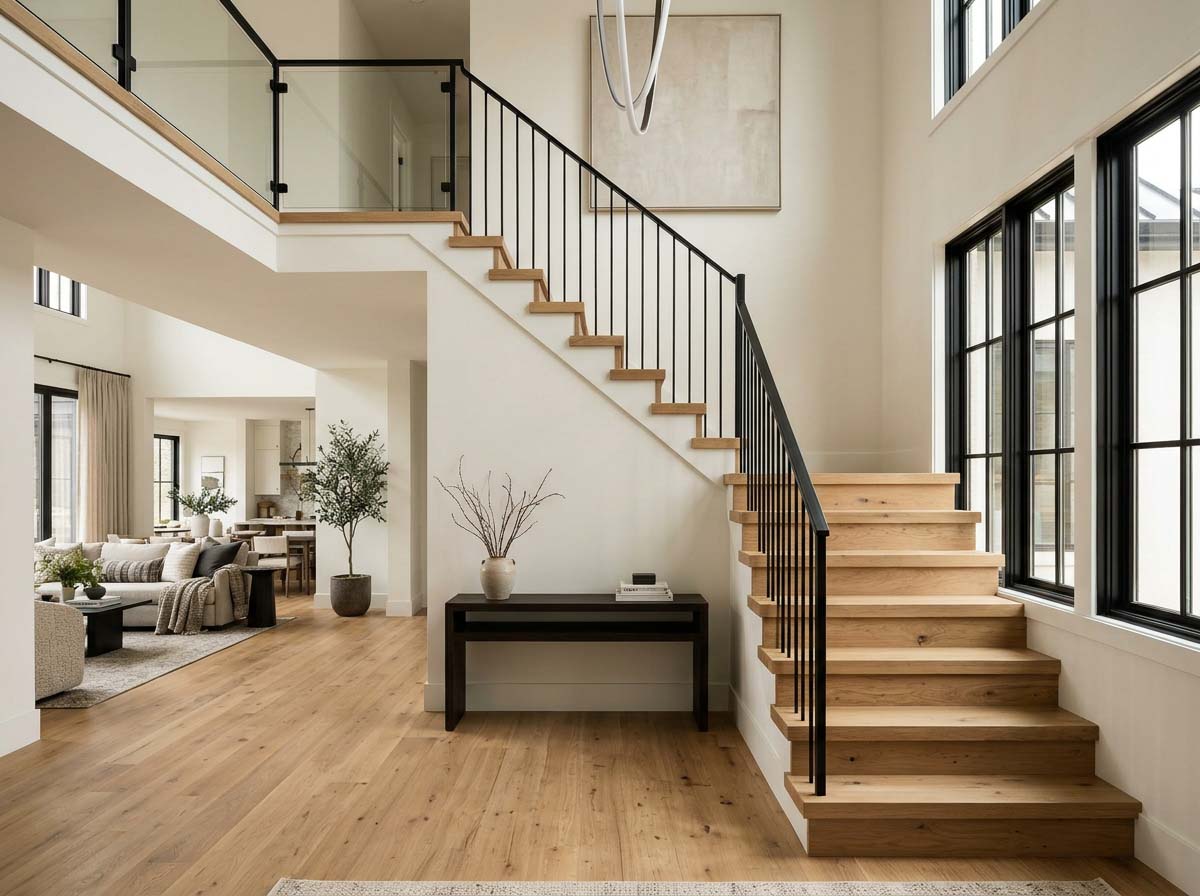
A staircase is more than a functional connection between floors. It can become a defining architectural feature that shapes the style, atmosphere, and overall value of a home. One of the most important decisions when updating a staircase is choosing the right railing material.
Today, homeowners are exploring a range of options, from the warmth of traditional wood to the timeless elegance of wrought iron and the clean, modern appearance of glass. Each material offers distinct advantages in terms of aesthetics, maintenance, durability, and cost.
So, which stair railing trend is right for your home: wood, wrought iron, or glass? The answer depends on your interior design preferences, the existing staircase structure, your budget, and the level of maintenance you’re comfortable with.
In this guide, we’ll compare these three popular railing options to help you make an informed decision for your next staircase renovation.
1. Wood Stair Railings: Timeless Warmth and Versatility
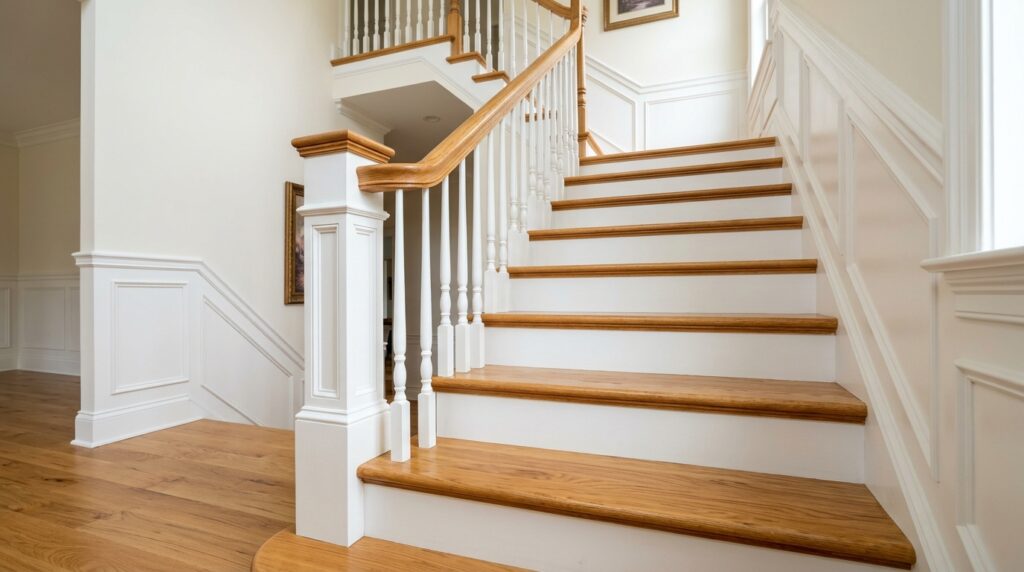
Wood remains a popular choice for stair railings because of its natural beauty, versatility, and ability to complement a wide range of interior styles. From classic oak staircases to minimalist designs featuring clean wooden lines, this material offers plenty of customization options.
Why Wood Railings Are Trending
Current design preferences often emphasize natural materials, warm tones, and finishes that highlight the grain of the wood. Oak, maple, walnut, and other hardwoods can bring texture and character to a staircase without overwhelming the surrounding space.
Popular wood railing styles include:
- Natural wood finishes: Showcase the grain and warm tones of the material.
- Traditional turned balusters: Add classic architectural detail.
- Minimalist wooden railings: Feature simple profiles and clean lines.
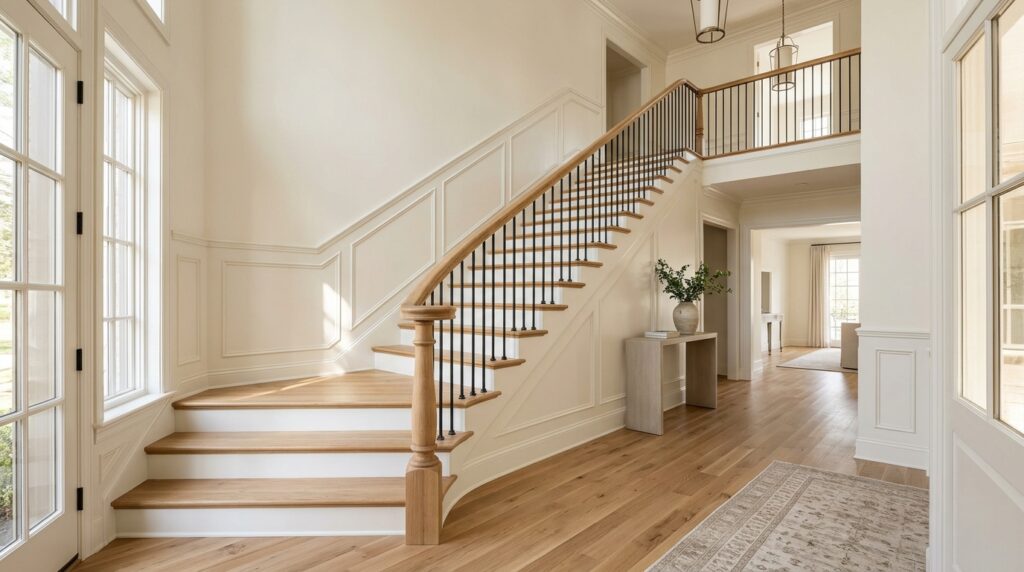
- Mixed-material designs: Combine wood handrails with black metal balusters for a contemporary look.
Advantages of Wood Railings
- Warm, inviting appearance.
- Wide variety of wood species, stains, and finishes.
- Can complement hardwood stair treads and flooring.
- Scratches and worn finishes can often be repaired or refinished.
- Works well in traditional, transitional, and contemporary homes.
Potential Drawbacks
Wood requires periodic maintenance to preserve its finish. Scratches, dents, and fading may occur over time, especially in high-traffic areas. Wood can also expand and contract as humidity changes, making proper material selection and installation important.
Best for: Homeowners who want a classic, welcoming staircase with plenty of customization options.
2. Wrought Iron Stair Railings: Strength and Architectural Character
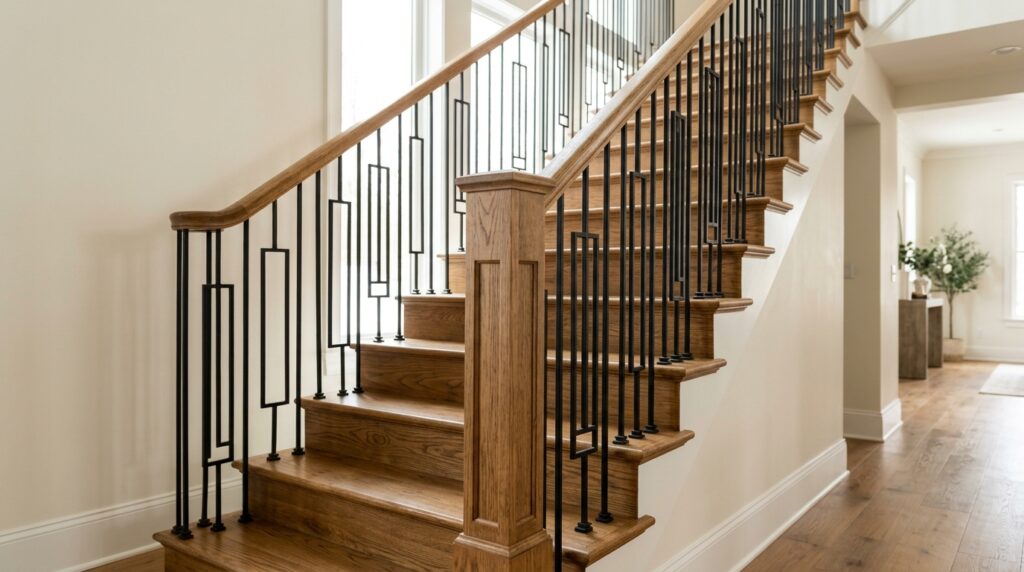
Wrought iron and other decorative metal railing systems are popular for their durability, visual contrast, and ability to add architectural interest. While intricate ironwork remains a classic option, simpler black metal balusters are especially versatile in modern and transitional interiors.
Why Metal Railings Are Trending
Black metal railings create a strong visual outline against light-colored walls, white oak treads, and neutral interiors. More elaborate designs can introduce curves, scrollwork, and decorative details, while straight vertical balusters provide a cleaner, more contemporary appearance.
Popular styles include:
- Matte black balusters: Create contrast with natural wood.
- Traditional wrought iron: Features decorative curves and ornamental patterns.
- Geometric metal designs: Use simple lines and repeating shapes.
- Wood-and-metal combinations: Pair a hardwood handrail with metal balusters.
Advantages of Wrought Iron Railings
- Strong and durable when properly designed and installed.
- Wide range of decorative styles.
- Creates a striking contrast with hardwood stair treads.
- Generally requires less frequent refinishing than wood.
- Can suit both traditional and modern interiors.
Potential Drawbacks
Metal railings can cost more when custom fabrication or intricate designs are involved. Painted finishes may chip, and exposed metal can corrode if its protective coating is damaged and moisture is present. Installation also requires secure connections to the staircase structure.
Best for: Homeowners looking for a durable railing with strong visual definition and a sophisticated architectural style.
3. Glass Stair Railings: Modern, Open, and Minimalist
Glass stair railings are a popular option for homeowners who want to create a bright, open, and contemporary interior. By reducing visual obstructions, glass panels allow natural light to travel through the staircase and help smaller spaces feel more expansive.
Why Glass Railings Are Trending
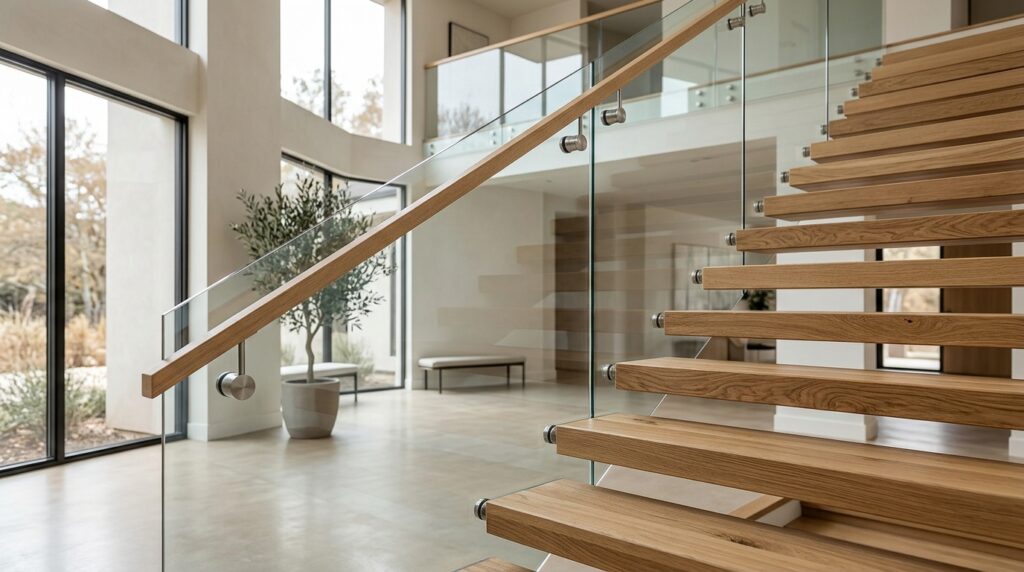
Modern residential design often prioritizes clean lines, open layouts, and minimal visual clutter. Glass fits these preferences particularly well, especially when paired with hardwood stair treads, floating stairs, or slim metal hardware.
Popular glass railing styles include:
- Frameless glass panels: Create a clean appearance with minimal visible hardware.
- Glass with wood handrails: Combine modern transparency with natural warmth.
- Glass with black metal framing: Add definition while maintaining an open feel.
- Glass with stainless steel hardware: Complement contemporary and minimalist interiors.
Advantages of Glass Railings
- Allows natural light to pass through the staircase.
- Creates an open, uncluttered appearance.
- Highlights hardwood stair treads and surrounding architectural details.
- Works well in contemporary and minimalist homes.
- Tempered or laminated safety glass systems can provide strength when properly specified.
Potential Drawbacks
Glass railings generally require frequent cleaning because fingerprints, dust, and smudges are easy to see. Specialized glass panels and hardware can also increase installation costs. Damaged panels must be evaluated and replaced according to the manufacturer’s requirements rather than repaired like wood.
Best for: Homeowners who want a contemporary staircase that maximizes light and emphasizes clean architectural lines.
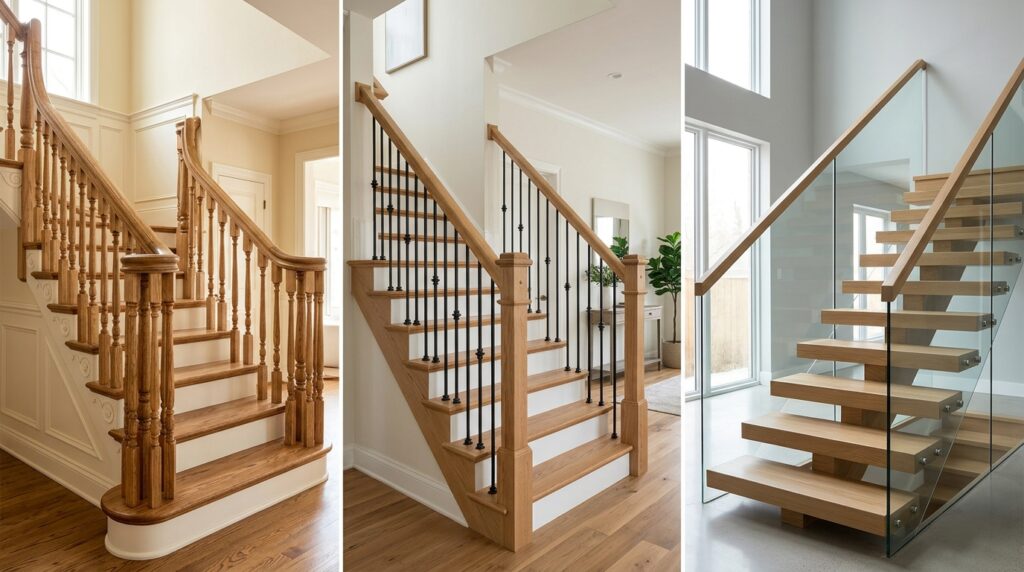
4. Wood vs. Wrought Iron vs. Glass: Which Is Best?
Each railing material offers a different balance of style, maintenance, and cost. The best choice depends on your priorities and the conditions of your home.
| Feature | Wood | Wrought iron / metal | Glass |
|---|---|---|---|
| Overall style | Warm and timeless | Classic or bold | Modern and minimalist |
| Design flexibility | High | High | Moderate to high |
| Routine maintenance | Periodic finish care | Finish and corrosion checks | Frequent cleaning |
| Natural light | Partially obstructed | Partially obstructed | Maximized |
| Typical cost | Low to high | Moderate to high | Moderate to high |
| Repair considerations | Often refinishable | Finish or component repairs | Panel replacement may be necessary |
Cost depends on the railing design, material quality, fabrication, hardware, labor, and complexity of the staircase. These are general comparisons, not fixed price estimates.
5. How to Choose the Right Railing for Your Home
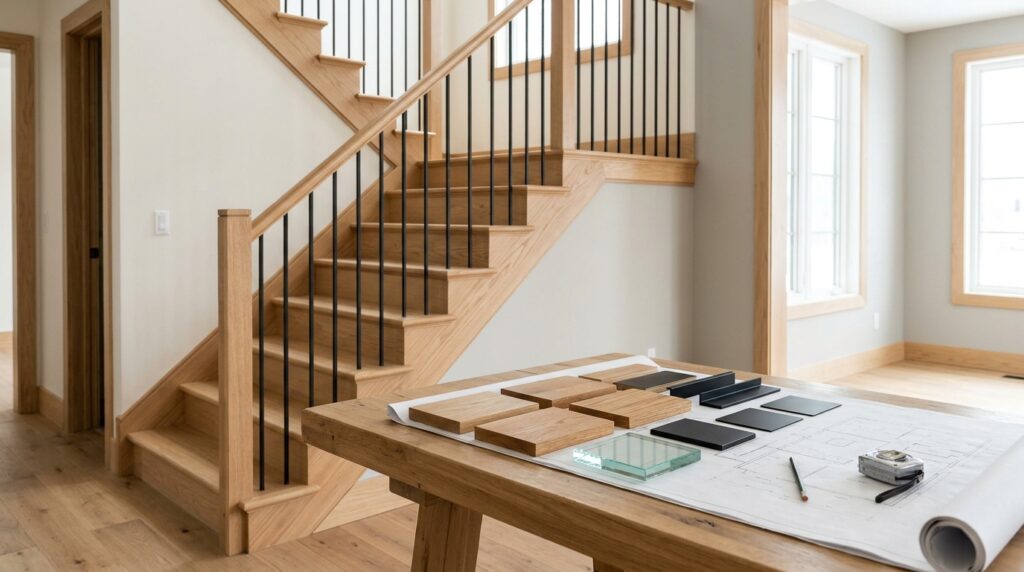
Before choosing a material based on appearance alone, consider how the railing will work with your staircase and the rest of your interior.
Match the Railing to Your Existing Hardwood
If your staircase already has hardwood treads, choose a railing that complements the wood species, stain, and finish.
- Natural oak treads pair well with matching wood handrails or black metal balusters.
- Dark hardwood stairs can create a sophisticated contrast with light walls and simple metal railings.
- Light-colored treads and glass panels can reinforce a bright, contemporary design.
The goal is to create a cohesive appearance without making every element identical.
Consider Your Interior Design Style
Traditional homes often benefit from decorative wood or wrought iron details. Contemporary homes may look better with straight metal balusters, simple wood profiles, or glass panels.
Transitional interiors can combine elements from both approaches, such as a natural oak handrail with matte black metal balusters.
Evaluate Maintenance Requirements
Think about how much time you want to spend maintaining the railing.
Wood may need refinishing as wear develops. Metal requires attention to its protective coating, particularly in damp environments. Glass needs regular cleaning to maintain its appearance.
Establish Your Budget
The initial material price is only one part of the total cost. Installation, custom fabrication, removal of the existing railing, finishing, and code compliance can all affect the final investment.
Request an itemized estimate before deciding between materials.
6. Don’t Overlook Stair Railing Safety and Building Codes
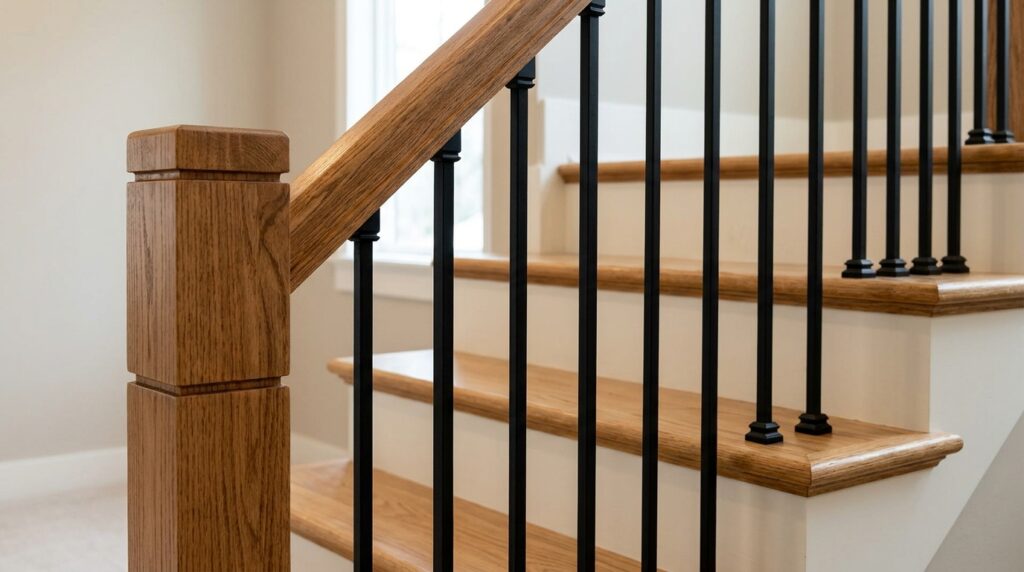
A railing should look beautiful, but it must also provide reliable support and meet applicable building requirements.
Before installing a new railing, consider:
- Handrail height: Must meet the requirements applicable to your staircase.
- Baluster spacing: Openings must comply with applicable safety limits.
- Structural attachment: Handrails and guardrails must be securely anchored.
- Glass specifications: Panels, supports, and hardware must be appropriate for the intended application.
- Local building codes: Requirements can vary depending on the jurisdiction, staircase configuration, and type of property.
For homes in New Jersey and Pennsylvania, verify the applicable local and state requirements before beginning a renovation. A qualified contractor can help determine which provisions apply to your project.
7. Can You Combine Different Railing Materials?
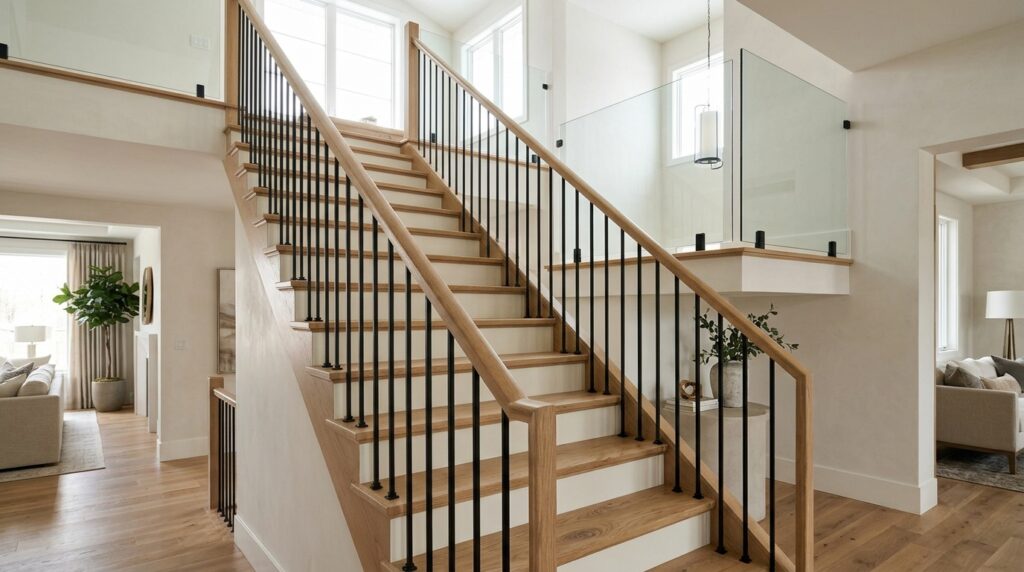
Absolutely. Combining materials is an effective way to create a distinctive staircase without committing to a single design style.
Some popular combinations include:
- Wood and wrought iron: A hardwood handrail paired with black metal balusters offers warmth and contrast.
- Wood and glass: A natural wood handrail softens the sleek appearance of glass panels.
- Wood treads and metal railing: This combination highlights the hardwood while introducing a modern architectural detail.
Mixed-material railings can also help connect the staircase to other features in the home, including flooring, cabinetry, door hardware, and lighting fixtures.
Final Thoughts
Choosing between wood, wrought iron, and glass depends on the appearance you want, your maintenance preferences, and the requirements of your staircase.
Wood offers natural warmth and timeless versatility. Wrought iron and metal provide durability, contrast, and architectural character. Glass creates a bright, open appearance that works especially well in contemporary interiors.
At Renova Flooring, the goal is to help homeowners make informed decisions that balance design, durability, and functionality. By considering your existing hardwood, interior style, budget, and applicable safety requirements, you can choose a railing that complements your staircase and enhances your home for years to come.
Planning a custom stair railing or staircase renovation? Visit renovaflooring.com to request a consultation.