
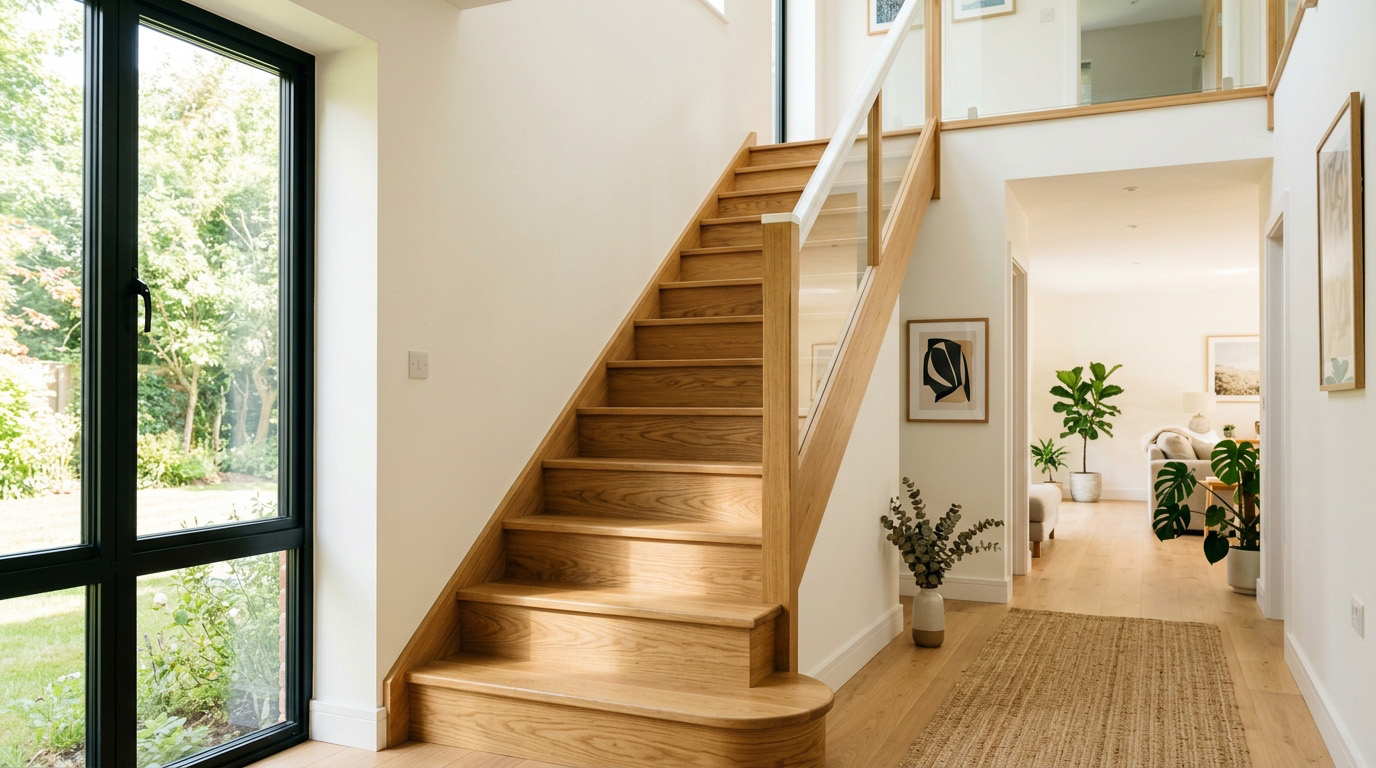
A squeaky staircase is one of the most common complaints homeowners have, especially in older homes. While the occasional creak isn’t always a cause for concern, persistent noises often indicate movement somewhere within the staircase.
Many people assume the treads are simply loose. In reality, the source of the noise is frequently deeper within the structure. Components like the stringers, fasteners, or supporting framing may be shifting slightly every time someone walks up or down the stairs.
Identifying where that movement is coming from is the key to making a lasting repair.
Not Every Squeak Comes from the Stair Tread
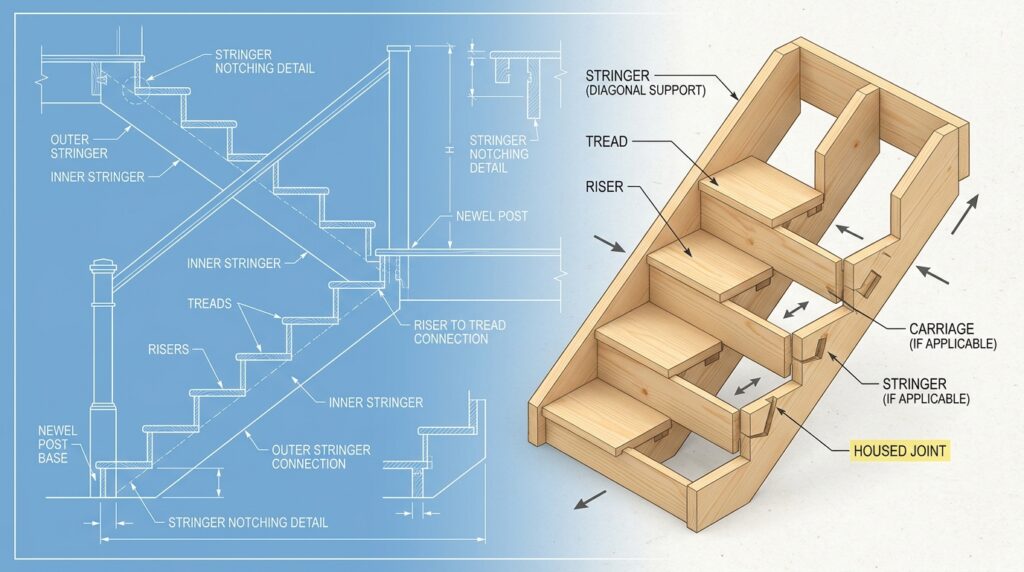
When a staircase is built correctly, the treads, risers, and stringers work together as one solid structure.
Over time, however, years of daily use, seasonal humidity changes, and natural settling can allow these components to move independently.
As they rub against one another under weight, squeaks and creaks begin to develop.
We often inspect staircases where homeowners believe a single tread is causing the problem, only to find that the movement actually originates within the structural support beneath it.
What Are Stair Stringers?
Stringers are the primary structural supports of a staircase. They run beneath or alongside the treads and carry the weight of both the staircase and the people using it.
Every step depends on the stringers remaining rigid and properly supported.
If a stringer begins to flex, settle, or loosen over time, the entire staircase can begin moving slightly with every step, creating the squeaks many homeowners hear.
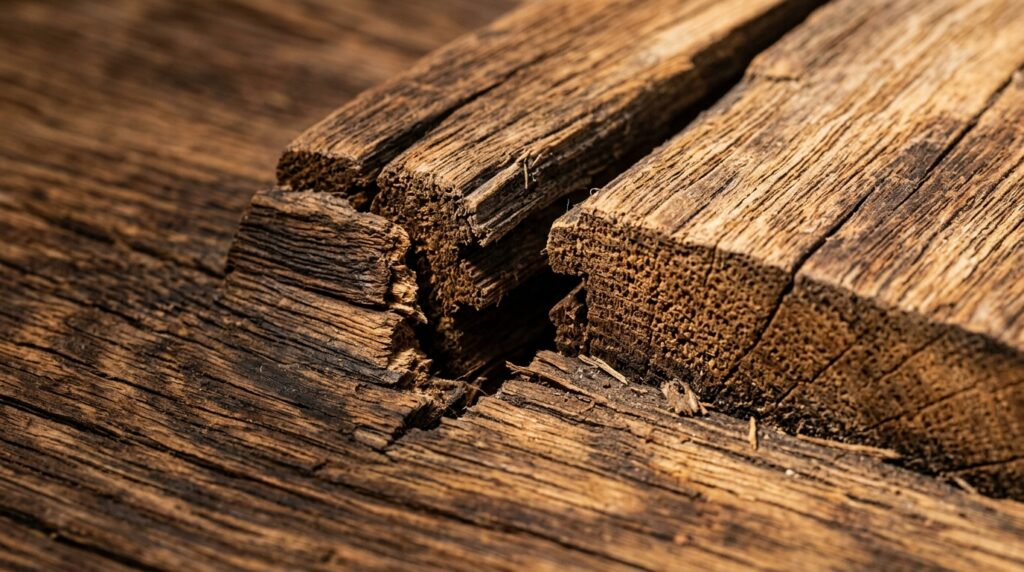
What Causes Stair Stringers to Move?
Several conditions can contribute to structural movement, including:
- Natural expansion and contraction caused by seasonal humidity
- Years of repeated foot traffic
- Loose fasteners or aging construction methods
- Minor settlement of the home
- Moisture damage affecting structural lumber
- Inadequate support beneath the staircase
Most staircases do not become noisy overnight. The movement usually develops gradually over many years.
What Is Structural Sag?
Structural sag occurs when part of the staircase or its supporting framework slowly settles or bends under long-term loads.
Even a small amount of sag can change how weight is distributed throughout the staircase.
Instead of transferring loads evenly, certain components begin carrying more stress than intended.
This additional movement often causes:
- Flexing stair treads
- Separation between treads and risers
- Slight twisting of the stringers
- Fasteners shifting under pressure
- Friction between structural components
Each step creates tiny movements that eventually produce the familiar squeaks and creaks heard throughout the staircase.
Signs the Problem May Be Structural
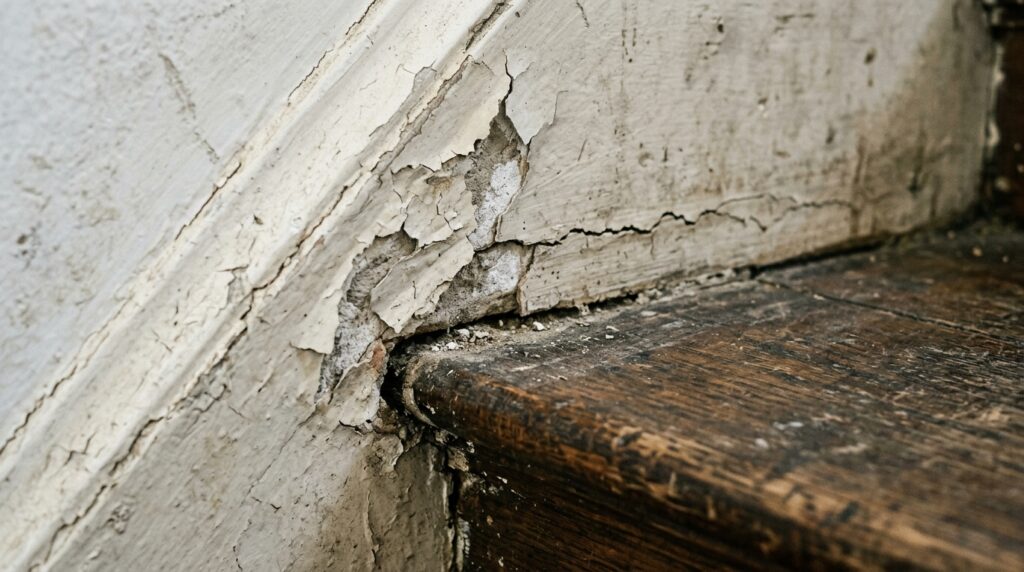
A noisy staircase does not always require major repairs, but some symptoms suggest the issue extends beyond a loose tread.
Common warning signs include:
- The same step squeaks every time it is used
- Stairs feel soft or bouncy underfoot
- Small gaps appear between treads, risers, or trim
- One section of the staircase feels lower than the rest
- Cracks develop in nearby drywall or trim
These signs may indicate structural movement that should be evaluated before it becomes more extensive.
Can a Squeaky Staircase Be Repaired?
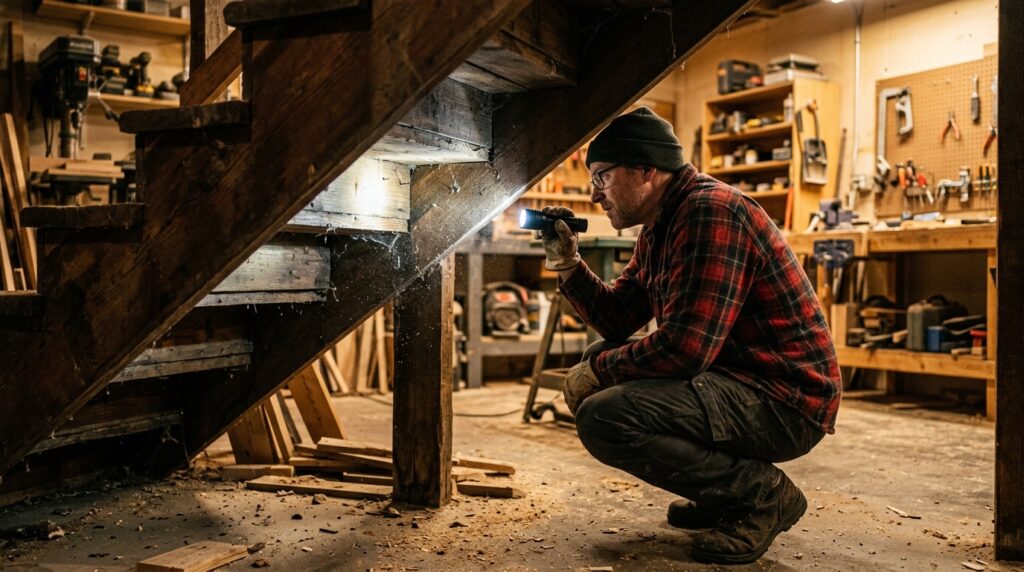
In many cases, yes.
If the movement is caused by loose fasteners, minor seasonal movement, or isolated wear, targeted repairs can often eliminate the noise.
However, if the underlying cause is structural sag, deteriorated stringers, moisture damage, or inadequate support, simply tightening a few screws may only provide temporary relief.
A proper inspection identifies the source of the movement before repairs begin.
Treating the symptom without addressing the cause often results in the squeaks returning later.
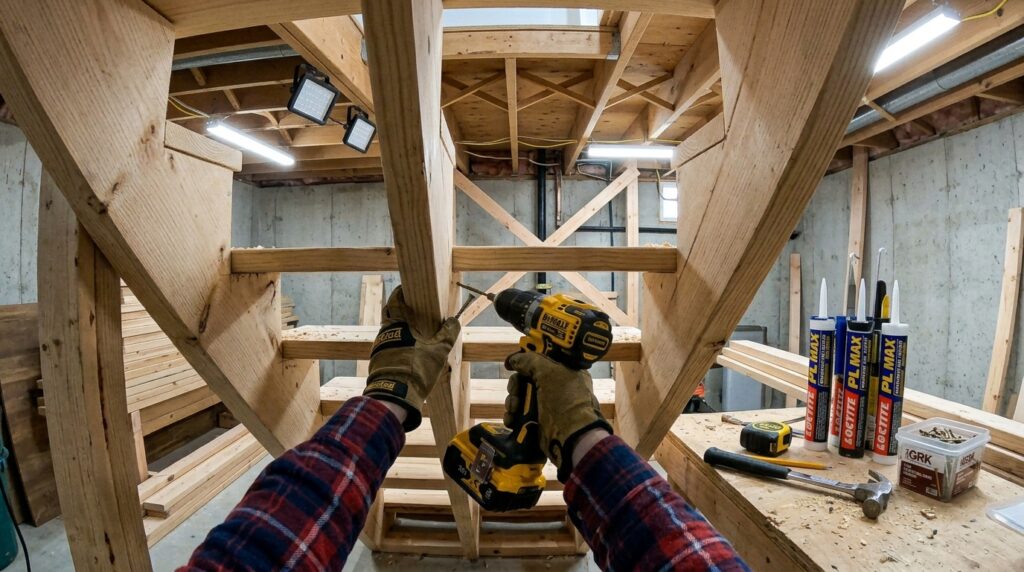
How Professionals Diagnose Stair Noise
A thorough staircase inspection goes beyond the visible surface.
It should include evaluating:
- The condition of the stringers
- Tread and riser connections
- Fastener integrity
- Substructure and framing
- Signs of moisture intrusion
- Evidence of settlement or excessive movement
We often find that the visible squeak is only one symptom of a larger structural issue hidden beneath the finished staircase.
Understanding the entire system allows repairs to address the root cause rather than simply masking the noise.
Preventing Future Stair Problems
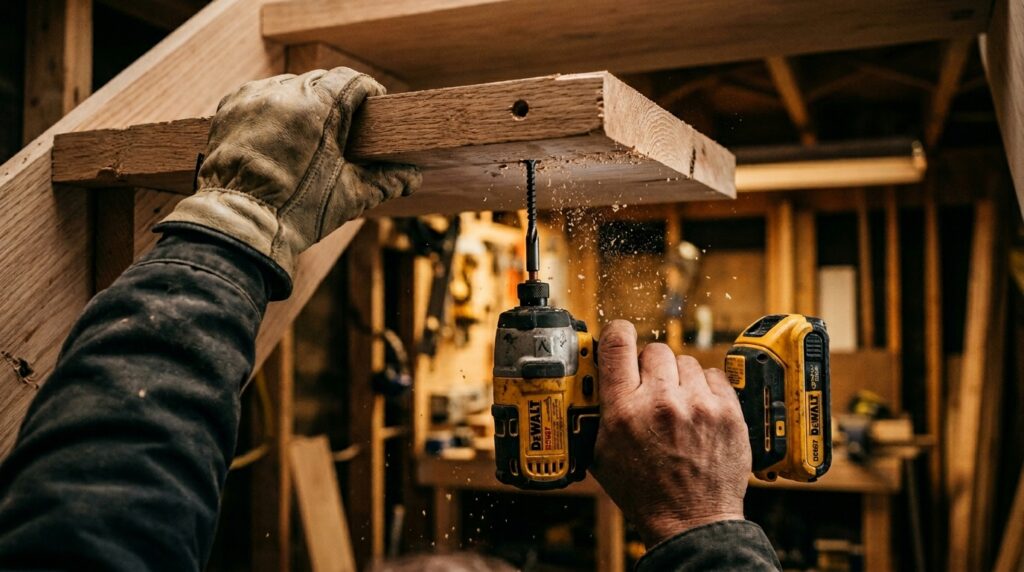
Like any structural component of a home, staircases benefit from regular attention.
Maintaining stable indoor humidity, repairing water leaks promptly, and addressing small areas of movement early can significantly extend the life of the staircase.
Minor structural issues are typically much easier and less expensive to correct before they develop into larger repairs.
Final Thoughts
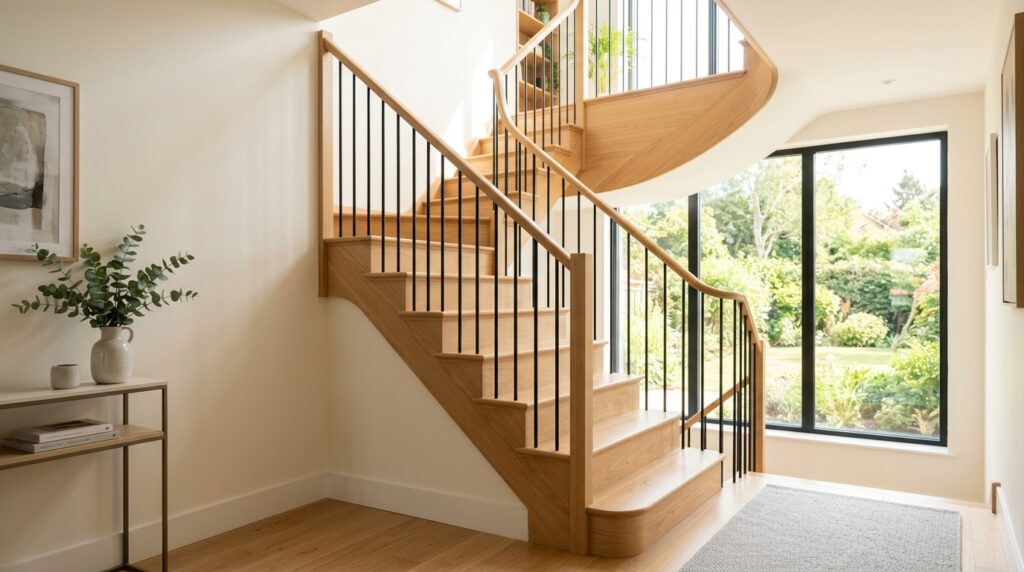
A squeaky staircase is rarely just about noise. It is often the result of movement somewhere within the structure, whether from loose connections, natural settling, or changes affecting the stringers and supporting framework.
Understanding where that movement originates is the first step toward a lasting solution.
A well-built staircase should feel solid, perform quietly, and maintain its structural integrity for decades. When persistent squeaks or movement begin to appear, identifying the real cause early helps protect both the safety and long-term performance of the staircase.
Request a consultation:
renovaflooring.com
Visit our website for more inspiration and design ideas!