
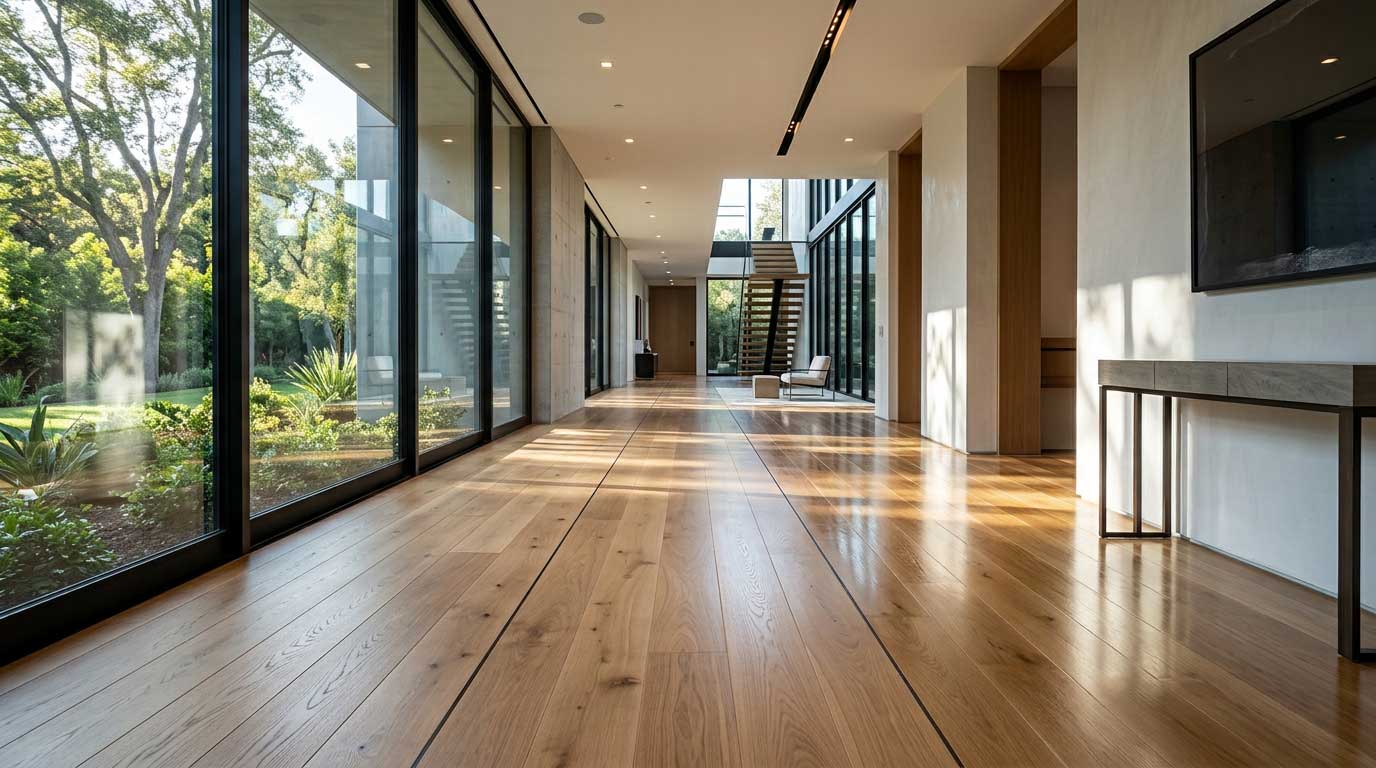
Choosing between matte, satin, and semi-gloss isn’t just about how shiny you want your hardwood floors to look.
Sheen changes how the wood interacts with light, how noticeable scratches and everyday wear become, and ultimately how the floor looks after years of use.
For busy homes, that’s an important distinction.
One misconception, however, is that a shinier finish automatically provides better protection. Sheen and durability are not the same thing. The performance of a hardwood floor depends primarily on the quality of the finish system, proper preparation, and correct application.
So when choosing between matte, satin, and semi-gloss within the same finish system, the decision is primarily about appearance, maintenance expectations, and how visible everyday wear will be.
Matte: Natural Look, Less Visible Wear
Matte finishes reflect very little light, creating a natural and understated appearance.
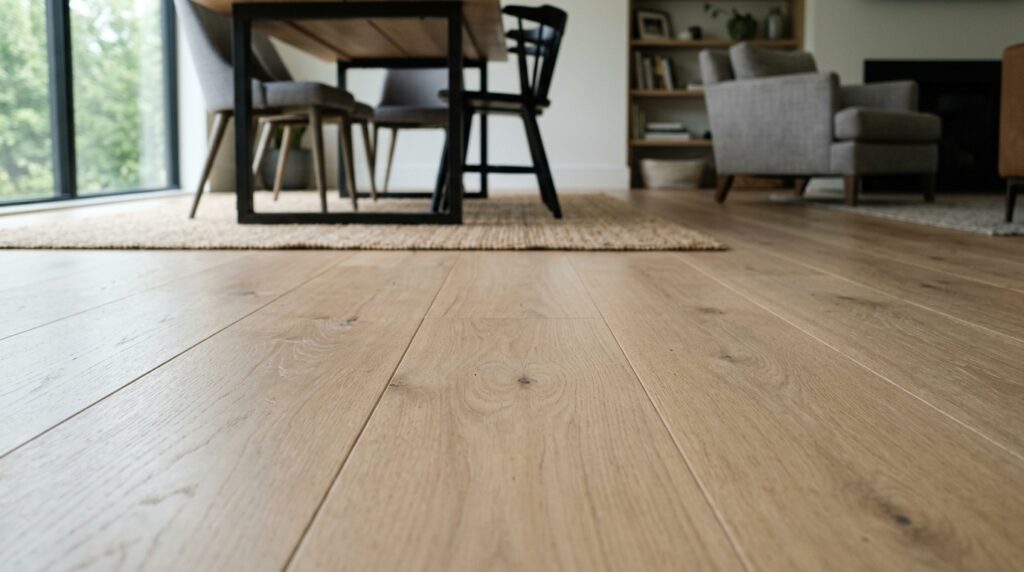
They’re especially popular with White Oak and contemporary interiors because they allow the grain and character of the wood to stand out without creating much surface reflection.
Matte also has a practical advantage in busy homes: minor scratches, dust, scuffs, and surface imperfections tend to be less noticeable.
That doesn’t mean the floor is scratching less. The lower sheen simply makes everyday wear harder to see.
Matte is a strong choice for:
- High-traffic living areas
- Homes with children or pets
- Contemporary and minimalist interiors
- Homeowners who prefer a natural wood appearance
- Spaces where low visual maintenance is important
Satin: The Most Versatile Choice
Satin sits between matte and semi-gloss, providing some light reflection without creating a highly polished surface.
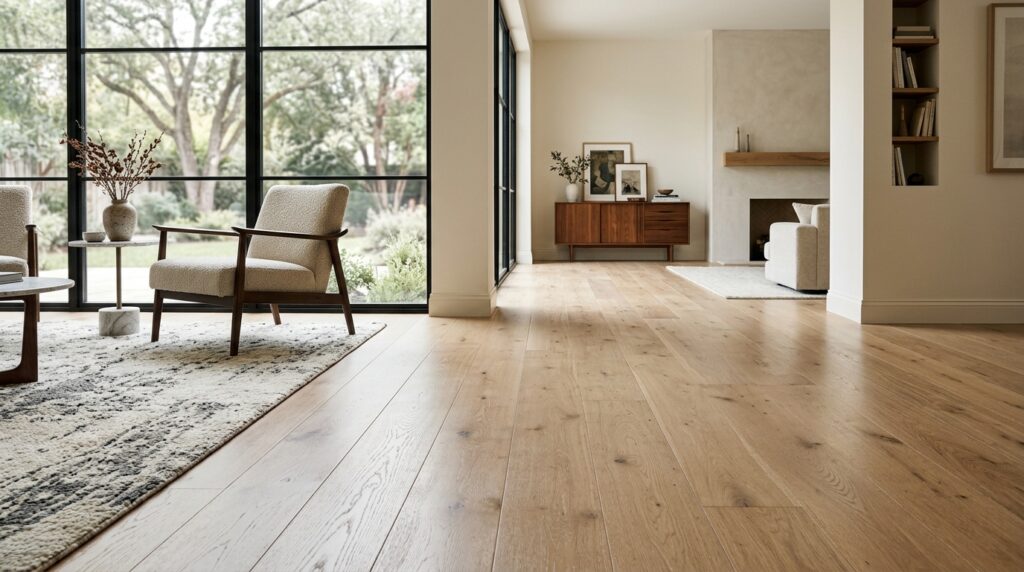
For many homeowners, it’s the easiest balance between a natural appearance and a more traditional finished look.
Satin provides enough sheen to add subtle depth to the wood while still doing a good job of disguising normal wear.
For busy homes, we often recommend matte or satin—not because they’re inherently more durable, but because everyday scratches and imperfections tend to be less noticeable.
Satin works particularly well for:
- Family homes
- Living rooms and kitchens
- Traditional and transitional interiors
- High-traffic areas
- Homeowners who want some sheen without excessive reflection
It’s also a versatile choice when the home combines modern and traditional design elements.
Semi-Gloss: More Reflection and a More Formal Appearance
Semi-gloss reflects significantly more light than matte or satin.
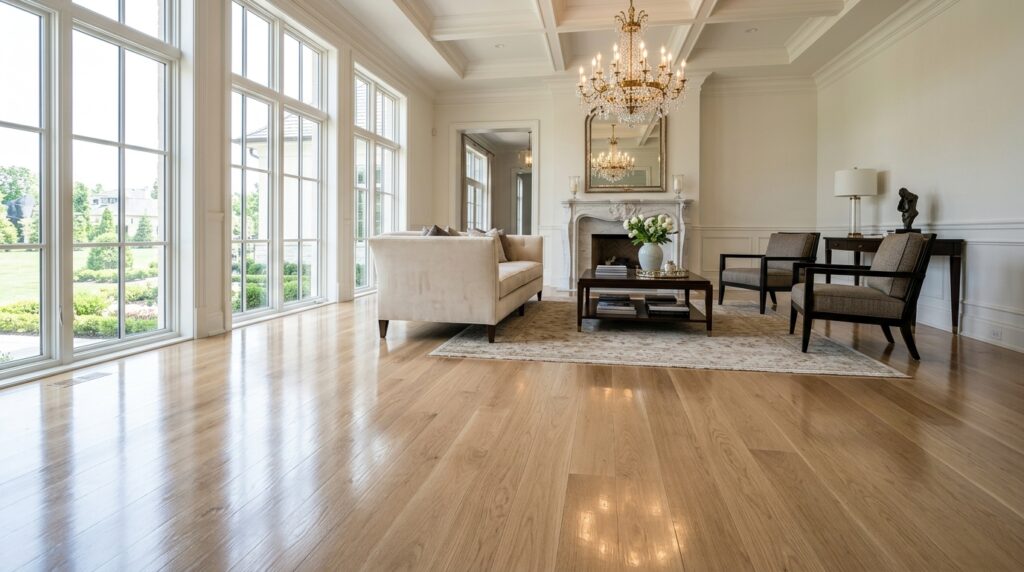
The increased reflection can make hardwood appear more polished and may visually emphasize the richness of the grain and stain.
It’s often a good fit for traditional or formal interiors where a more polished appearance is intentional.
The tradeoff is visibility.
Because the surface reflects more light, semi-gloss tends to make:
- Fine scratches
- Dust
- Scuffs
- Surface irregularities
- Normal wear patterns
more noticeable, particularly when sunlight or strong interior lighting hits the floor at an angle.
Semi-gloss can still perform extremely well in a high-traffic home when a quality finish system is used. It simply requires different expectations regarding how visible everyday wear will be
Does Matte or Satin Last Longer Than Semi-Gloss?
Not necessarily.
This is one of the most important things to understand when selecting a hardwood finish.
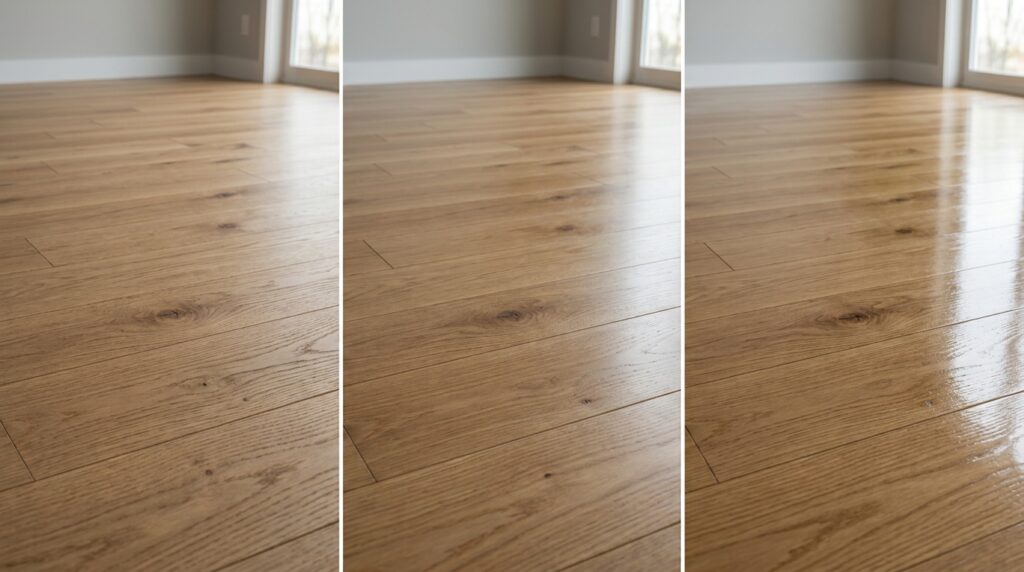
Sheen level by itself does not determine how durable the floor will be.
If matte, satin, and semi-gloss are options within the same professional finish system, the underlying protection can be comparable.
What matters more is:
- The finish product being used
- Proper sanding and surface preparation
- The number and thickness of coats specified by the finish manufacturer
- Correct application
- Cure time
- Maintenance after installation
A premium professional finish in matte can outperform a lower-quality semi-gloss product, and vice versa.
The sheen primarily changes what you see, not necessarily how much protection the wood receives.
How Sheen Changes the Appearance of Hardwood
Put the same stain on three identical White Oak samples and apply matte, satin, and semi-gloss finishes, and they can look surprisingly different.
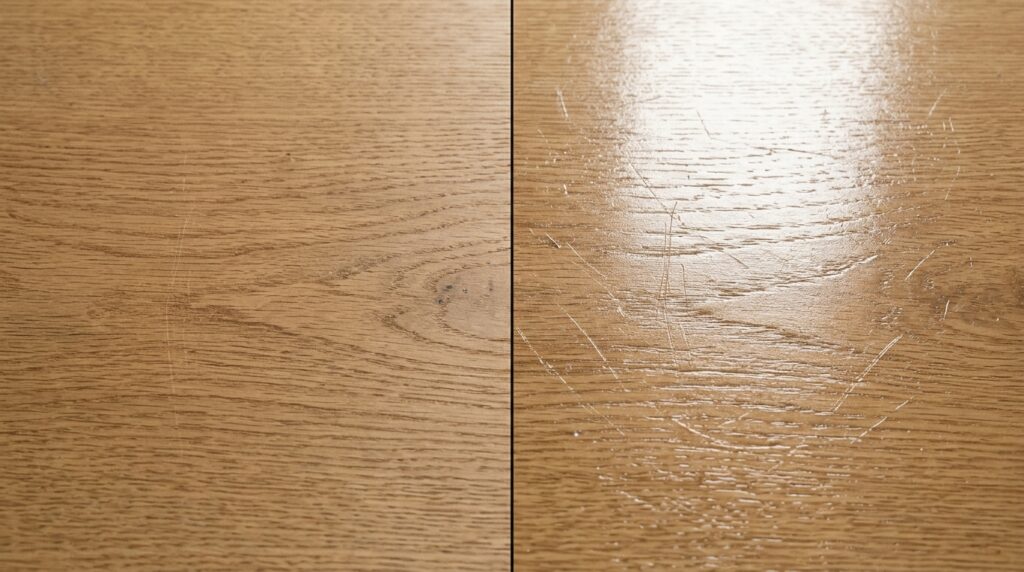
Matte creates the most natural appearance with minimal reflection.
Satin introduces subtle reflection and depth without making the floor appear particularly shiny.
Semi-gloss produces noticeably more reflection and a polished appearance.
The effect also changes depending on the room.
Natural light, artificial lighting, window placement, stain color, plank width, and even the direction of the flooring can influence how much sheen you actually notice.
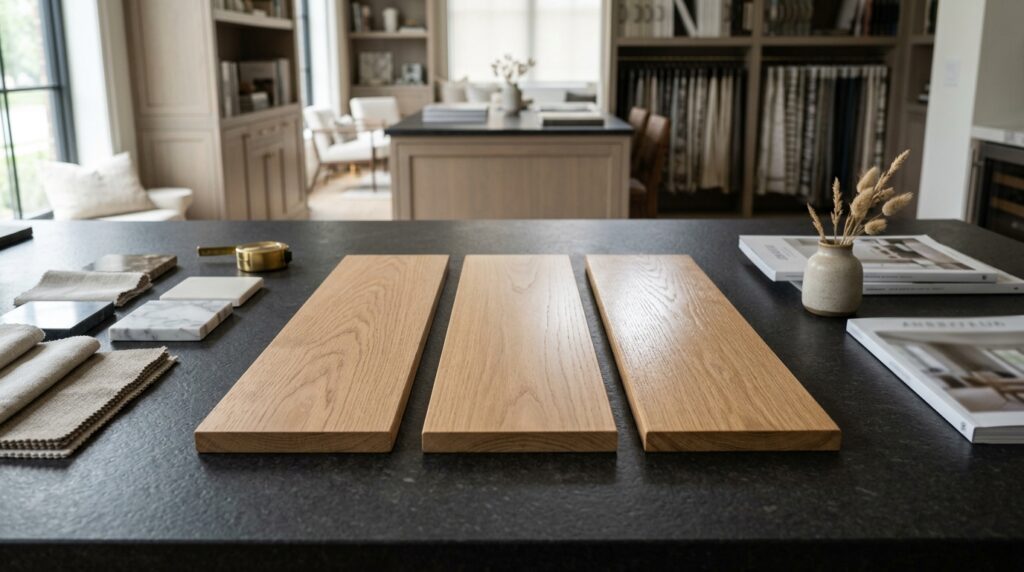
That’s why seeing physical samples in the home’s lighting can be more useful than choosing from photographs alone.
Which Sheen Is Best for a High-Traffic Home?
For most busy residential environments, matte or satin tends to be the most practical choice.
Not because those finishes necessarily resist scratches better, but because they make normal wear less visually obvious.
Matte is ideal when the goal is a natural, modern appearance with minimal reflection.
Satin is a strong middle ground when you want some richness and sheen while still keeping everyday wear relatively subtle.
Semi-gloss makes sense when a more polished, traditional appearance is an important part of the design and the homeowner is comfortable with scratches, dust, and wear being somewhat easier to see.
Don’t Choose Sheen From a Screen
One of the easiest mistakes to make is choosing a finish based entirely on photos.
Lighting can dramatically change how sheen appears.
A satin floor photographed in soft natural light may look almost matte, while the same floor under direct sunlight or strong recessed lighting can appear noticeably shinier.
Whenever possible, evaluate actual finish samples with the wood species and stain you’re considering—and ideally under the lighting conditions of the home.
Final Thoughts
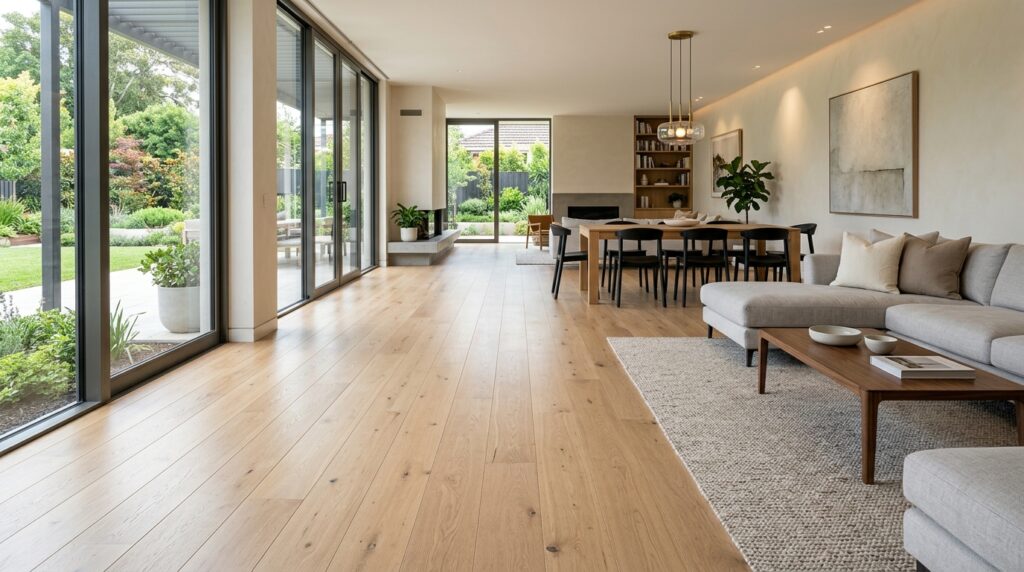
There is no universally best sheen for hardwood flooring.
The right choice depends on the home’s design, lighting, traffic, lifestyle, and how much visible wear the homeowner is comfortable seeing over time.
For many high-traffic homes, matte and satin offer an excellent balance between premium appearance and practical everyday living. Semi-gloss remains a strong option when the design calls for a more polished, traditional finish.
Most importantly, don’t confuse shine with protection.
Request a consultation:
renovaflooring.com
Visit our website for more inspiration and design ideas!