
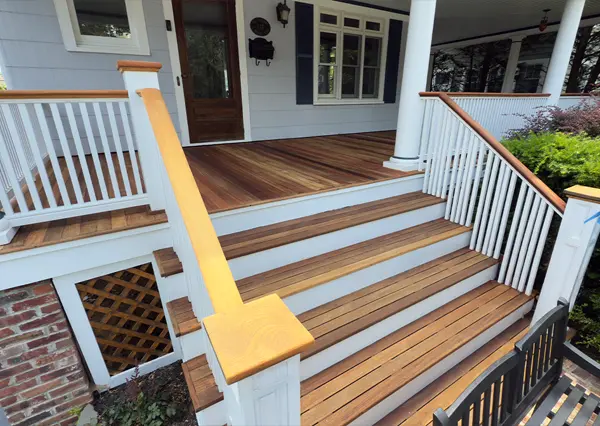
A deck is often perceived as a simple outdoor feature an extension of your living space meant for relaxation, gatherings, and everyday use. However, structurally, a deck is a load-bearing system exposed year-round to moisture, temperature changes, and mechanical stress. Many deck failures do not happen suddenly without cause; they are typically preceded by subtle, often overlooked warning signs.
Below are seven silent indicators that may suggest your deck is at risk of structural failure and requires professional evaluation.
1. Ledger Board Deterioration or Separation
The ledger board connects the deck to the main structure of the house. If this component fails, the entire deck can collapse.
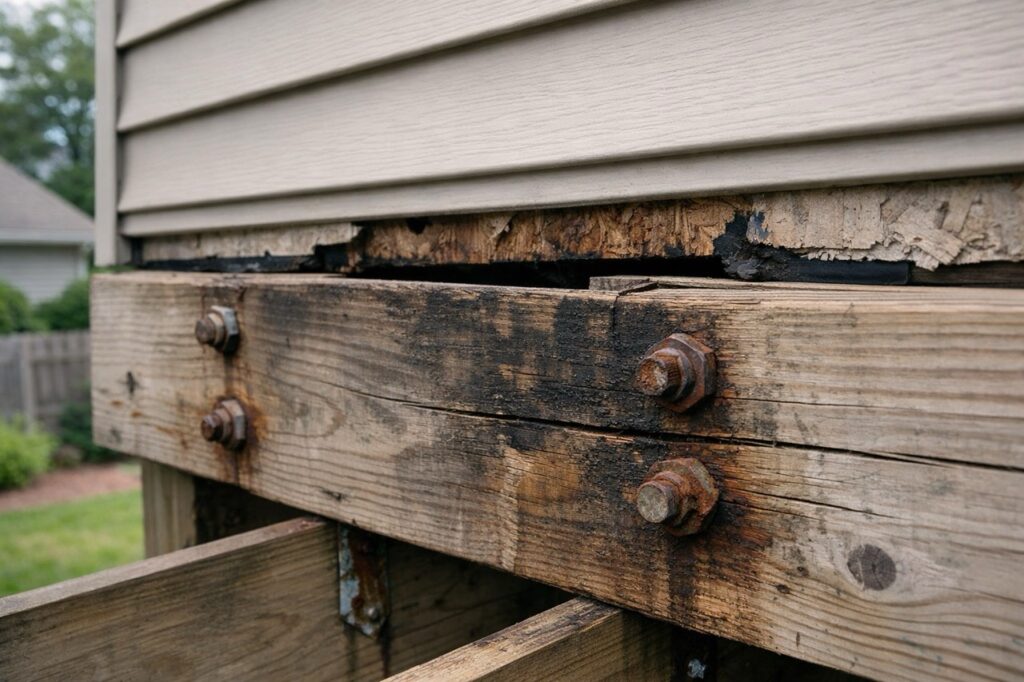
Warning signs include:
- Visible gaps between the deck and the house
- Rusted, missing, or improperly spaced fasteners
- Soft, crumbling, or darkened wood near the ledger area
Ledger board issues are one of the most common causes of catastrophic deck failure, particularly in older decks or those built without proper flashing.
2. Soft or Spongy Deck Boards
Deck boards should feel firm and stable underfoot. A spongy or flexible sensation often indicates internal rot.
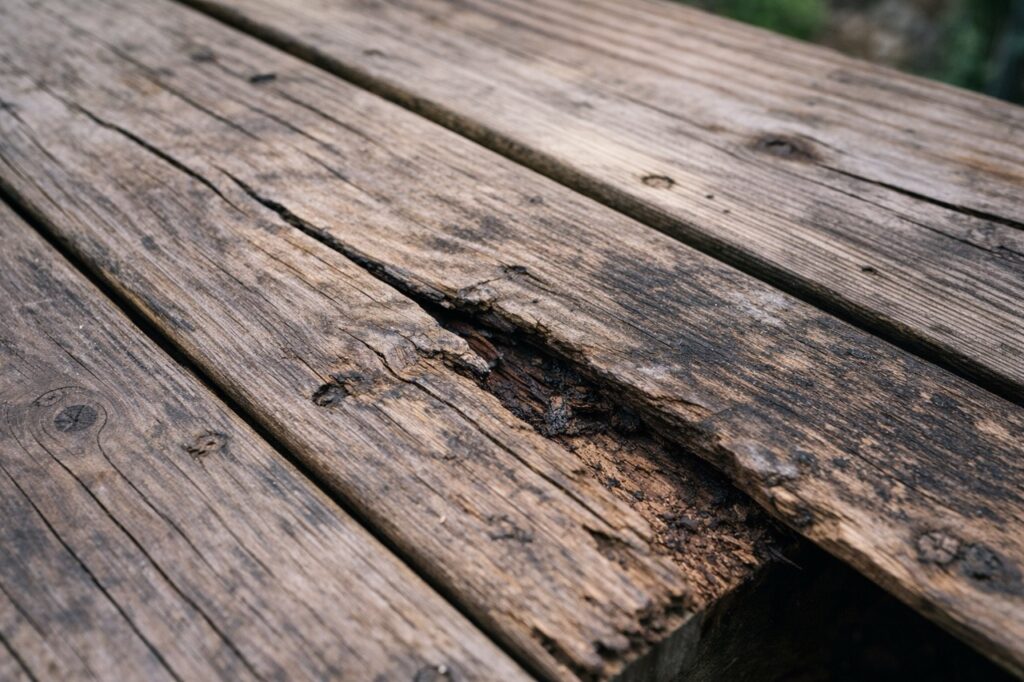
What this usually means:
- Long-term moisture intrusion
- Wood decay beneath the surface
- Loss of load-bearing capacity
Even if the surface looks acceptable, compromised boards can fail suddenly under concentrated weight.
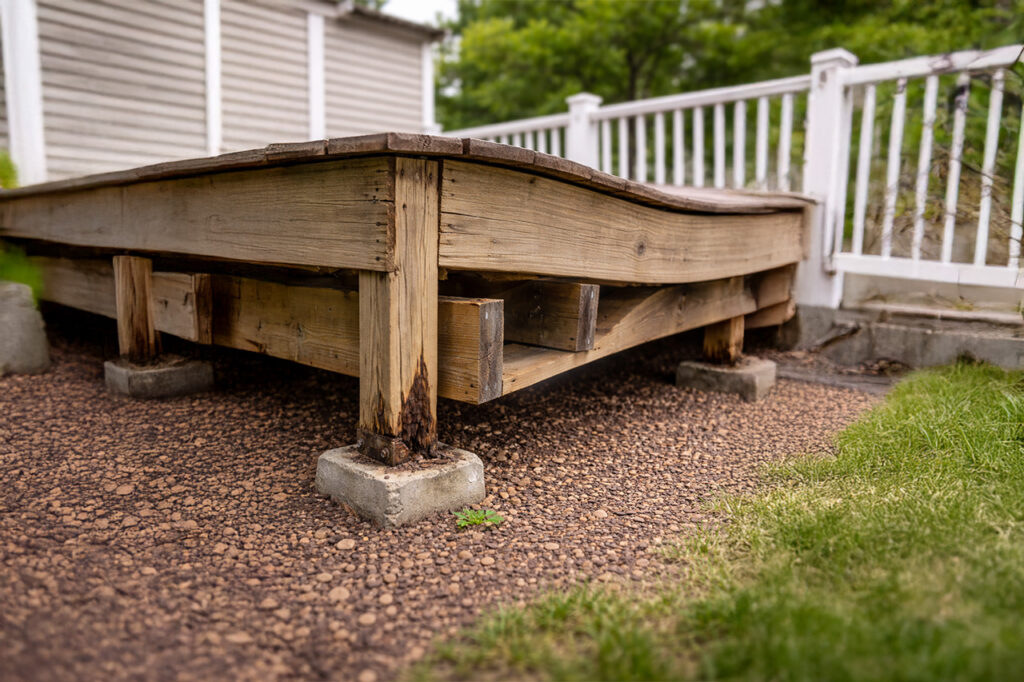
3. Sagging or Uneven Deck Surface
A level deck distributes loads evenly. Sagging or sloping areas suggest structural distress.
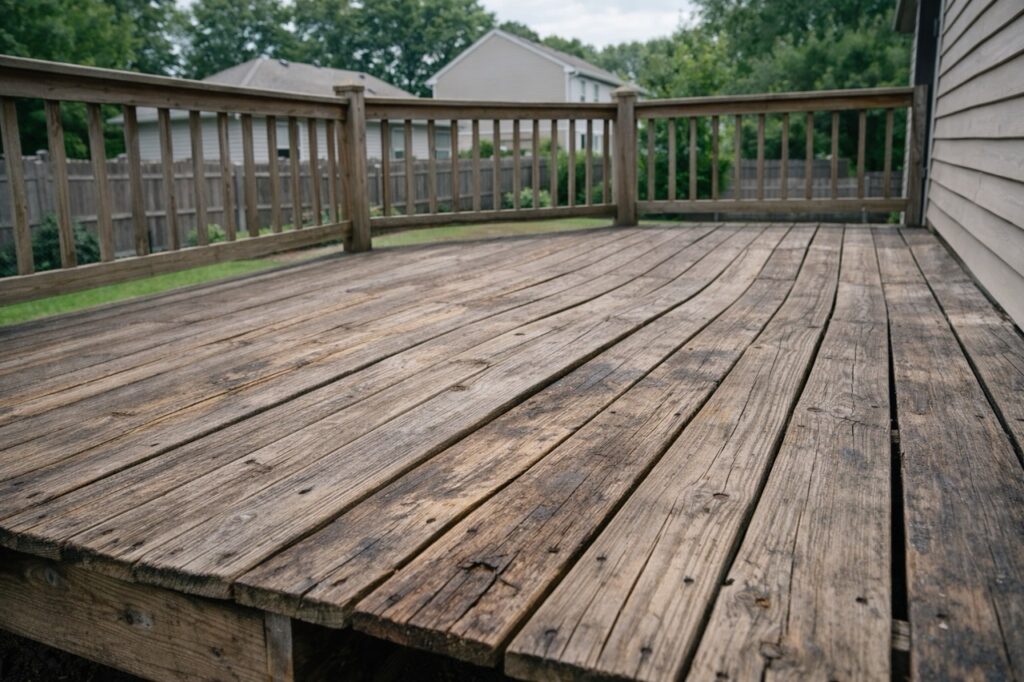
Common underlying causes:
- Overstressed or undersized joists
- Deteriorated beams
- Footings that have shifted or settled
This issue often progresses gradually and may go unnoticed until significant damage has occurred.
4. Corroded or Incompatible Fasteners
Decks rely on metal connectors nails, screws, bolts, joist hangers to maintain structural integrity. Corrosion weakens these critical connections.
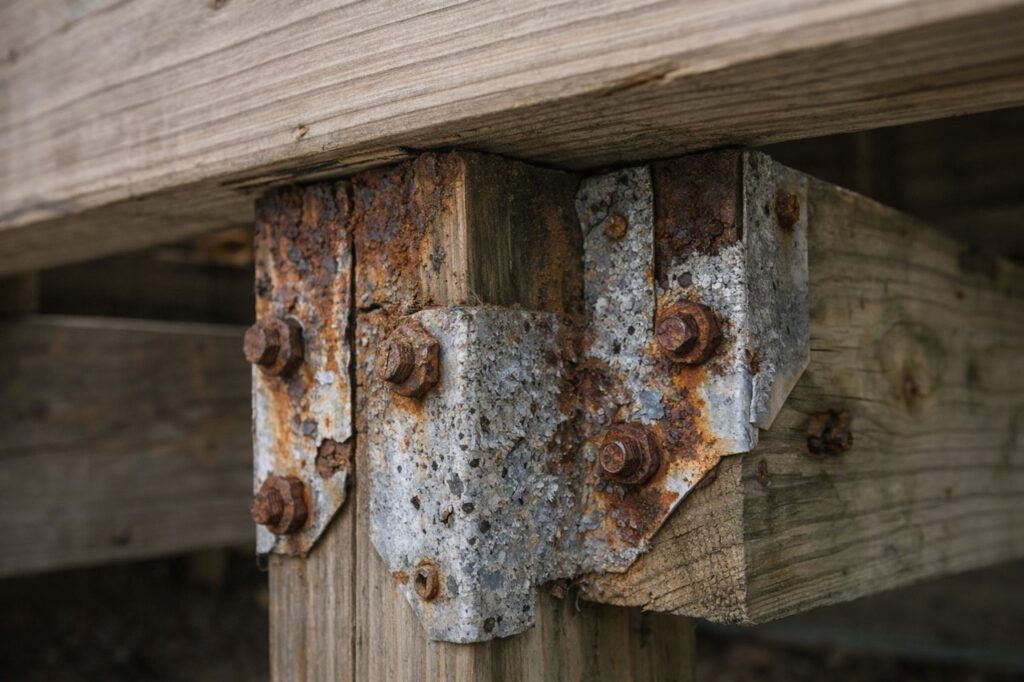
Pay close attention to:
- Rusted nails or screws
- Cracked or bent joist hangers
- Use of non-galvanized fasteners with pressure-treated wood
Fastener failure can occur even when the surrounding wood appears intact.
5. Wobbly or Loose Railings
While railings are often viewed as a safety feature rather than a structural component, loose railings can indicate broader connection problems.
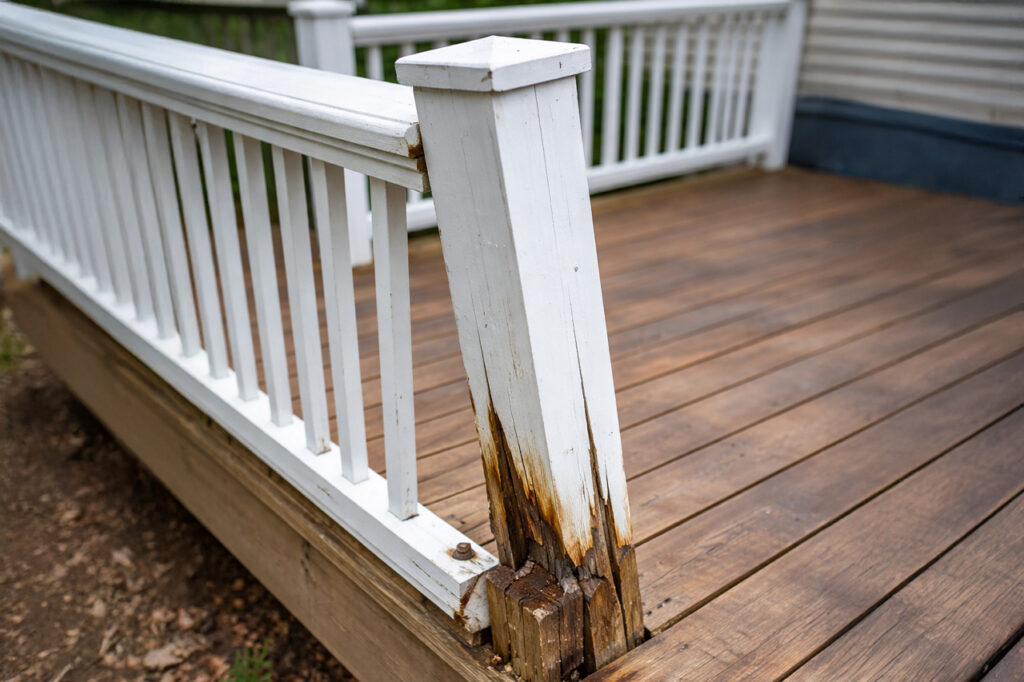
Potential implications:
- Inadequate anchoring to framing members
- Rot at connection points
- General structural movement within the deck system
Loose railings are also a direct fall hazard and should be addressed immediately.
6. Visible Cracks, Splits, or Rot in Support Posts and Beams
Vertical posts and horizontal beams carry the majority of a deck’s load. Damage here is especially serious.
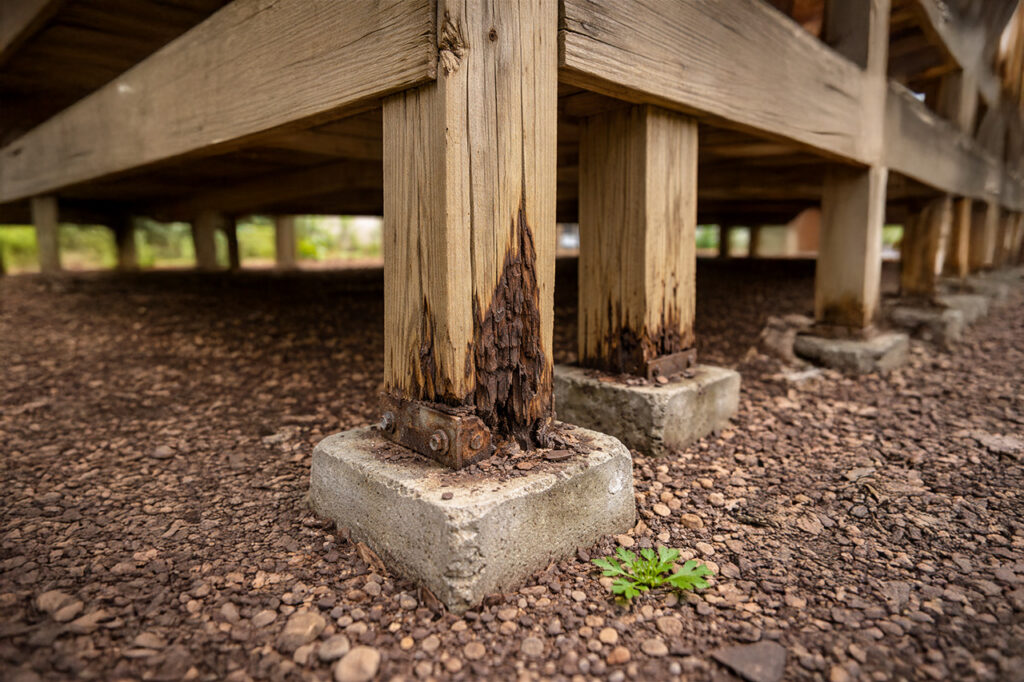
Red flags include:
- Vertical cracks running along posts
- Splitting at beam ends or notches
- Rot at the base of posts where they contact footings or soil
Failure of these components can lead to partial or total deck collapse.
7. Unusual Movement, Creaking, or Bouncing
Some minor movement is normal, but excessive motion or noise is not.
Concerning behaviors include:
- Noticeable bounce when walking
- Creaking or popping sounds under load
- Lateral movement when weight shifts
These symptoms often indicate weakened connections or insufficient structural support.
Liability and Insurance Considerations in the U.S.
In the United States, deck failures can carry significant liability and insurance implications. If an injury occurs and an investigation determines that wood rot, structural deficiencies, or known warning signs were neglected, homeowners may face denied or reduced insurance claims, as well as personal liability for injuries or property damage. Regular maintenance and documented professional evaluations can be critical in protecting both occupant safety and insurance coverage.
Why Early Detection Matters
Deck failures can result in severe injuries, property damage, and liability exposure. Because many warning signs are subtle, homeowners often underestimate the risk until a serious incident occurs.
A professional deck inspection can identify hidden deficiencies, assess load capacity, and determine whether repairs or reinforcement are necessary. Addressing issues early is significantly more cost-effective and far safer than responding after a failure.
Final Thoughts
If your deck is more than 10–15 years old, has been exposed to harsh weather, or shows any of the signs described above, it should be evaluated by a qualified professional. Structural integrity is not something to assume it must be verified.
A safe deck is not just about appearance; it is about sound engineering, proper materials, and ongoing maintenance. When in doubt, schedule a professional inspection to ensure your deck is safe, compliant, and built to last.
Visit our website for more inspiration and design ideas!