

Hardwood stairs are designed to withstand decades of daily use, but even the most durable treads will eventually show signs of wear. Whether the damage comes from moving furniture, pet claws, dropped tools, or years of foot traffic, one of the most common questions homeowners ask is:
Can this scratch be repaired, or does the tread need to be replaced?
The answer depends on the depth of the damage, the type of hardwood, and whether the scratch has compromised the structural integrity of the tread. The key is determining whether the damage is cosmetic or structural. Knowing the difference can help you avoid unnecessary replacement costs while maintaining both the safety and appearance of your staircase.
At Renova Flooring, we often inspect staircases where homeowners assume the tread needs to be replaced, only to find that the damage is limited to the finish and can be repaired successfully. A careful evaluation helps identify the most practical and cost-effective solution without replacing hardwood that still has years of life left.
Not All Scratches Are the Same
A scratch that looks severe at first glance may only affect the protective finish, while a smaller-looking gouge may extend deep into the wood fibers.
Professional flooring contractors generally classify stair damage into three categories.
1. Surface Scratches (Finish Only)
These scratches affect only the protective coating, such as polyurethane, water-based finishes, or oil-based finishes.
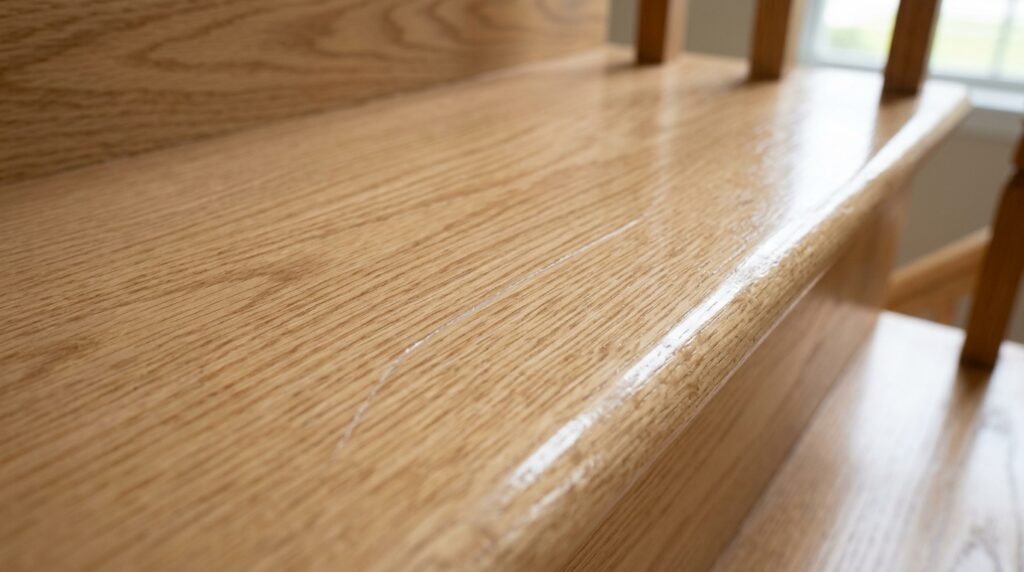
Typical characteristics include:
- Visible mainly under certain lighting angles
- Smooth to the touch
- The wood color remains unchanged
- No splintering or indentation
These scratches can usually be repaired with:
- Buffing
- Spot refinishing
- Applying a fresh protective finish
In most cases, tread replacement is unnecessary.
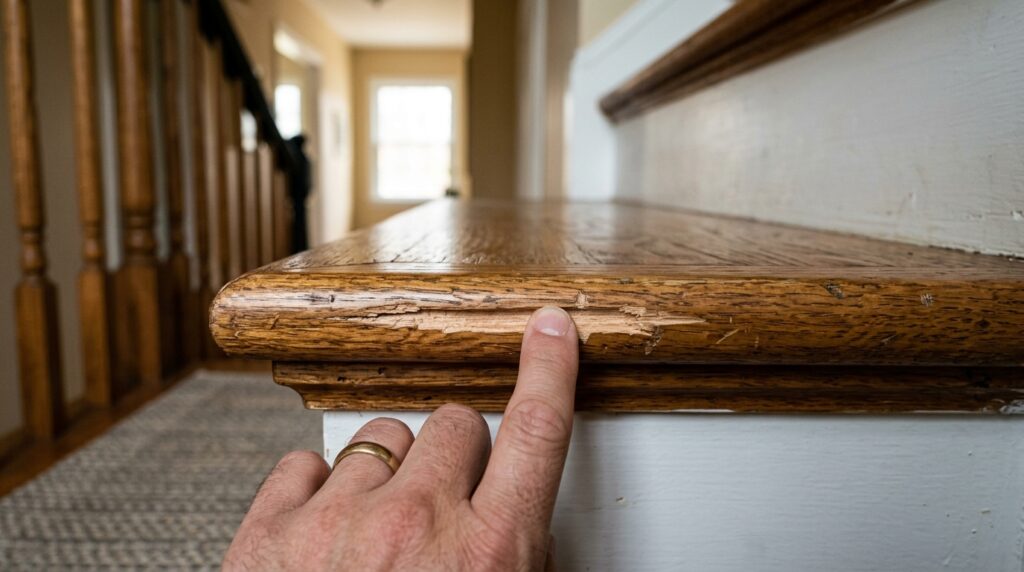
2. Medium-Depth Scratches
These scratches extend beyond the finish and into the hardwood itself.
Signs include:
- The scratch catches your fingernail.
- Bare wood is visible.
- The damaged area appears lighter than the surrounding wood.
- Dirt begins collecting inside the groove.
Depending on the severity, repairs may include:
- Color-matched wood filler
- Professional putty repairs
- Spot sanding
- Partial refinishing
If the damage is localized, the tread can often be restored without replacing the entire piece.
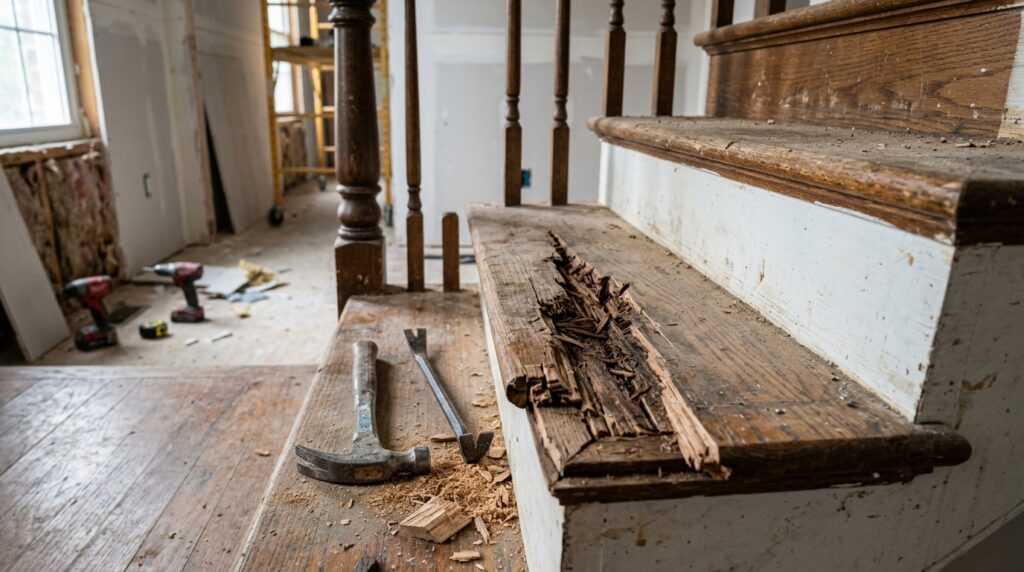
3. Deep Gouges or Structural Damage
This is where replacement becomes a more likely solution.
Warning signs include:
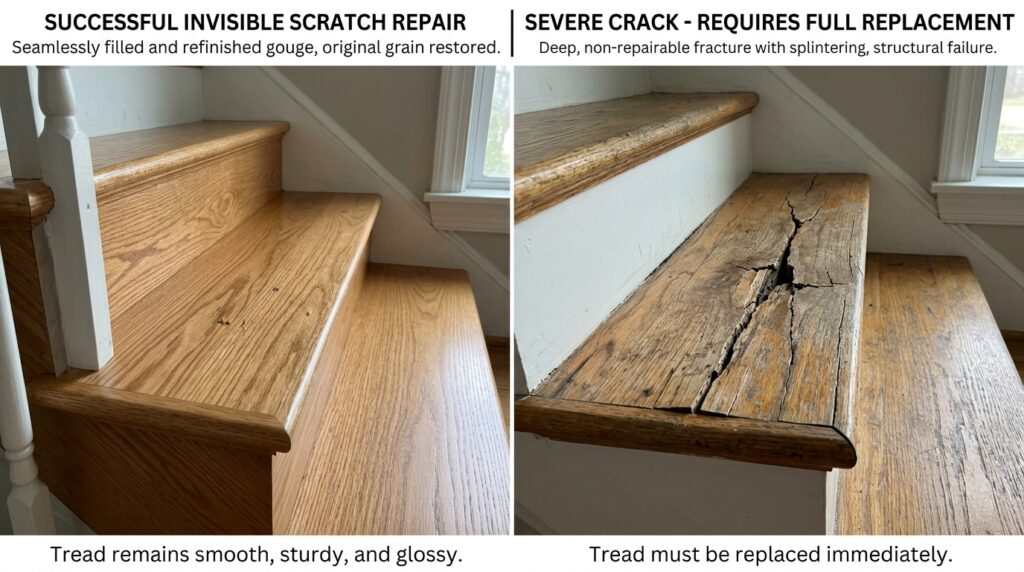
- Cracks extending across the tread
- Splintered wood fibers
- Loose sections
- Missing pieces along the edge
- Damage deeper than approximately 1/8 inch
- Noticeable movement or flexing when stepped on
At this stage, cosmetic repairs alone may no longer restore the tread’s structural integrity.
When a Scratch Can Be Repaired
Many scratches that homeowners believe are permanent can actually be repaired successfully.
Repair is typically recommended when:
- The tread remains structurally sound.
- The damage is confined to a limited area.
- There is no movement or squeaking.
- The wood fibers remain intact.
- Moisture has not penetrated the damaged area.
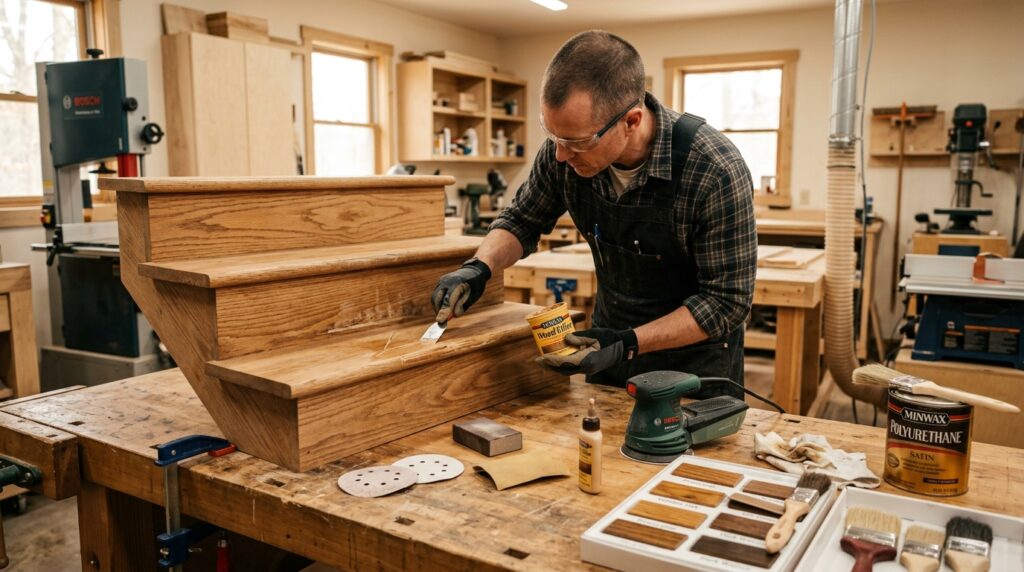
Professional repairs may involve:
- Precision spot sanding
- Filling the damaged area
- Custom stain matching
- Applying multiple finish coats
- Blending the repair seamlessly with surrounding treads
When performed correctly, the repaired area is often nearly impossible to notice.
When Replacement Is the Better Option
Some damage extends beyond aesthetics.
The decision isn’t based on the size of the scratch alone, but on whether the damage affects the tread’s long-term strength, stability, or safety.
Replacement may be recommended when the tread has suffered one or more of the following issues.
The Tread Has Cracked
A crack reduces the tread’s ability to distribute weight properly.
Even if filled, the crack may continue expanding as the wood naturally moves with seasonal humidity changes.
The Scratch Has Become a Deep Gouge
Heavy impacts can remove a significant amount of wood.
Deep gouges may expose end grain, weaken the tread, or create stress points that make future cracking more likely.
Water Damage Is Present
If moisture enters through a damaged area, it can cause:
- Swelling
- Softened wood fibers
- Mold growth
- Finish failure
In these situations, replacing the damaged tread is often the most reliable long-term solution.
The Tread Has Been Repaired Multiple Times
If a tread has already been:
- Filled repeatedly
- Sanded several times
- Refinished multiple times
there may not be enough material remaining to perform another lasting repair.
Replacement often provides a cleaner appearance and a more durable result.
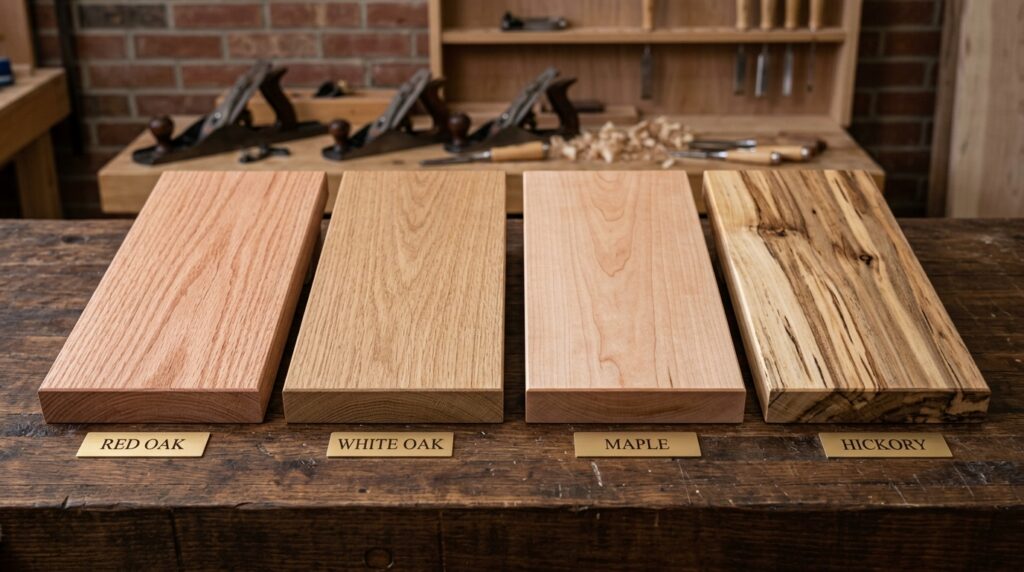
Hardwood Species Also Matter
Different hardwood species respond differently to scratches and repairs.
Red Oak
- Easier to sand and repair
- Grain naturally disguises minor imperfections
- Accepts stain blending exceptionally well
White Oak
- Dense and highly durable
- Requires careful stain matching
- Offers outstanding long-term performance
Maple
- Extremely hard surface
- Scratch repairs tend to be more noticeable
- Color matching requires greater precision
Hickory
Natural color variation can help conceal repairs
One of the hardest domestic hardwoods
More difficult to sand evenly
The Location of the Scratch Matters
Not every part of the stair tread experiences the same amount of stress.
Damage deserves closer inspection when located:
- Along the front nosing
- Near stair edges
- Around fasteners
- Close to joints
- Beside the stringers
These areas experience the highest levels of impact during everyday use.
Can You Repair It Yourself?
Minor surface scratches are often suitable for DIY repair using:
- Hardwood touch-up markers
- Wax repair sticks
- Scratch repair kits
- Hardwood floor polish
However, deeper scratches generally require professional equipment and experience.
Improper sanding can:
- Create uneven surfaces
- Remove stain inconsistently
- Damage surrounding finish
- Leave highly visible repair marks
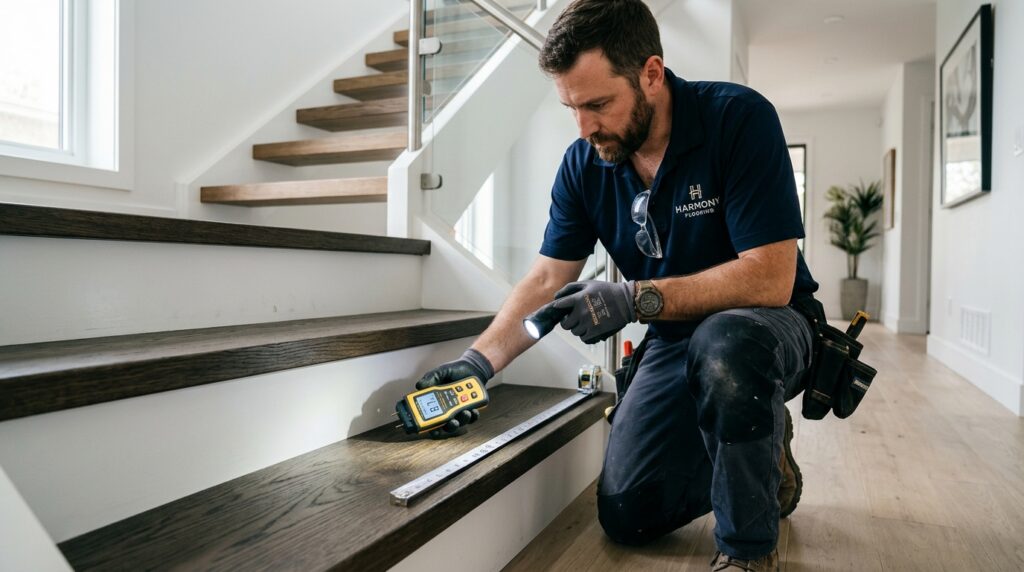
How Professionals Evaluate Stair Damage

Before recommending repair or replacement, flooring specialists typically assess:
- Scratch depth
- Hardwood species
- Finish condition
- Structural integrity
- Moisture content
- Existing wear patterns
- Age of the staircase
The objective is to recommend the most durable and cost-effective solution while preserving as much of the original hardwood as possible.
Preventing Future Stair Scratches
Once a tread has been repaired or replaced, proper maintenance can help extend its lifespan.
Simple preventive measures include:
- Keeping pet nails trimmed
- Using furniture sliders when moving heavy objects
- Regularly removing dirt and grit
- Avoiding cleats or high heels on hardwood stairs
- Maintaining indoor humidity between 35% and 55%
- Reapplying protective finishes before excessive wear develops
Routine maintenance significantly extends the life and beauty of hardwood stair treads.
Final Thoughts
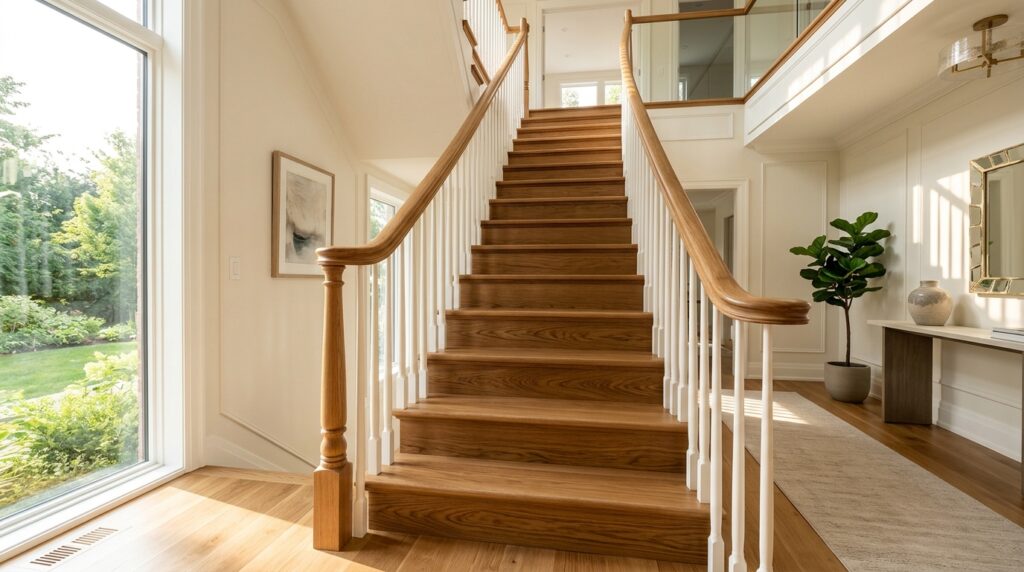
A scratch on your hardwood stair tread doesn’t automatically mean replacement is necessary. In many cases, surface scratches and moderate damage can be repaired successfully, restoring the appearance of the staircase while preserving the original wood.
However, when damage extends into deep gouges, structural cracks, or moisture-related deterioration, replacing the tread is often the safest and most durable solution.
A professional inspection can determine whether the tread can be repaired or if replacement is the better long-term investment, helping preserve both the safety and appearance of your staircase. Addressing damage early not only extends the life of your hardwood stairs but also helps prevent more costly repairs in the future.
Request a consultation:
renovaflooring.com
Visit our website for more inspiration and design ideas!