

White oak flooring is widely recognized for its durability, clean grain, and timeless appearance. In high-end residential projects, it is often selected for its ability to create long, seamless visual flow throughout a space.
But achieving that level of finish requires precision during installation.
One of the most common issues installers face with white oak flooring is row drift, where flooring rows gradually move out of alignment during installation, creating visible gaps, inconsistent spacing, and irregular visual lines.
While these issues may begin subtly, they become increasingly noticeable as the floor progresses, especially on long plank installations and open-concept layouts.
This is where professional installation techniques, and specialized tools like a floor powerjack, become critical.
Why White Oak Flooring Can Develop Crooked Rows
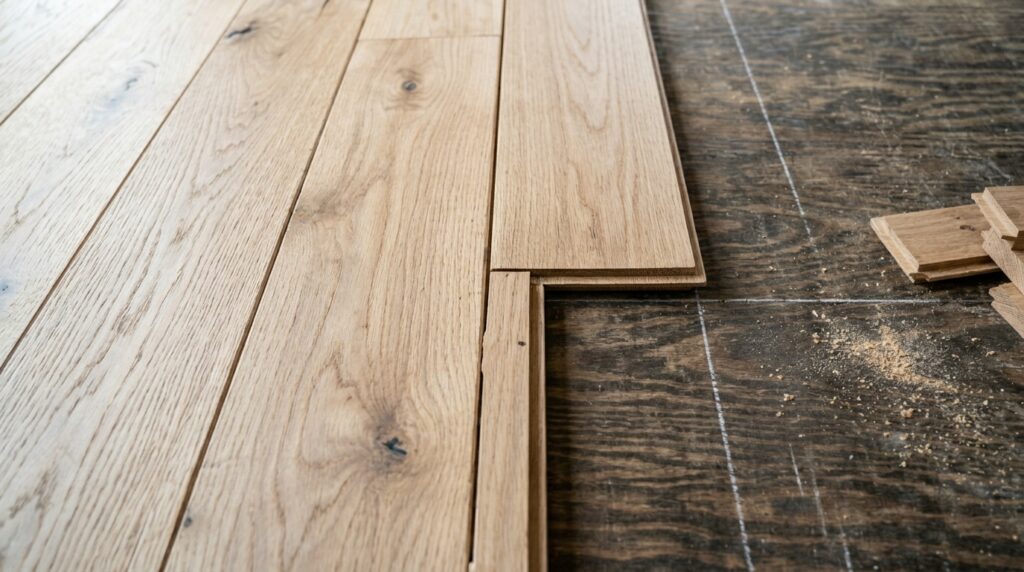
Although white oak is considered one of the more stable hardwood species, natural wood still responds to environmental conditions and installation variables.
Several factors can contribute to rows shifting out of alignment during installation:
- Minor dimensional variation between planks
- Changes in humidity and moisture levels
- Tension created while locking or fastening boards
- Subfloor inconsistencies or slight elevation changes
- Long plank layouts that amplify small deviations over distance
We often see installations where the first few rows appear perfectly aligned, but small movement compounds gradually until visible spacing issues begin appearing several rows later.
On premium floors, these inconsistencies become difficult to ignore once the project is complete.
Why Small Gaps Become a Major Visual Problem
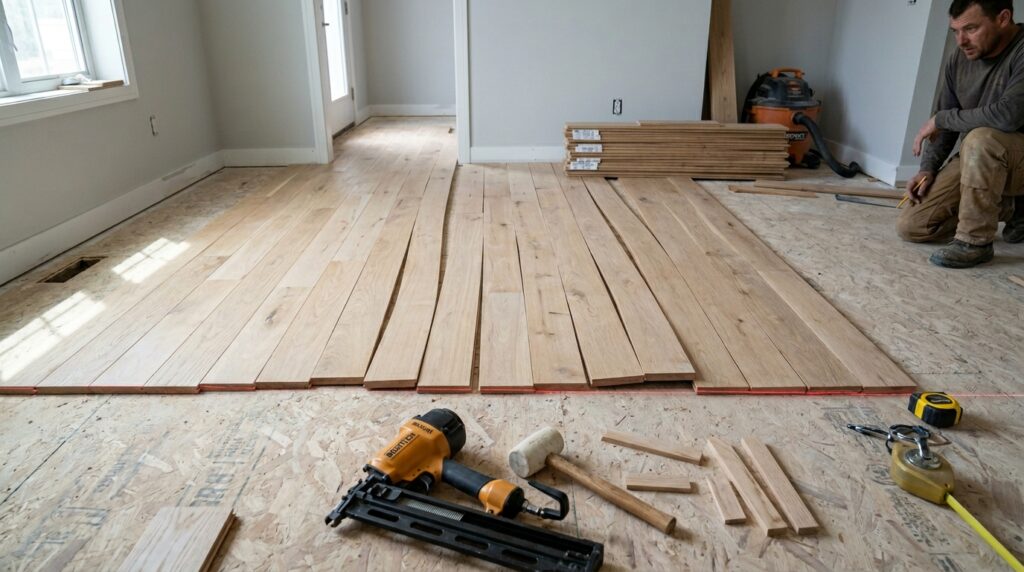
At first glance, minor spacing issues may seem insignificant. In reality, flooring alignment problems rarely remain isolated.
As installation progresses, crooked rows can create:
- Uneven spacing between boards
- Irregular end-joint patterns
- Distorted plank lines across open spaces
- Inconsistent transitions between rooms
- A loss of the clean, continuous appearance clients expect
White oak floors are especially unforgiving in this regard because their refined and uniform appearance naturally highlights inconsistencies.
In large residential spaces with natural lighting, even slight alignment issues become highly visible.
What Is a Floor Powerjack?
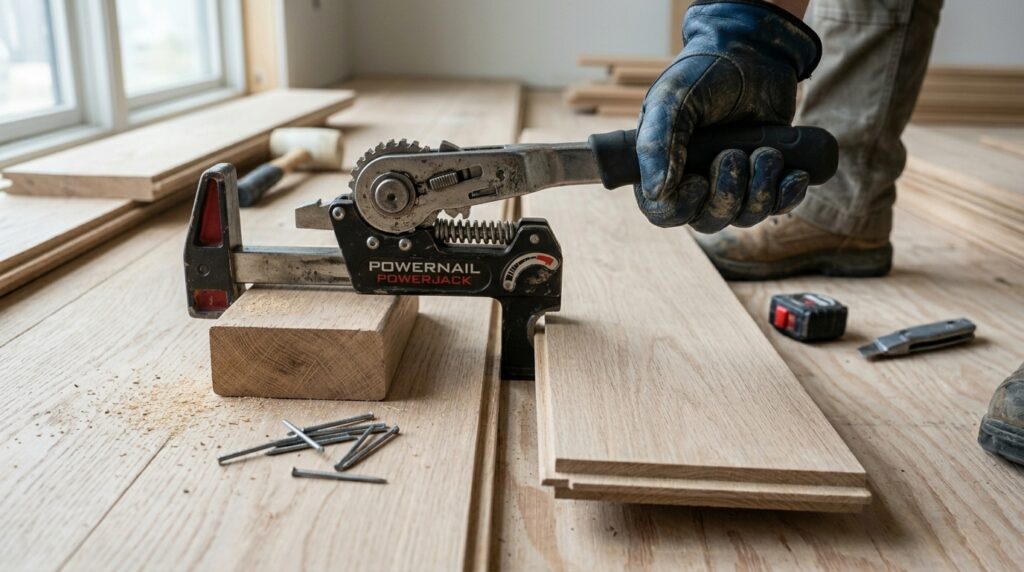
A floor powerjack is a specialized flooring installation tool designed to apply controlled lateral pressure across multiple flooring rows.
Rather than forcing boards manually or relying on improvised methods, installers use a powerjack to make gradual, precise adjustments during installation.
Its primary functions include:
- Pulling flooring rows tightly together
- Correcting alignment drift
- Closing visible gaps between boards
- Maintaining consistent spacing across long runs
- Preserving straight, clean layout lines
The key advantage is controlled force.
Instead of creating unnecessary stress on the material, the tool allows installers to make accurate corrections without damaging the flooring or compromising the installation.
How Professional Installers Use a Powerjack to Correct Crooked Rows

Once row drift begins, correcting it early is critical.
Professional installers use a powerjack to apply steady lateral pressure that gradually brings flooring rows back into alignment before the issue spreads further across the installation.
This process helps:
- Realign long flooring runs
- Eliminate developing spacing inconsistencies
- Reduce the need for board removal
- Preserve project timelines
- Maintain the visual quality of the finished floor
In many cases, early correction prevents installers from having to remove and reinstall large sections of completed flooring later in the project.
Why Tools Alone Do Not Guarantee a Quality Installation
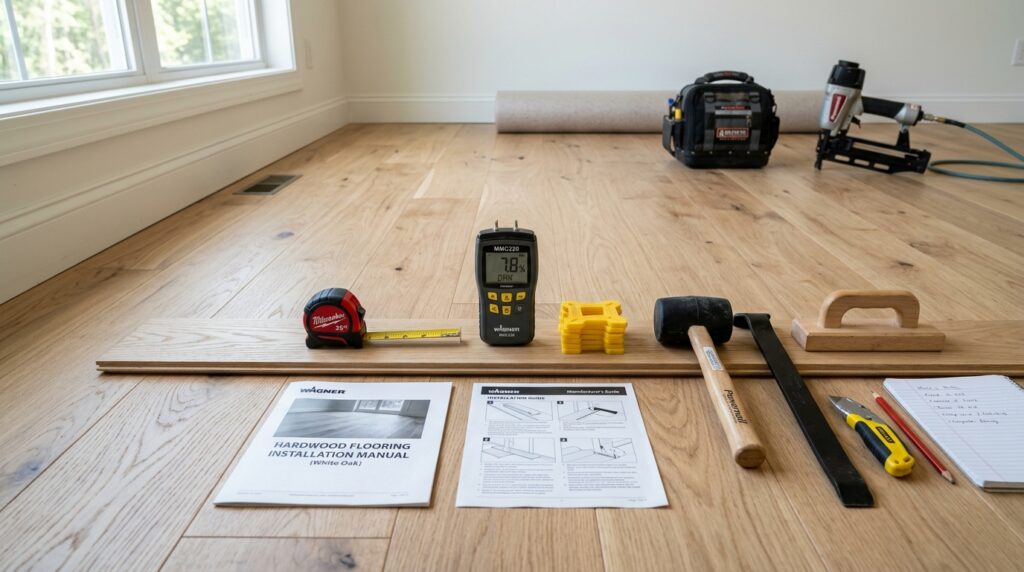
A powerjack is highly effective, but it does not replace proper installation fundamentals.
Long-term flooring performance still depends on:
- Correct material acclimation
- Moisture testing before installation
- Proper subfloor flatness and stability
- Accurate expansion spacing
- Adherence to manufacturer specifications
We often see situations where installers attempt to force alignment corrections without addressing the root cause of the movement. In those cases, gaps and shifting frequently return over time.
Professional installation requires understanding both the symptom and the source of the issue.
When Flooring Gaps Indicate a Larger Problem
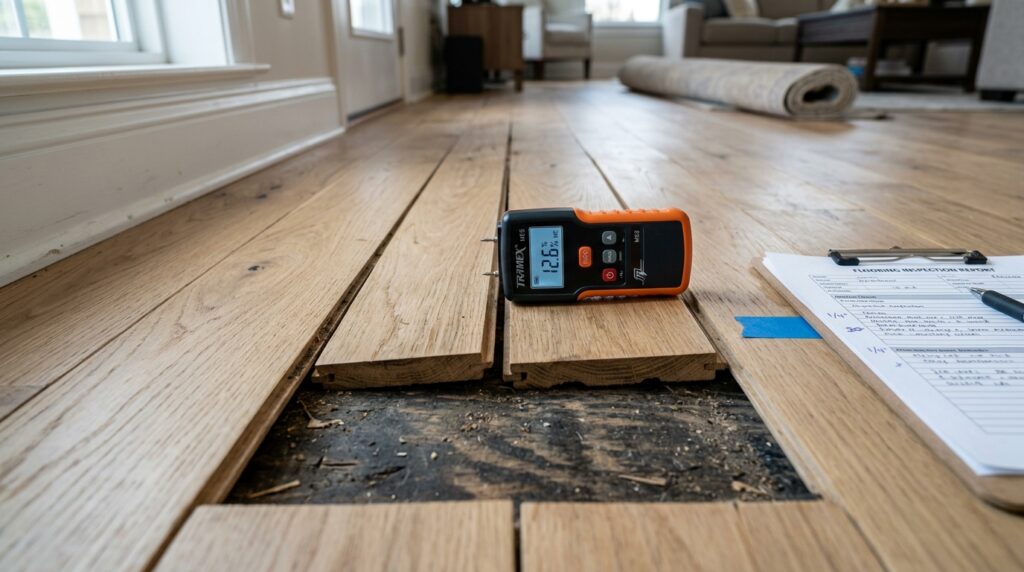
Not every spacing issue can be corrected with installation tools alone.
Persistent or recurring gaps may indicate:
- Excess moisture in the subfloor
- Improper acclimation prior to installation
- Structural movement beneath the flooring system
- Material defects
- Earlier installation errors affecting overall layout integrity
Recognizing when an issue is cosmetic versus structural is one of the most important parts of professional flooring installation.
Correct diagnosis prevents short-term fixes from becoming long-term failures.
Final Thoughts

White oak flooring is often chosen for its ability to create clean, seamless, and highly refined interiors. But achieving that result depends just as much on installation precision as it does on material quality.
Specialized tools like a floor powerjack allow experienced installers to maintain alignment, correct developing issues, and preserve the consistency expected in high-end flooring projects.
Because flawless floors are not created by chance.
They are the result of preparation, technical understanding, precision tools, and disciplined execution from the very beginning.
Request a consultation:
renovaflooring.com
Visit our website for more inspiration and design ideas!