
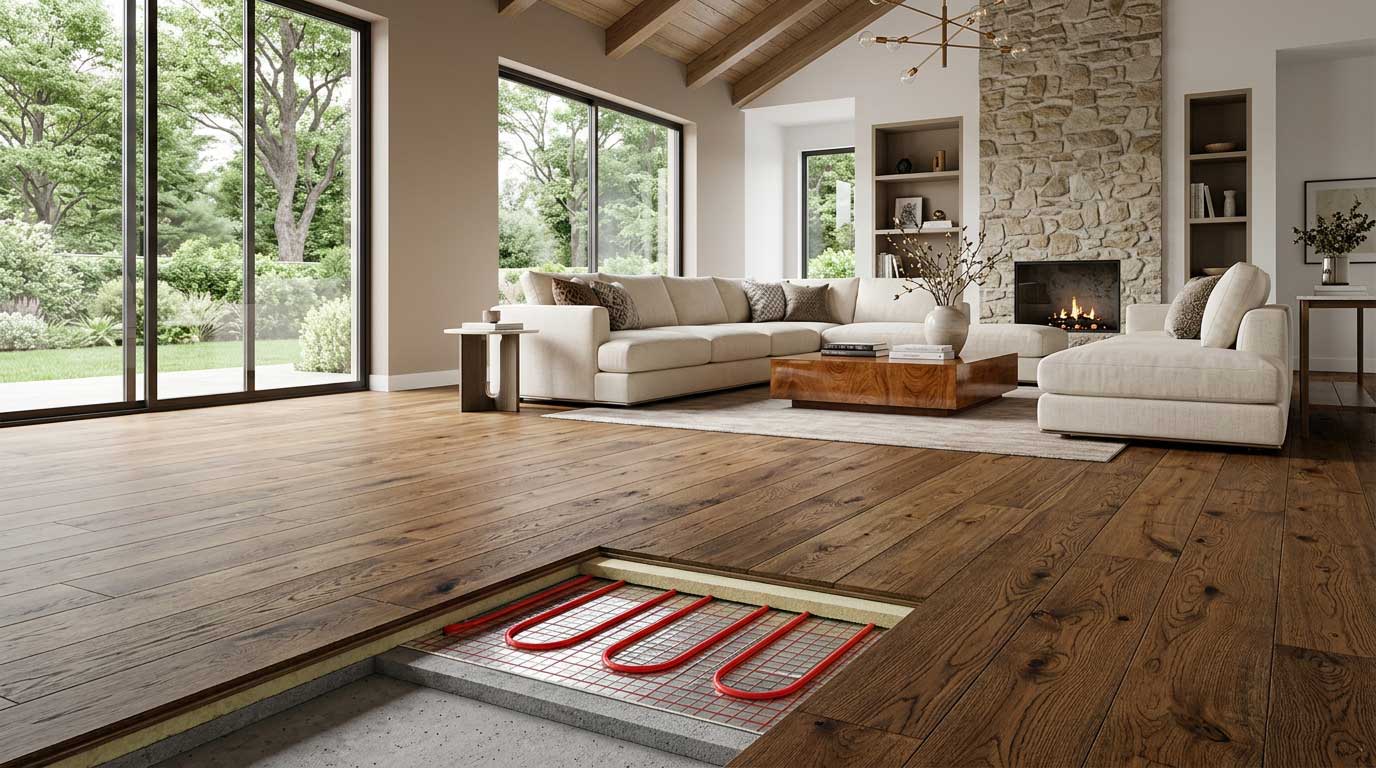
Radiant heating is becoming increasingly common in luxury New Jersey homes, especially in new construction and major renovations.
But adding radiant heat changes how hardwood flooring should be selected.
The question isn’t simply whether engineered or solid hardwood looks better. The flooring needs to work with the heating system, subfloor, plank dimensions, wood species, indoor environment, and installation method.
For many radiant-heated projects—particularly those using wide-plank hardwood—engineered flooring is often the more practical choice.
That doesn’t mean solid hardwood is automatically wrong. It means the entire flooring system needs to be evaluated before the material is ordered.
Why Radiant Heat Changes Hardwood Flooring
Wood naturally gains and loses moisture as its surrounding environment changes.
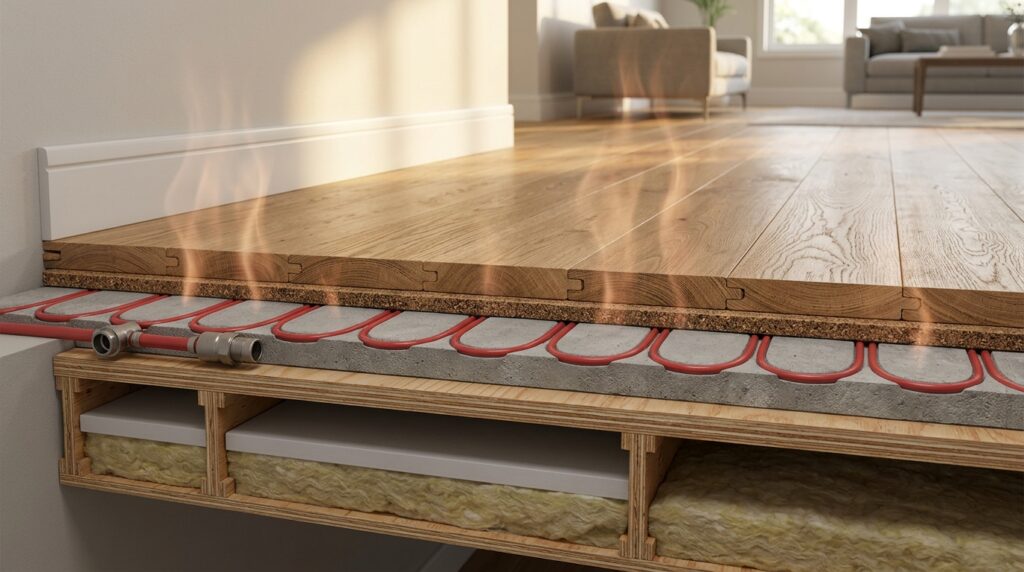
When indoor conditions become more humid, hardwood can absorb moisture and expand. When conditions become drier, it loses moisture and contracts.
Radiant heating can contribute to drier conditions at the flooring surface during the heating season, making moisture management especially important.
In New Jersey, where homes experience humid summers and dry heating seasons, those environmental changes deserve even more attention.
The goal isn’t to eliminate wood movement—that’s impossible.
The goal is to select and install a flooring system that can accommodate normal movement without creating excessive gaps, distortion, or other performance problems.
Why Engineered Hardwood Is Often Preferred Over Radiant Heat
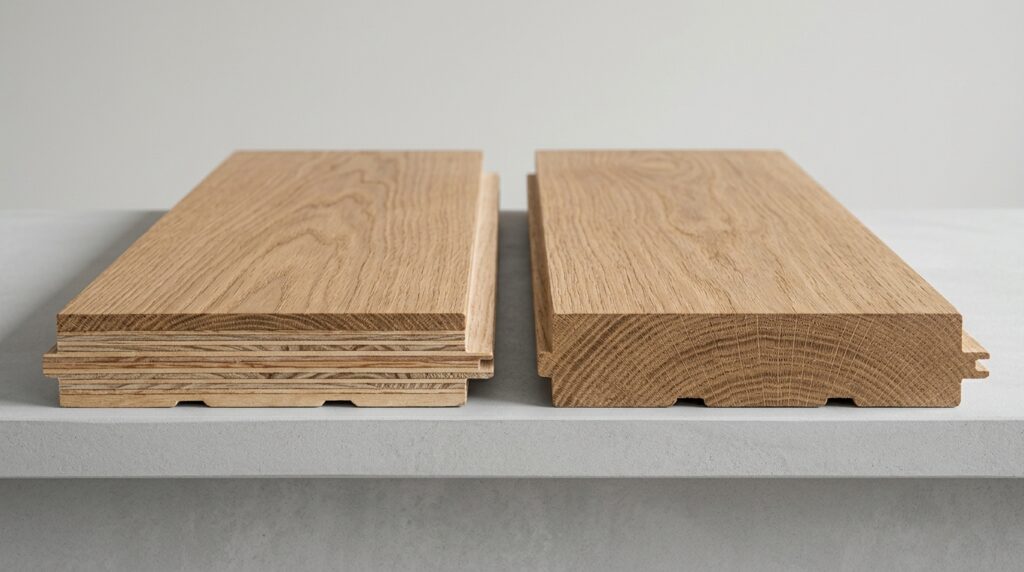
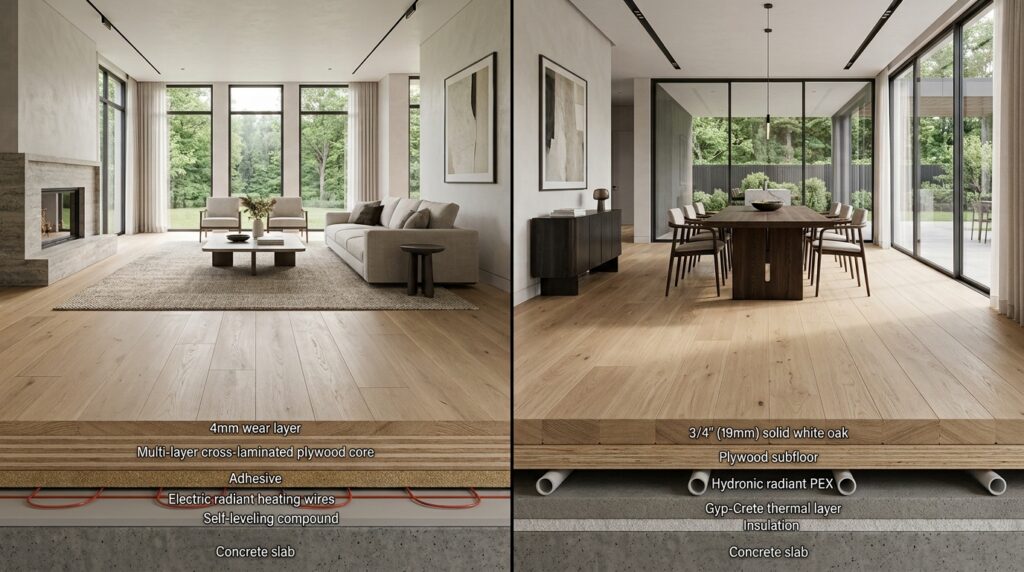
Engineered hardwood has a real hardwood wear layer over a multi-layer core designed to provide greater dimensional stability than a comparable solid wood plank.
That construction can make engineered hardwood particularly attractive for radiant-heated floors.
Depending on the specific product, engineered flooring can offer:
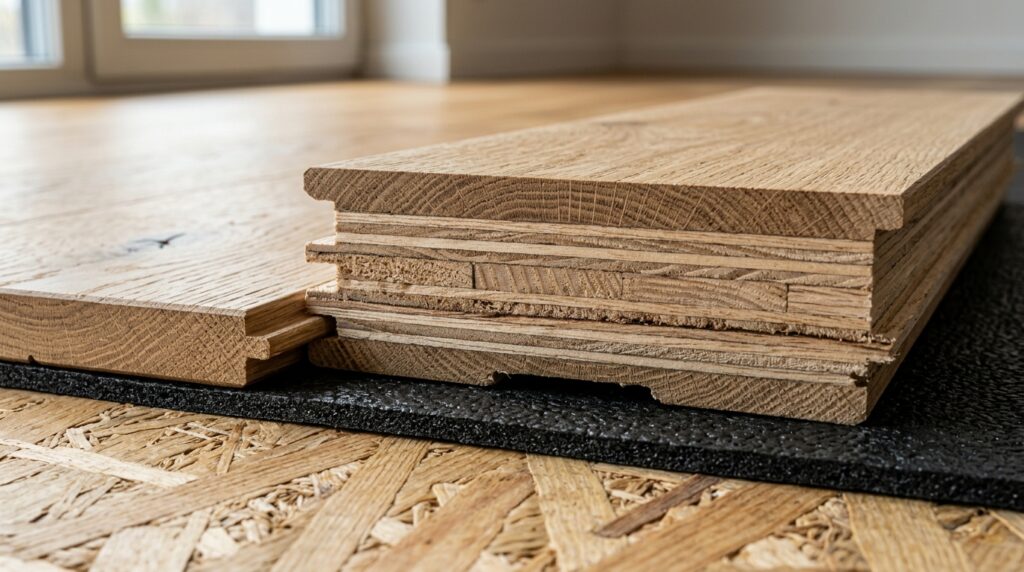
- Greater dimensional stability
- Less seasonal movement
- Better suitability for wide-plank designs
- Compatibility with many radiant heating systems
- Multiple installation options
- The same premium appearance expected from high-end hardwood
Most importantly, engineered does not mean lower-end flooring.
High-quality engineered White Oak can feature thick wear layers, premium grades, wide planks, custom stains, and high-performance finishes.
Once installed, a premium engineered floor can provide exactly the architectural appearance expected in a luxury home.
Why Wide-Plank Floors Deserve Special Attention
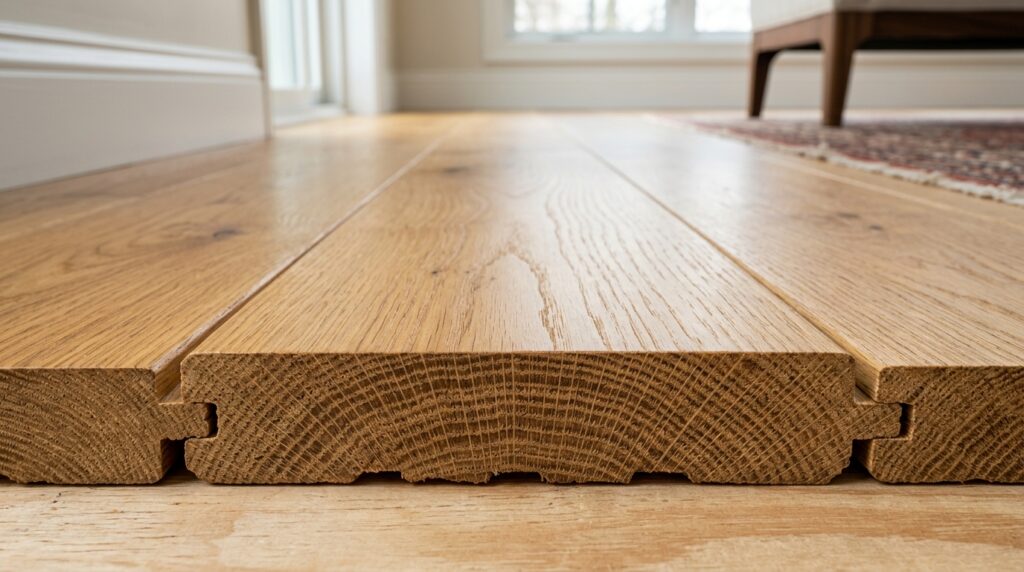
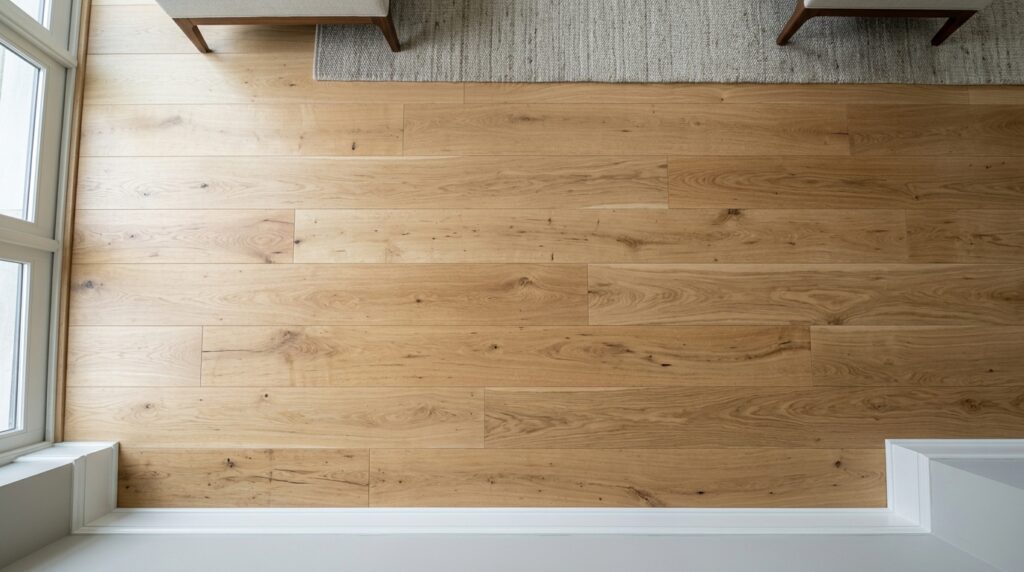
This becomes especially important in luxury homes because wide-plank White Oak is extremely popular.
As plank width increases, dimensional movement across each individual board can become more noticeable.
An 8-inch or 10-inch solid hardwood plank therefore presents different stability considerations than a traditional narrow-strip floor.
That doesn’t automatically make wide solid hardwood unsuitable.
But when a project combines wide planks, radiant heat, and New Jersey’s seasonal humidity changes, engineered construction often provides an important stability advantage.
The wider the design becomes, the more important product selection, moisture control, and installation planning become.
Can Solid Hardwood Be Installed Over Radiant Heat?
Potentially, yes—but not every solid hardwood product should be installed over every radiant system.
Solid hardwood is manufactured from a single piece of wood, which means it responds more directly to changes in moisture content.
Its long service life and ability to be refinished multiple times make it attractive for high-end homes, but radiant installations require careful planning.
Important considerations include:
- Wood species
- Plank width and thickness
- Subfloor construction
- Heating-system design
- Installation method
- Indoor humidity
- Flooring moisture content
- Manufacturer requirements
Some manufacturers permit specific solid hardwood products over radiant heat. Others restrict or prohibit them.
The flooring manufacturer’s specifications should always be reviewed before the material is selected.
Not Every Engineered Floor Is Approved for Radiant Heat
This is equally important.
Choosing engineered hardwood doesn’t automatically make a floor compatible with radiant heating.
Products differ in construction, adhesives, core materials, thickness, and installation requirements.
Before ordering flooring, the installation team should confirm that the specific product is approved for the radiant system being used.
The manufacturer’s requirements may address:
- Maximum surface temperature
- Heating-system type
- Subfloor requirements
- Installation method
- Approved adhesives
- Moisture conditions
- Indoor temperature and relative humidity
Those specifications should become part of the flooring plan—not something checked after the material arrives.
Surface Temperature Matters
Radiant heating should provide controlled, even heat.
Many hardwood flooring manufacturers establish maximum allowable floor-surface temperatures for their products.
The exact limit varies, which is why there shouldn’t be one universal temperature applied to every hardwood floor.
Operating the system outside the flooring manufacturer’s requirements can increase moisture loss and dimensional movement and may affect the floor’s performance or warranty.
The heating contractor and flooring installer therefore need to understand each other’s requirements.
Moisture Testing Is Critical
A premium flooring product cannot compensate for improper site conditions.
Before hardwood is installed, professionals should evaluate the moisture conditions of both the flooring and the substrate.
Depending on the assembly, this may include:
- Hardwood moisture content
- Wood subfloor moisture content
- Concrete moisture conditions
- Indoor temperature
- Relative humidity
The objective is to confirm that the flooring, substrate, and building environment are appropriate for installation.
A fixed acclimation period—such as simply leaving hardwood inside for three days—doesn’t replace actual moisture evaluation.
The House Needs to Be Ready Before the Hardwood Is Installed
Acclimation only makes sense when the building itself is operating under conditions reasonably representative of normal occupancy.
In a new luxury build, that means coordinating flooring installation with the rest of the construction schedule.
The HVAC system should be operating as required, moisture-producing construction work should be sufficiently complete, and the radiant system should be commissioned according to the flooring and heating-system requirements.
Installing hardwood into an uncontrolled construction environment and stabilizing the house afterward can create unnecessary movement in the floor.
Installation Method Matters Too
The flooring product is only part of the equation.
Depending on the floor and substrate, engineered hardwood may be:
- Glued down
- Nailed or stapled
- Installed using another manufacturer-approved system
Each method has different requirements.
For example, a glue-down installation over a radiant-heated concrete slab requires careful attention to slab moisture conditions, adhesive compatibility, and the flooring manufacturer’s specifications.
There isn’t one installation method that’s automatically best for every radiant project.
Engineered vs. Solid: Which Would We Choose?
For many luxury New Jersey projects combining radiant heat with wide-plank hardwood, engineered flooring would often be our first material to evaluate.
The additional dimensional stability can make it better suited to the environmental conditions created by that combination.
But we wouldn’t make the decision based on the words “engineered” or “solid” alone.
We would also consider:
- The exact flooring product
- Manufacturer radiant-heat approval
- Plank width
- Wood species
- Subfloor construction
- Radiant system
- Installation method
- Moisture conditions
- Desired appearance
- Long-term refinishing expectations
A properly selected solid hardwood floor may perform well in the right system, while an incorrectly specified engineered floor can still fail.
Plan the Flooring Before Construction Is Finished
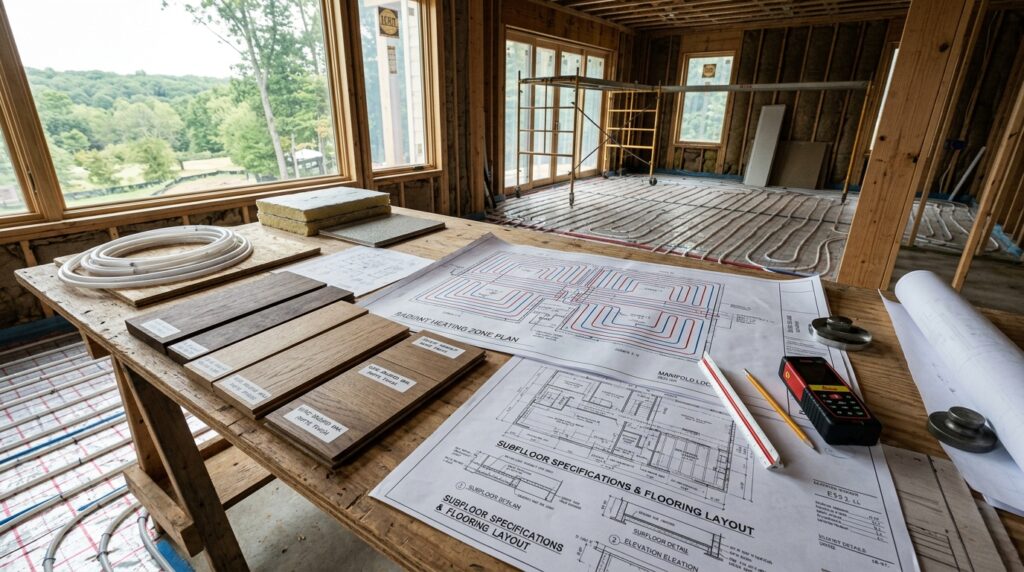
One of the biggest mistakes in high-end construction is treating hardwood flooring as a finish selection that can be finalized near the end of the project.
With radiant heat, decisions made much earlier can affect the flooring installation.
Ideally, the architect, builder, radiant-heating contractor, and hardwood flooring specialist should coordinate before the flooring is ordered.
That allows the team to verify compatibility between the heating system, subfloor assembly, flooring product, and installation method before those decisions become expensive to change.
Final Thoughts
For luxury New Jersey homes with radiant heating, engineered hardwood is often the more practical choice—particularly when the design calls for wide-plank White Oak or other large-format hardwood.
Its construction generally provides greater dimensional stability while still delivering the appearance expected from a premium hardwood floor.
But engineered hardwood isn’t automatically compatible with radiant heat, and solid hardwood isn’t automatically incompatible.
The correct decision depends on the specific flooring product and the entire system beneath it.
In a high-end project, the best results come from making those decisions before installation begins—not trying to solve compatibility problems after the hardwood has already been delivered.
Request a consultation:
renovaflooring.com
Visit our website for more inspiration and design ideas!