
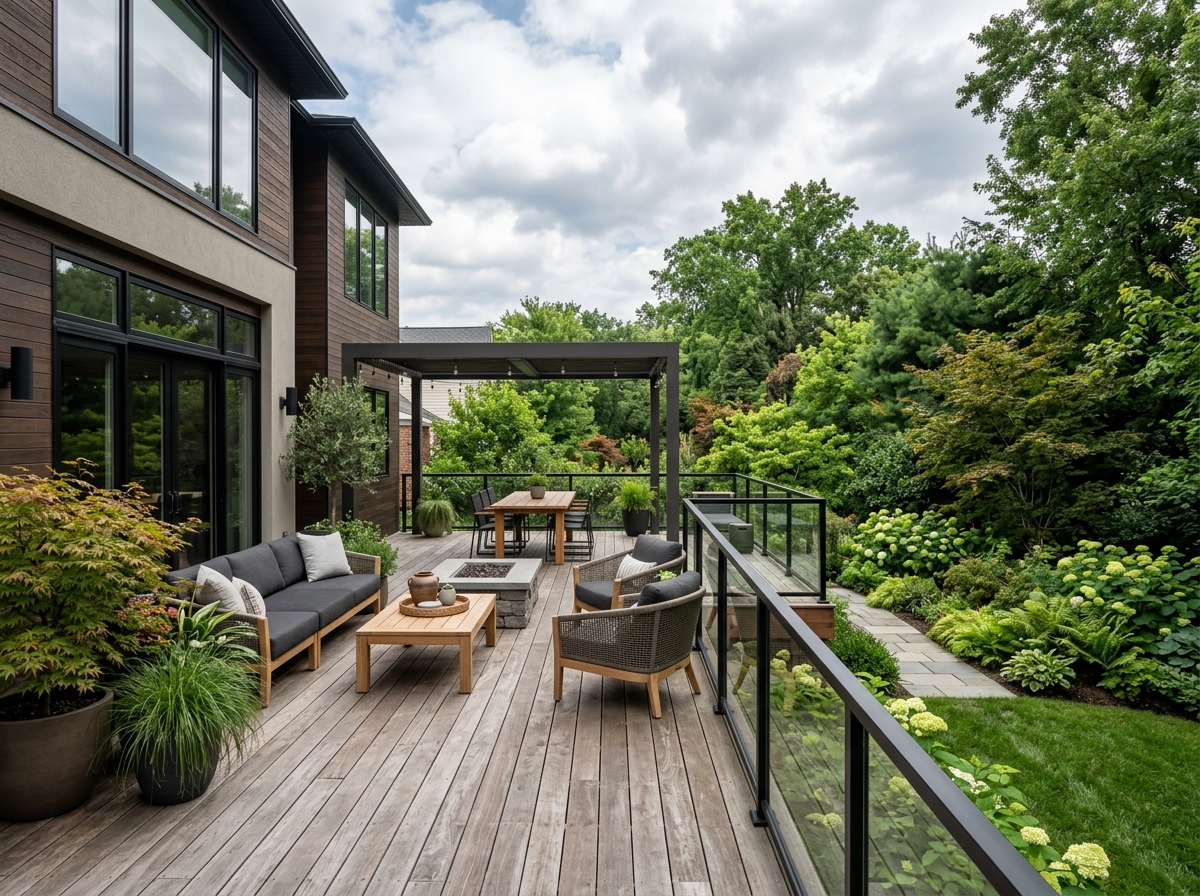
The Mid-Atlantic region presents a unique challenge for homeowners. With hot, humid summers, cold winters, heavy rainfall, and seasonal temperature swings, outdoor structures take a constant beating—especially decks.
Choosing the right material is not just about appearance. It is about how that material performs over time, and how it is installed.
Because in this climate, the wrong decision doesn’t just age poorly, it fails prematurely.
1. The Climate Defines the Rules
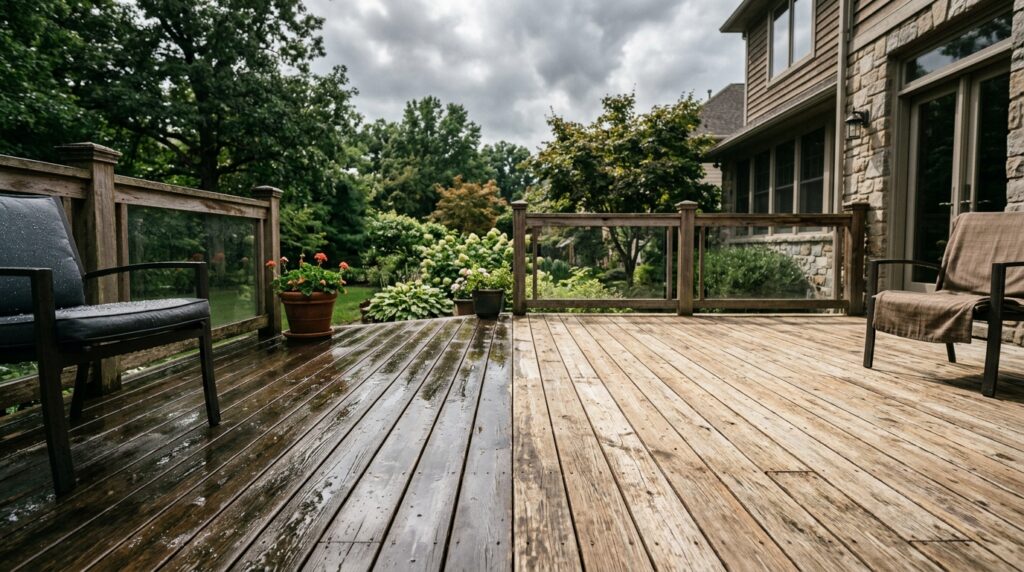
Before selecting any material, it is critical to understand what your deck will face year-round:
- High humidity in summer
- Freeze-thaw cycles in winter
- Constant moisture exposure from rain
- UV degradation from direct sunlight
These conditions create expansion, contraction, and long-term wear.
Over time, this leads to:
- Warping and movement
- Surface cracking
- Mold and mildew growth
- Structural stress
Any material selected must be able to handle these variables without compromising performance.
2. Pressure-Treated Wood: Functional, but Limited
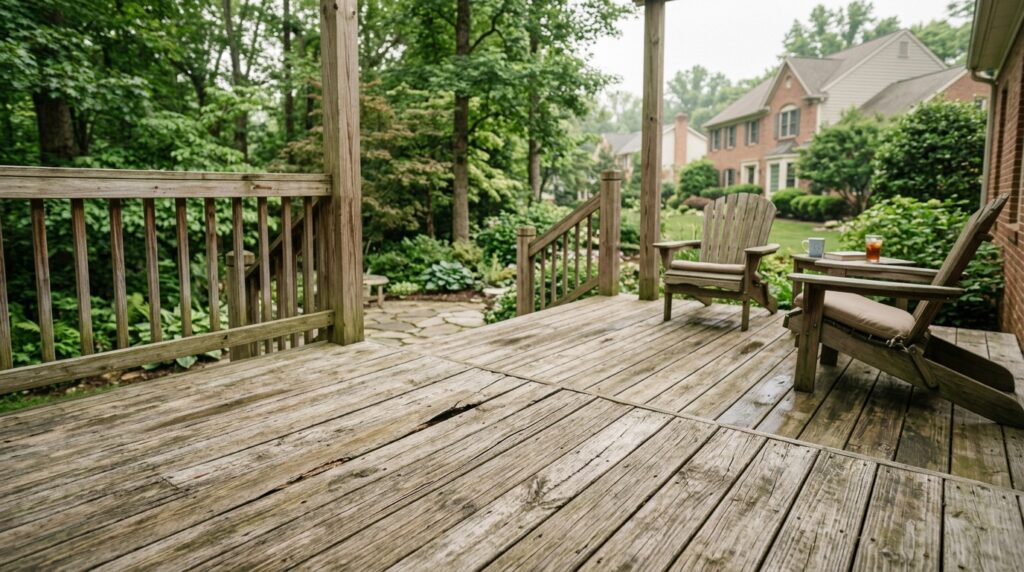
Pressure-treated wood is widely used due to its accessibility and lower upfront cost.
However, in the Mid-Atlantic climate, it is more vulnerable to:
- Warping and cracking from moisture cycles
- Ongoing maintenance requirements
- Shorter lifespan under constant exposure
It can serve a purpose in lower-budget applications, but it is not typically aligned with long-term performance or high-end expectations.
3. Composite Decking: Controlled Performance
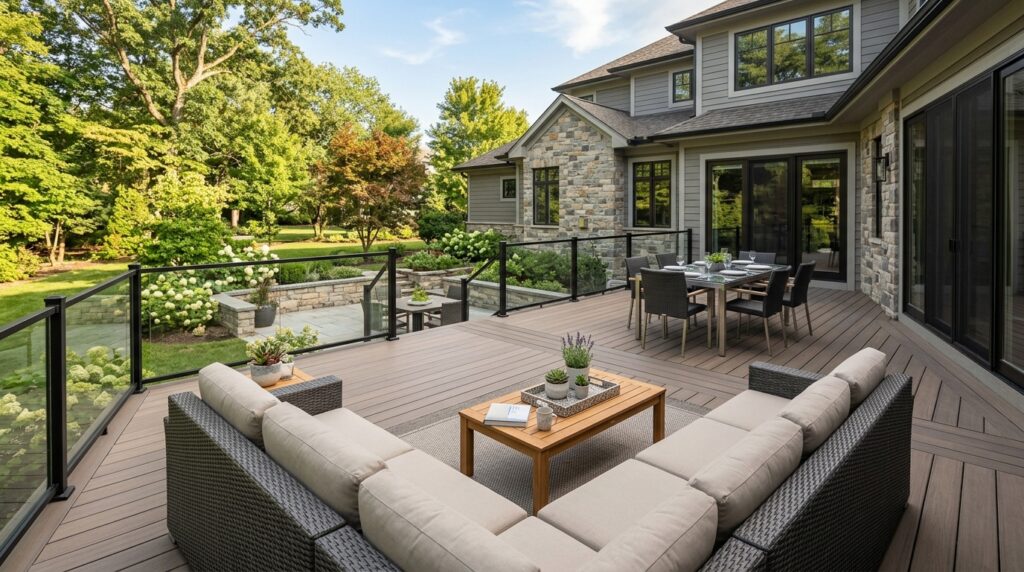
Composite decking offers a more stable option in environments with frequent moisture exposure.
It provides:
- Resistance to rot and moisture
- Consistent appearance over time
- Reduced maintenance requirements
However, it can retain heat under direct sunlight and lacks the natural variation and character of real wood. While performance is predictable, aesthetics are more uniform.
4. PVC Decking: Maximum Moisture Resistance
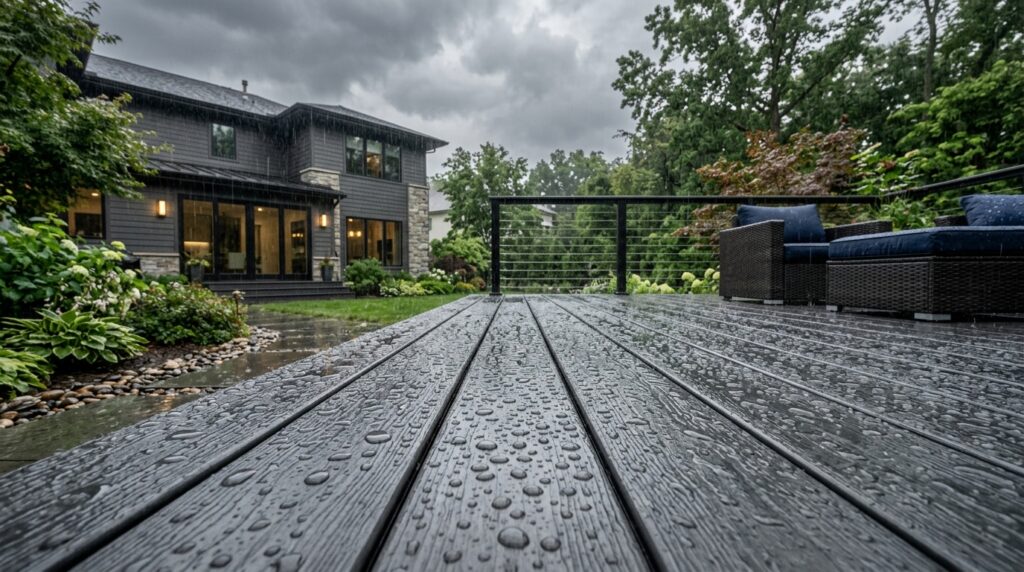
PVC decking is engineered for environments where moisture is a constant concern.
It offers:
- High resistance to water absorption
- Minimal risk of mold or decay
- Long-term durability in wet conditions
That said, it comes at a premium cost and has a more synthetic appearance, which may not align with the design goals of higher-end properties.
5. Hardwood Decking: High Performance When Done Right
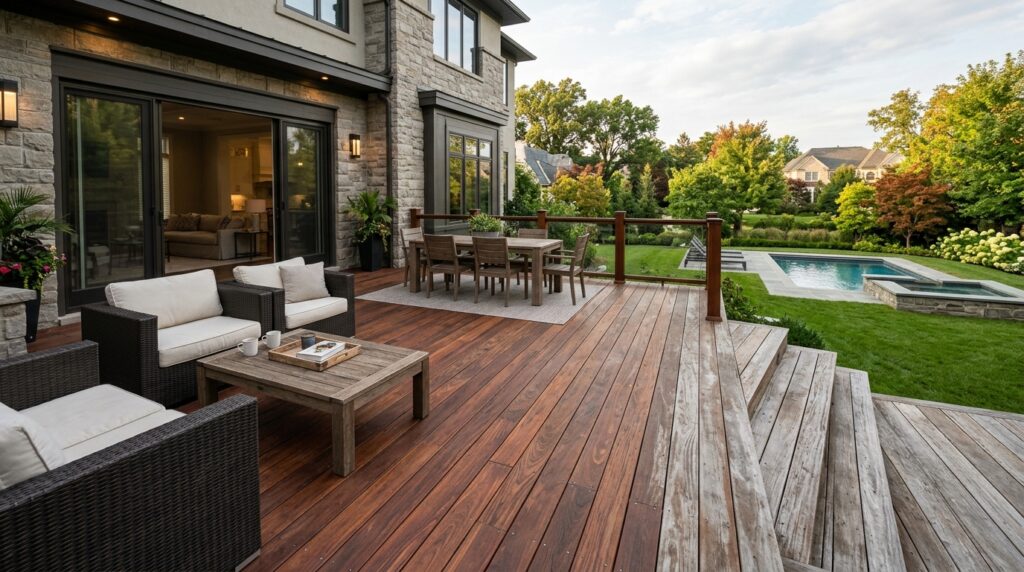
Exotic hardwoods such as ipe, cumaru, and teak remain one of the highest-performing decking materials available when properly installed.
They offer:
- Exceptional density and durability
- Natural resistance to moisture and insects
- A level of visual quality unmatched by synthetic materials
In the Mid-Atlantic climate, hardwood performs extremely well, but only when the installation is executed correctly.
Improper spacing, lack of airflow, or incorrect fastening can lead to movement, cupping, or premature wear. When designed and installed properly, hardwood decks can last decades while maintaining both structure and appearance.
6. Material Selection Is Only Half the Equation
One of the most common mistakes homeowners make is focusing only on the material itself.
In reality, long-term performance depends equally on:
- Substructure design and airflow
- Proper spacing for expansion and contraction
- Drainage and moisture management
- Correct fastening systems
We often see high-end materials fail prematurely due to poor installation, not because of the material itself.
Execution is what determines lifespan.
Final Thoughts
The Mid-Atlantic climate does not tolerate shortcuts.
Choosing the right material is important, but choosing the right system, design, and execution is what ultimately determines how your deck performs over time.
In many cases, investing in premium materials paired with proper installation delivers the best long-term value, both structurally and visually.
If you’re unsure which material is right for your property, a professional evaluation can help determine the best option based on your layout, exposure, and long-term goals.
Because when it comes to outdoor construction, performance is not defined by what you choose, but by how it is built.
Visit our website for more inspiration and design ideas!