
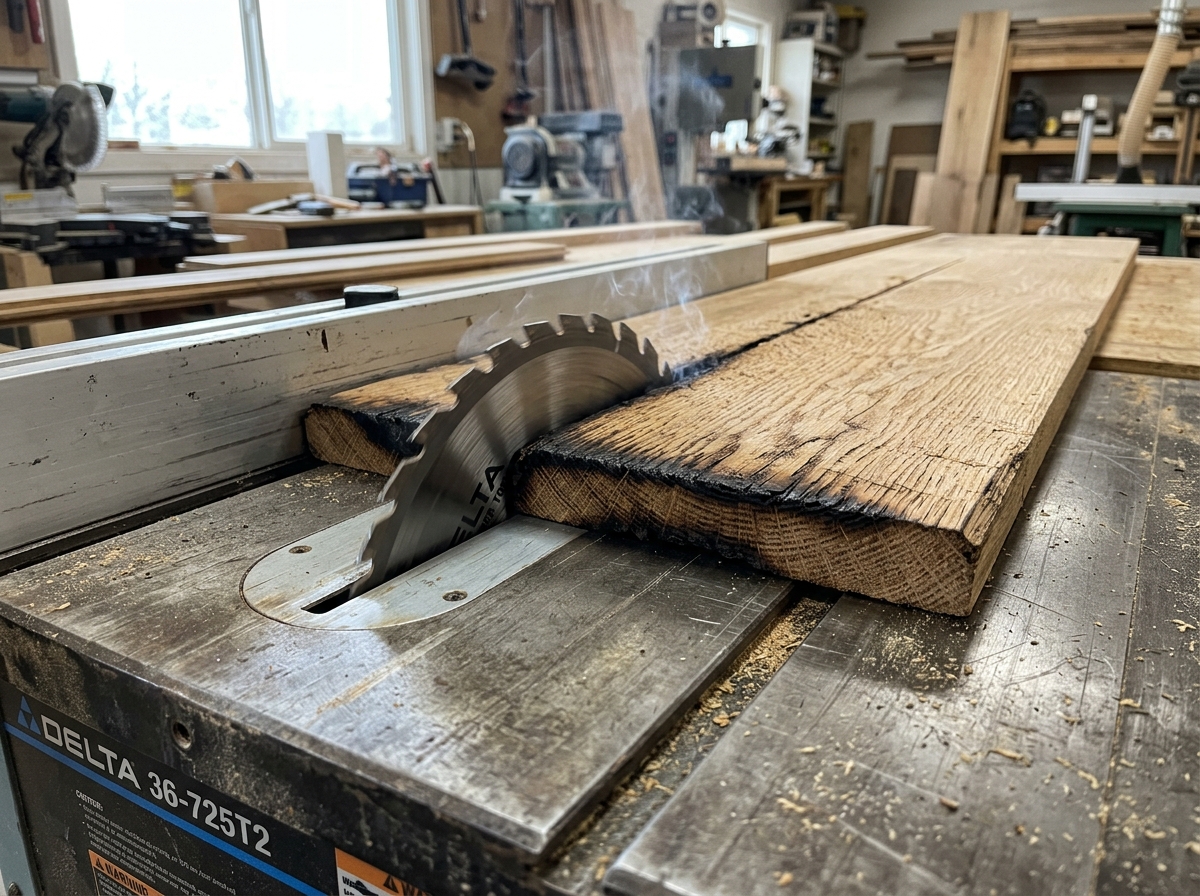
Few things ruin the appearance of a flooring installation faster than burn marks along freshly cut planks.
You make the cut expecting a clean edge, but instead end up with dark streaks, scorched grain, smoke marks, or discoloration running along the wood surface.
In most cases, the issue is not the flooring material itself. It is excessive friction generated during the cutting process.
For professional installers, burn marks are more than a cosmetic inconvenience. They are often a warning sign that something in the cutting setup, blade condition, or saw alignment is creating unnecessary heat and resistance.
On high-end flooring projects, even small cutting imperfections become highly visible once installation is complete.
Why Wood Burns During Cutting
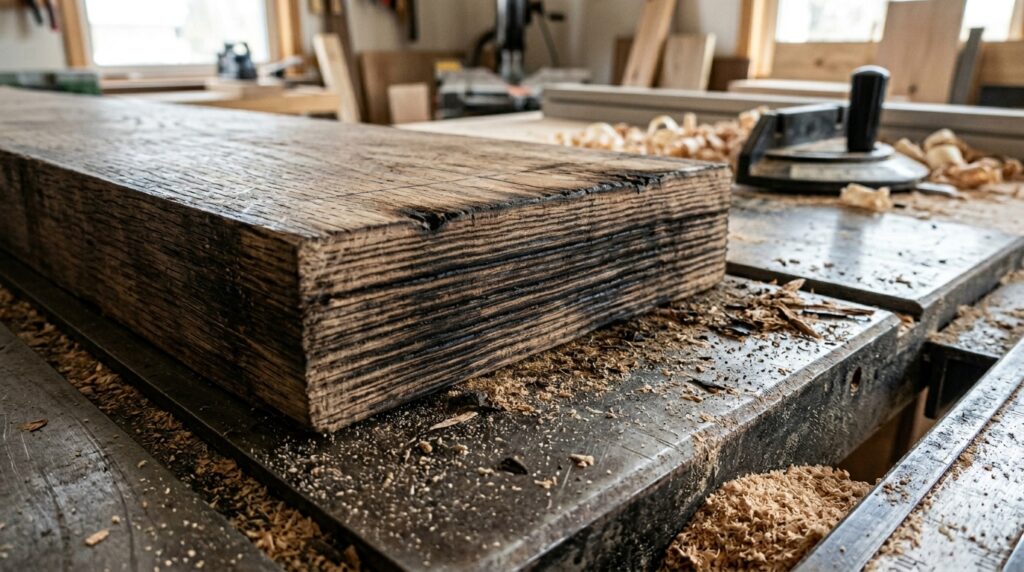
Wood burns when friction generates more heat than the material can dissipate during the cut.
Instead of slicing cleanly through the fibers, the blade begins rubbing against the wood surface, creating heat buildup and scorching the plank edge.
Several factors commonly contribute to this problem:
- Dull saw blades
- Incorrect blade selection
- Resin or pitch buildup on the blade
- Slow or inconsistent feed rates
- Misaligned fences or blade positioning
- Excess lateral pressure during cutting
In many cases, the issue develops gradually, meaning installers may not notice performance decline until visible burn marks begin appearing consistently.
Dull Blades Create Excessive Friction
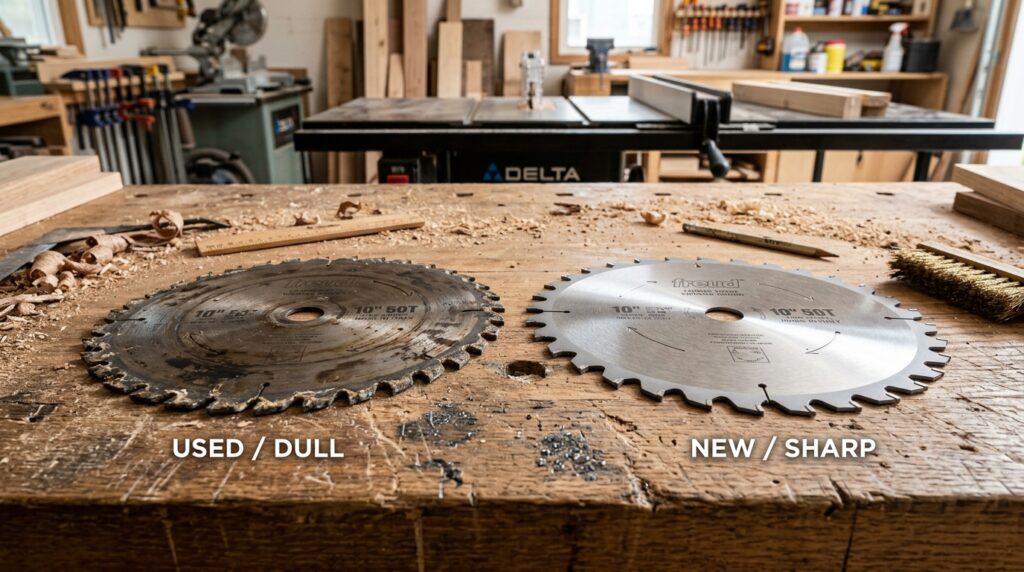
One of the most common causes of burn marks is a dull blade.
A sharp blade cuts efficiently with minimal resistance. As the cutting edge wears down, friction increases significantly.
This creates:
- Slower cutting speed
- Increased resistance through dense wood
- More pressure required from the operator
- Longer contact between blade teeth and the material
- Higher temperatures during the cut
We often see installers continue using blades well past peak sharpness, especially during large flooring projects where gradual performance decline is less noticeable day to day.
Over time, this almost always results in scorching along cut edges.
Dense Hardwood Species Reveal Problems Faster
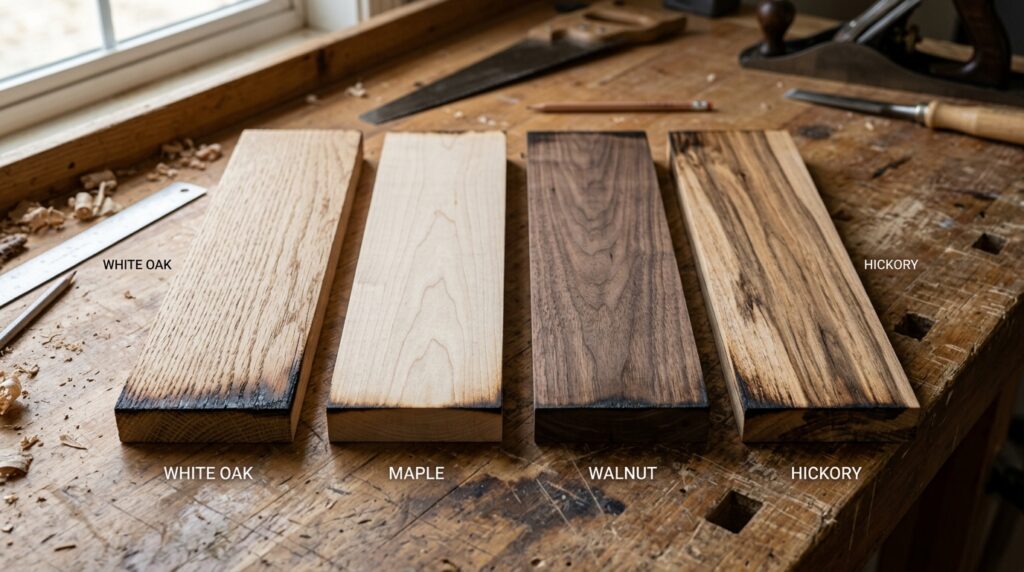
Hardwood flooring materials are particularly unforgiving when cutting conditions are not optimized.
Dense species such as:
- White oak
- Maple
- Hickory
- Walnut
- Exotic hardwoods
naturally generate more cutting resistance than softer woods.
This means even small inefficiencies in blade sharpness, alignment, or feed rate become more apparent.
On lighter-colored woods like white oak or maple, minor scorching can remain visible even after installation and finishing if not properly corrected.
Dirty Blades Often Mimic Dull Blades
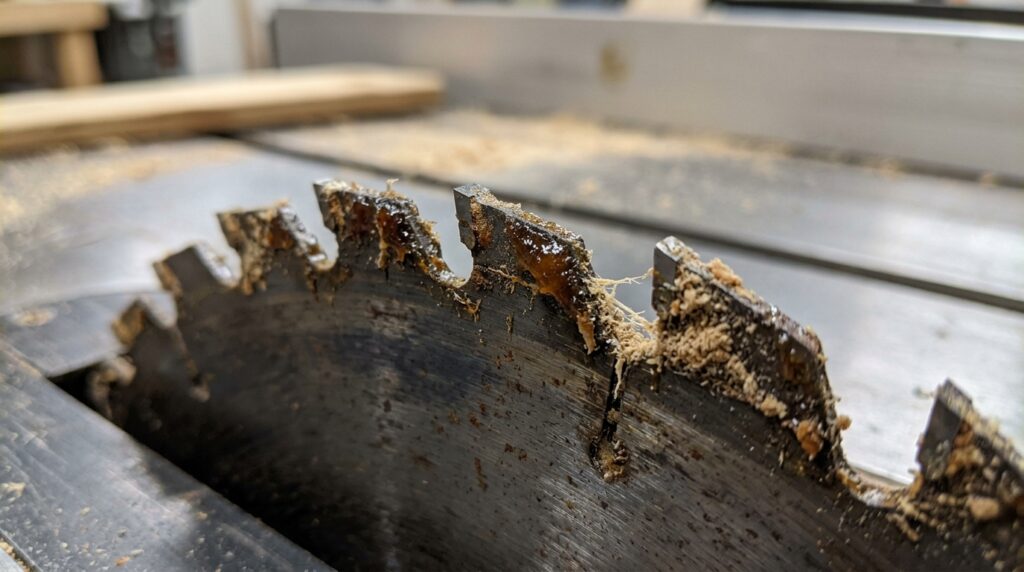
A blade does not always need replacement to perform poorly.
Over time, resin, pitch, adhesive residue, and compacted sawdust accumulate along the blade surface and teeth.
This buildup increases drag during operation and creates unnecessary heat.
Common warning signs include:
- Smoke during cuts
- Increased resistance while feeding material
- Rough or inconsistent edges
- Dark burn marks appearing intermittently
In many cases, proper blade cleaning restores cutting performance immediately.
Blade Selection Matters More Than Most People Realize
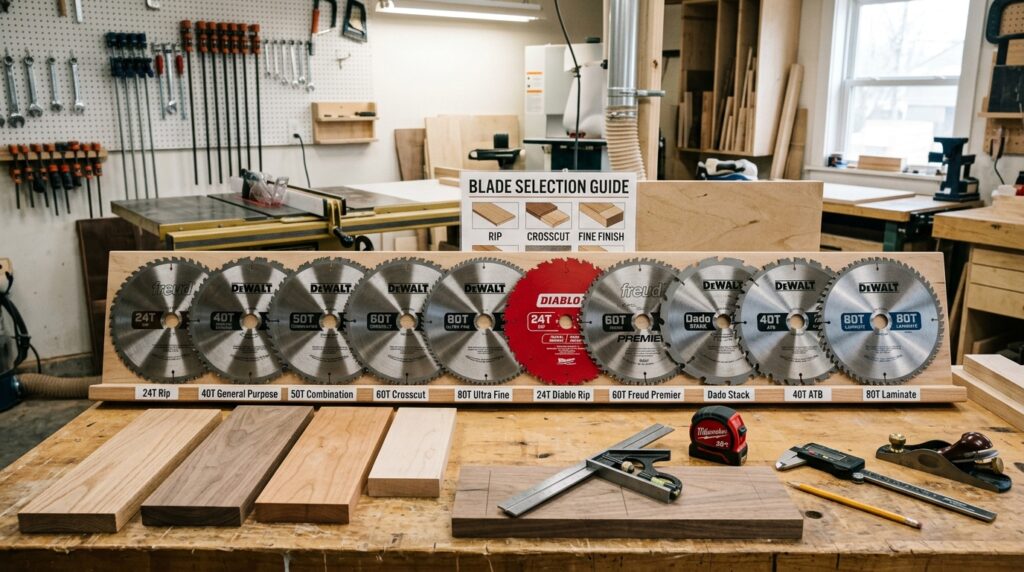
Different flooring materials require different cutting configurations.
Important variables include:
- Tooth count
- Tooth geometry
- Kerf thickness
- Blade diameter
- Blade material and coating
A blade optimized for framing lumber may perform poorly on precision flooring cuts.
Using the wrong blade often creates excessive friction even when the blade itself is new and properly installed.
Saw Alignment Problems Can Also Cause Burning
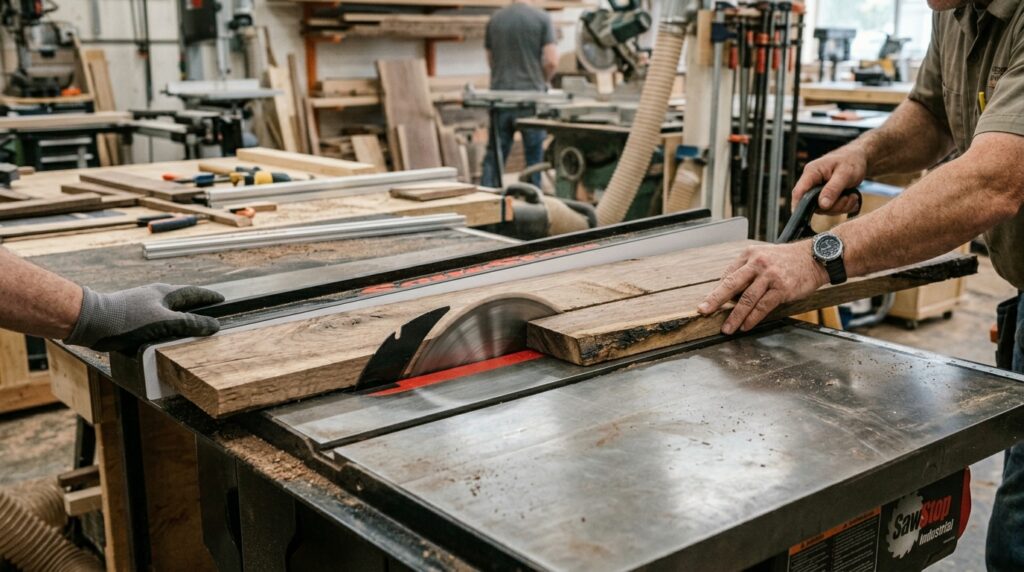
Burn marks are not always caused by the blade alone.
A misaligned fence or improperly calibrated saw can force material sideways during the cut, creating lateral pressure against the blade.
This leads to:
- Uneven cutting resistance
- Excess friction on one side of the plank
- Repeated scorching patterns
- Increased strain on both the material and equipment
Even minor alignment errors can create consistent defects across an entire flooring project.
Why Burn Marks Should Never Be Ignored
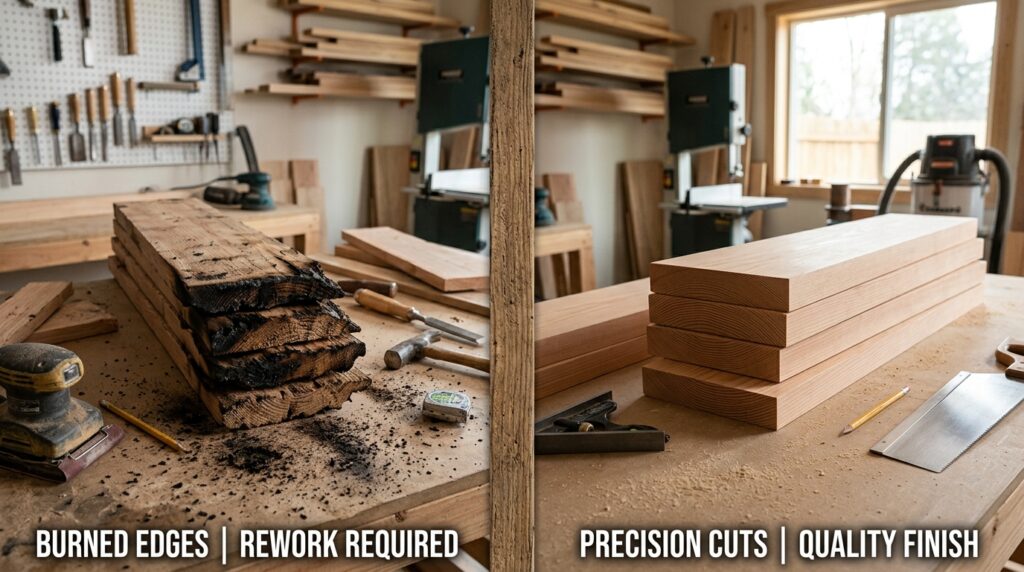
Scorching affects more than appearance.
Persistent burn marks often lead to:
- Additional sanding and correction work
- Slower installation progress
- Material waste
- Reduced finish quality
- Visible imperfections after coating
On premium flooring installations, these issues quickly become expensive.
Addressing the source early protects both efficiency and overall craftsmanship quality.
Precision Cutting Is Part of a High-End Installation

Clean cuts are not accidental.
Professional flooring installation depends on properly maintained equipment, correct blade selection, accurate saw calibration, and disciplined cutting technique.
Even the highest-quality flooring material can produce poor visual results when cutting conditions are ignored.
Because in flooring, craftsmanship starts long before the boards are installed.
It starts the moment the blade touches the wood.
Request a consultation:
renovaflooring.com
Visit our website for more inspiration and design ideas!