
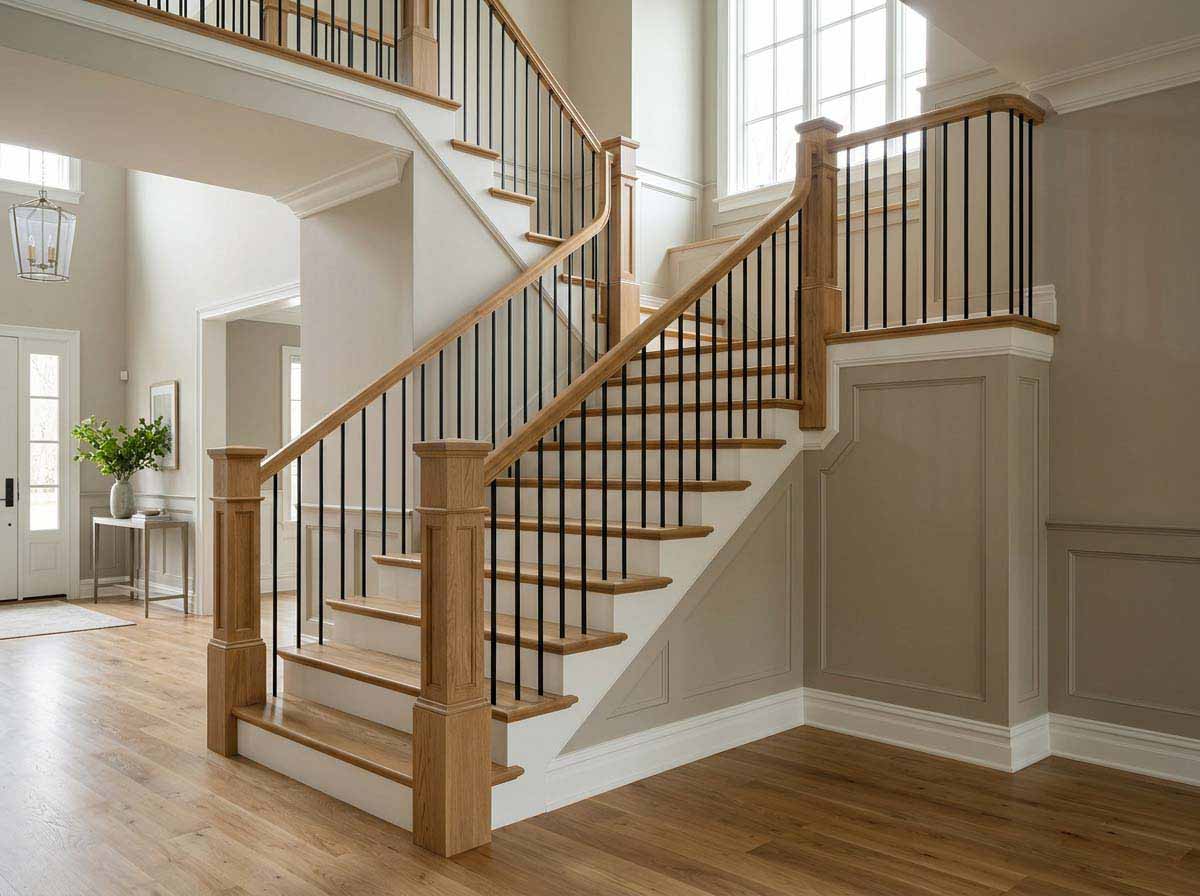
Installing a new stair handrail can improve the appearance of your staircase while providing essential support and protection. Whether you’re replacing an outdated railing, updating your hardwood stairs, or completing a larger home renovation, one important decision comes first: should you install the handrail yourself or hire a professional?
DIY stair handrail installation may seem like a cost-effective way to upgrade your home. Many railing systems are available as kits, and homeowners with basic carpentry experience may be able to handle relatively simple projects. However, stair railings are safety-critical components. Incorrect measurements, weak mounting connections, or improper baluster spacing can create serious problems.
Professional installation typically involves a higher upfront investment, but it can provide better control over structural attachment, code compliance, material compatibility, and finishing details.
In this guide, we’ll compare DIY and professional stair handrail installation, explain the advantages and disadvantages of each approach, and identify the risks homeowners should consider before making a decision.
1. What Does Stair Handrail Installation Involve?
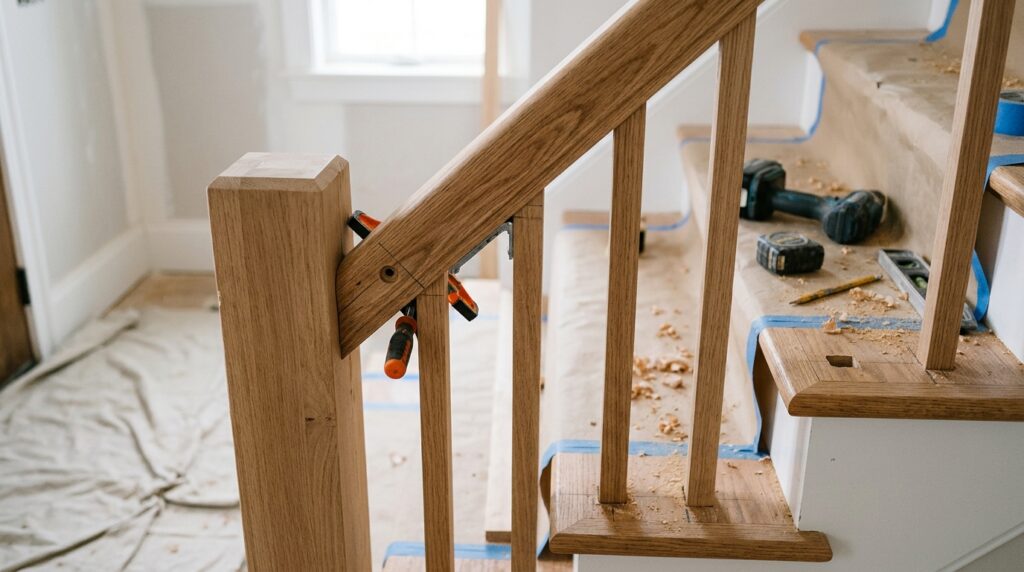
Before deciding whether to tackle the project yourself, it’s important to understand what a stair handrail installation actually requires.
The process involves more than attaching a piece of wood or metal along the staircase. A properly installed railing system must be measured, aligned, securely mounted, and compatible with the existing stair structure.
Depending on the design, the project may include:
- Measuring the staircase and determining the appropriate handrail length and height.
- Selecting the handrail material, profile, and finish.
- Installing or modifying newel posts and support brackets.
- Positioning and securing balusters or other infill components.
- Connecting the handrail to the supporting structure.
- Checking stability, clearances, and applicable building code requirements.
- Finishing and sealing exposed wood surfaces, where necessary.
The complexity varies significantly. Replacing a handrail with a similar model using existing, structurally sound mounting points is generally simpler than installing a completely new railing system or changing the staircase configuration.
Understanding the scope of work is the first step toward deciding whether DIY installation is realistic.
2. DIY Stair Handrail Installation: The Advantages
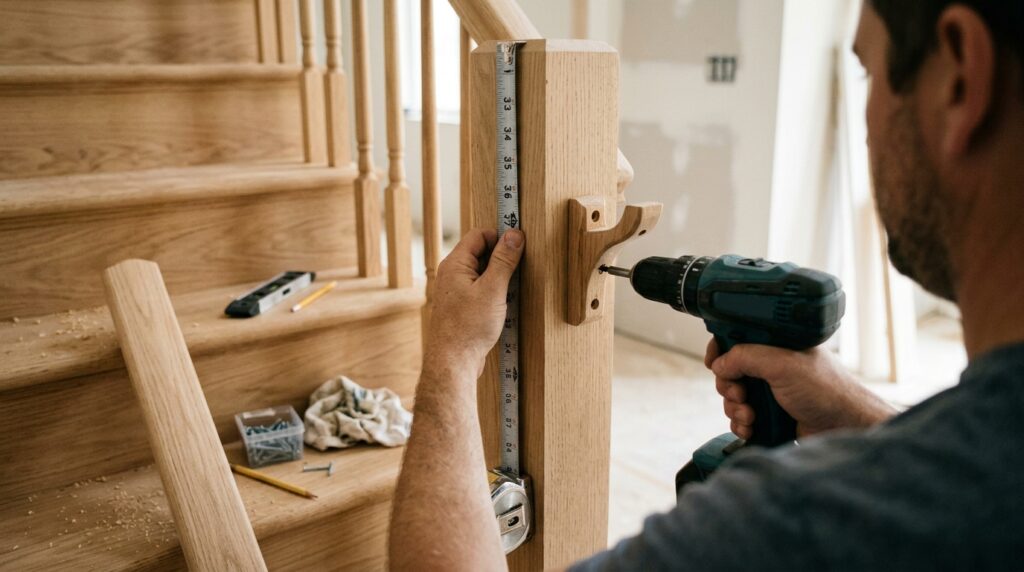
For homeowners with the right tools, experience, and a relatively straightforward staircase, DIY installation can offer several benefits.
Lower Upfront Labor Costs
One of the biggest reasons homeowners consider DIY installation is the opportunity to save on labor. By completing the work independently, you may reduce the initial project cost.
However, savings depend on the materials, tools, and equipment required. Specialty cutting tools, mounting hardware, finishing products, and measurement equipment can add to the overall expense.
Greater Control Over the Project
DIY installation allows homeowners to manage the project schedule and make decisions about materials, finishes, and design details.
You can take time comparing different handrail profiles, testing stain colors, and coordinating the railing with existing hardwood stair treads.
A Rewarding Home Improvement Project
For people who enjoy woodworking and home improvement, installing a handrail can be a satisfying project. It provides an opportunity to develop practical skills while making a visible improvement to the home.
However, the benefits of DIY installation are most relevant when the project is within the homeowner’s actual skill level and does not involve unresolved structural or safety concerns.
3. DIY Stair Handrail Installation: The Disadvantages
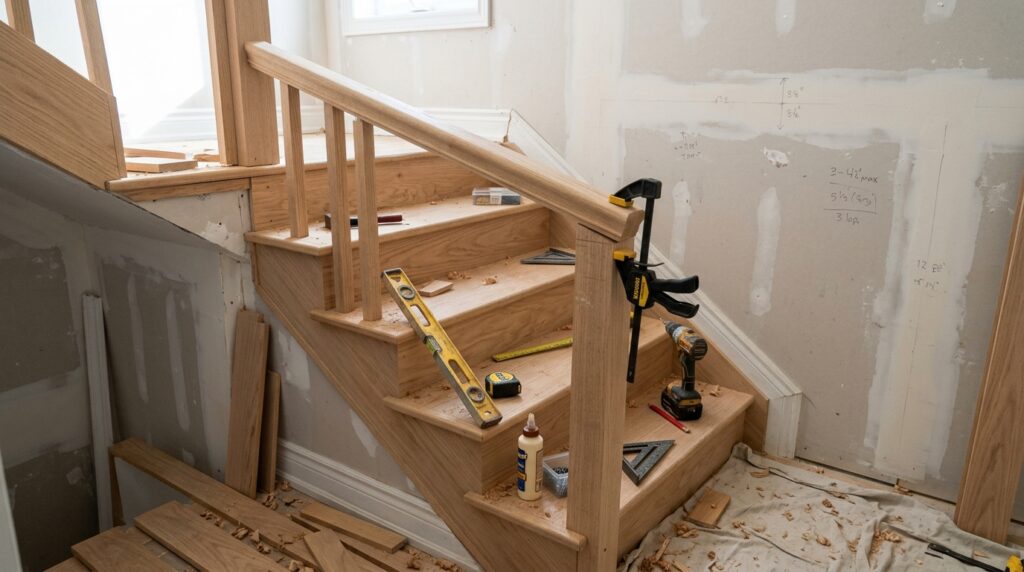
Although DIY installation can reduce labor expenses, it also comes with challenges that are easy to underestimate.
Measuring and Alignment Can Be Difficult
Staircases are not always perfectly uniform. Existing walls, stair angles, uneven treads, and variations in post placement can make accurate measurements more complicated than expected.
A small measurement error can affect the handrail’s alignment, the position of balusters, or the fit between individual components.
Specialized Tools and Skills May Be Necessary
Depending on the railing design, installation may require accurate angle cuts, drilling, fastening into structural supports, and precise finish work.
Wood handrails may also require sanding, staining, and sealing. Metal or glass railing systems can involve different tools, hardware, and installation techniques.
Without the appropriate equipment and experience, achieving a clean, secure result can be difficult.
The Project May Take Longer Than Expected
A professional installer who regularly works with staircases may complete a project more efficiently than a homeowner attempting it for the first time.
DIY projects can involve repeated measurements, adjustments, material mistakes, and additional trips to purchase supplies. These delays should be considered when comparing the true cost of each option.
4. Professional Stair Handrail Installation: The Advantages
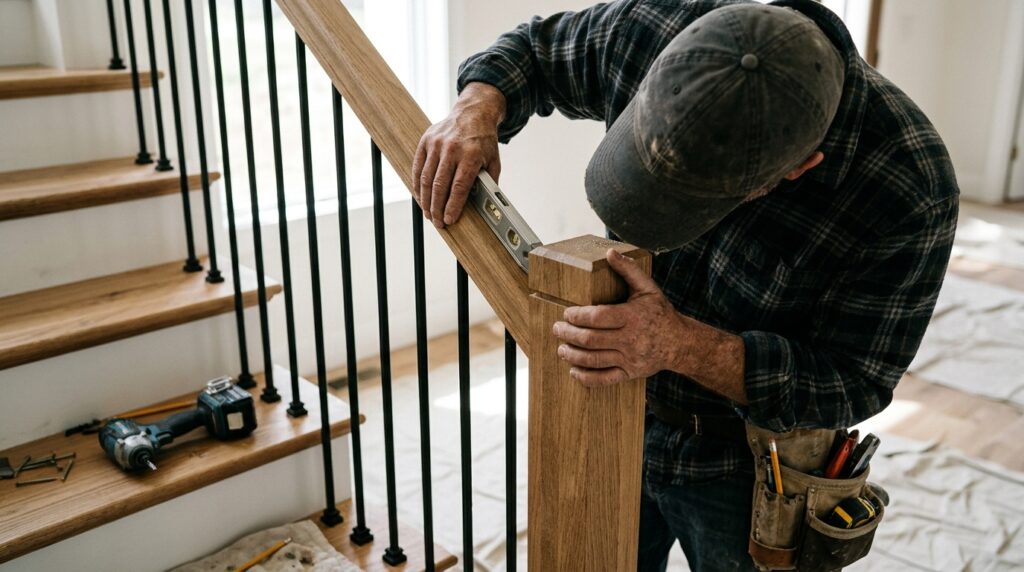
Hiring an experienced staircase or renovation professional can provide important advantages, particularly when the project involves structural changes or a custom railing design.
Proper Structural Assessment
A professional can evaluate the existing staircase before installation begins. This includes checking newel posts, mounting locations, fasteners, and the condition of the surrounding wood or framing.
This step is important because a new handrail cannot provide reliable support if the underlying connections are weak or deteriorated.
Accurate Measurements and Installation
Professional installers understand how to account for stair angles, handrail transitions, baluster placement, and mounting requirements.
They can also identify potential issues before materials are cut or permanently installed, reducing the likelihood of expensive corrections.
Building Code Considerations
Stair handrail and guardrail requirements may include specific rules for height, graspability, continuity, openings, and structural performance.
A qualified professional can help identify the applicable requirements and coordinate the work accordingly. Permit and inspection requirements should still be confirmed with the local building department.
This is particularly important for homeowners in New Jersey and Pennsylvania, where applicable requirements can vary according to the adopted code edition, property type, and local jurisdiction.
Higher-Quality Finishing
The appearance of a staircase depends heavily on the details. Clean joints, consistent spacing, smooth surfaces, and properly finished wood can make a significant difference in the final result.
Professionals who regularly install stair systems have experience coordinating handrails with hardwood treads, risers, balusters, and surrounding trim.
5. Professional Installation: The Disadvantages
Professional installation is not automatically the right choice for every project. Homeowners should also understand its potential drawbacks.
Higher Initial Cost
Hiring a professional generally costs more upfront because the estimate includes labor, experience, equipment, and project-related services.
Custom woodwork, specialty metal components, glass panels, and structural modifications can increase the total price.
However, the initial quote should be evaluated alongside the potential costs of correcting installation errors or replacing improperly fitted materials.
Scheduling and Availability
Professional contractors may have existing projects and limited availability. Depending on the season and the complexity of the work, homeowners may need to schedule installation in advance.
Material lead times and custom fabrication can also affect the project timeline.
Less Direct Control Over Daily Work
When hiring a contractor, homeowners may have less involvement in each installation decision. Clear communication is therefore essential.
Before work begins, discuss the materials, finish, installation scope, expected timeline, and any design details that must be preserved.
6. The Risks of Improper Stair Handrail Installation
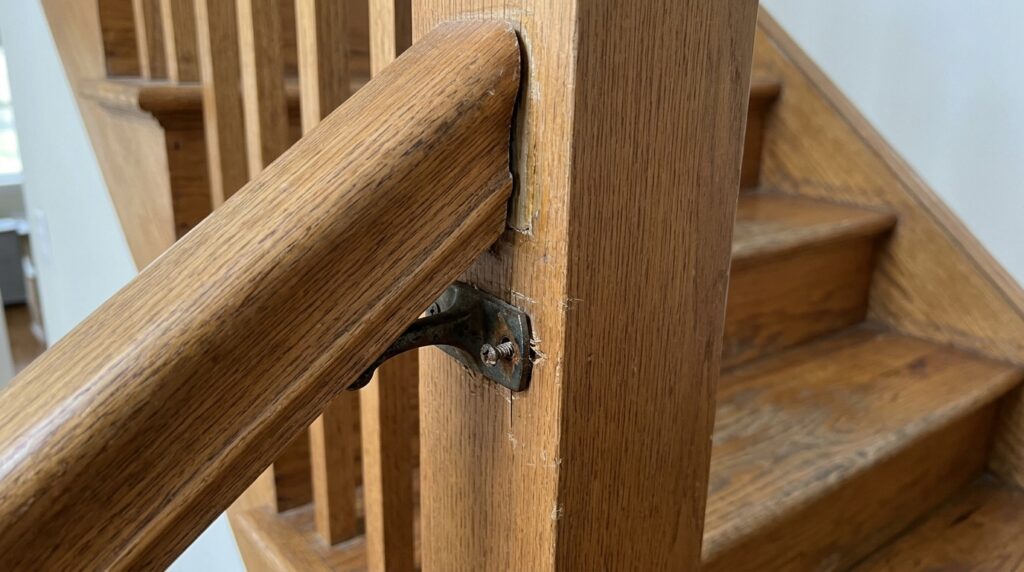
The biggest difference between a successful installation and a problematic one is not necessarily how the railing looks. It is whether the system provides dependable support and performs as intended.
Poor installation can create several risks.
Weak or Inadequate Mounting
A handrail that is attached only to drywall, weak trim, or unsuitable mounting points may loosen under repeated use.
The railing should be secured to appropriate structural support using compatible fasteners and installation methods.
Incorrect Handrail Height or Position
A handrail installed at an inappropriate height or in an uncomfortable position may be difficult to grasp and may not meet applicable code requirements.
Its placement should be evaluated in relation to the stair nosings, walking path, surrounding walls, and the specific requirements for the property.
Improper Baluster Spacing
Excessive openings between balusters can create safety concerns, particularly in homes with young children.
The spacing must comply with the applicable guard requirements, including any relevant exceptions for stairway openings.
Unstable Newel Posts
Newel posts are important structural components in many railing systems. If they are poorly anchored or attached to deteriorated materials, the entire railing assembly may become unstable.
Simply tightening a visible screw may not correct a problem caused by inadequate structural support.
Damage to Existing Stair Components
Incorrect drilling, cutting, or fastening can damage hardwood treads, posts, trim, or nearby flooring.
This can increase repair costs and create additional finishing work, particularly in staircases with custom wood details.
7. DIY vs. Professional Installation: A Direct Comparison
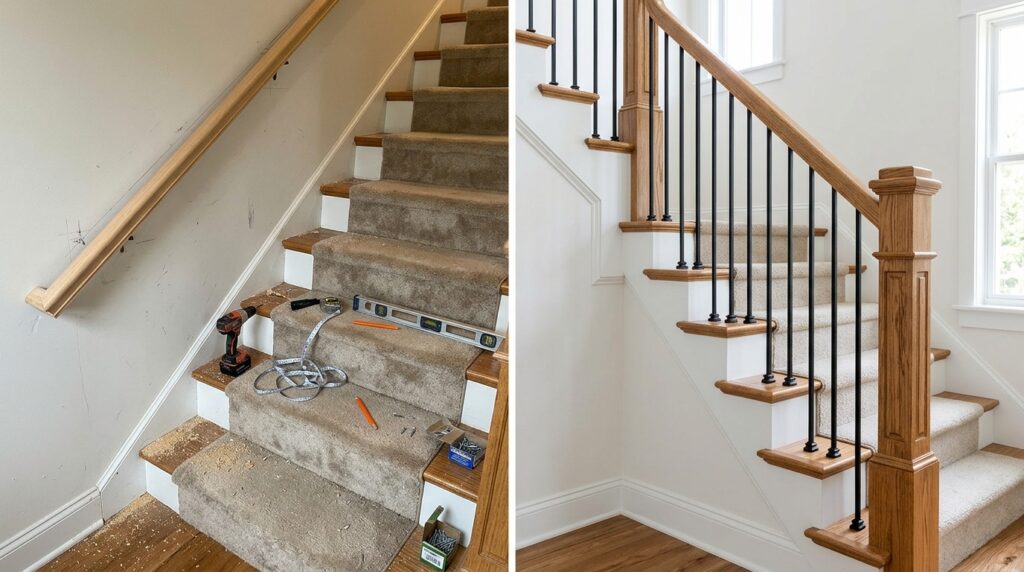
The best approach depends on the complexity of the staircase, the homeowner’s experience, and the condition of the existing structure.
| Factor | DIY Installation | Professional Installation |
|---|---|---|
| Initial labor cost | Generally lower | Generally higher |
| Required experience | Depends on project complexity | Provided by the installer |
| Tools and equipment | Purchased, rented, or already owned | Typically supplied by the contractor |
| Measurement and alignment | Homeowner is responsible | Handled by the installer |
| Structural assessment | Limited by homeowner experience | Can be evaluated by a qualified professional |
| Code considerations | Homeowner must research requirements | Professional can help identify applicable requirements |
| Project timeline | May take longer | Often more efficient |
| Custom designs | More challenging | Better suited to complex fabrication and installation |
| Finish quality | Depends on skill and tools | Benefits from specialized experience |
Neither option guarantees a successful result on its own. The important factors are the quality of the materials, the condition of the staircase, and whether the installation is performed correctly.
8. When Is DIY Installation a Reasonable Option?
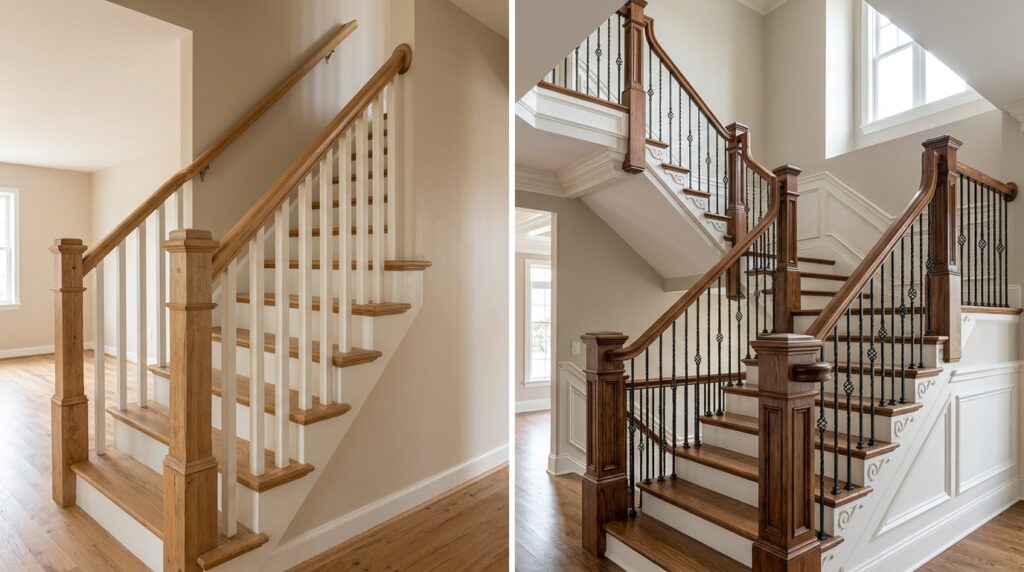
DIY installation may be appropriate when the project is relatively simple and the homeowner has the necessary tools and experience.
Examples include:
- Replacing a handrail with a similar model using existing, verified structural supports.
- Installing a straightforward railing kit according to the manufacturer’s instructions.
- Refinishing or repainting an existing handrail that is structurally sound.
- Replacing a small decorative component that does not affect the railing’s structural performance.
Even for simple projects, verify applicable code requirements and permit obligations before starting.
If the existing railing moves, the posts are damaged, or the mounting points are uncertain, the project should be assessed before attempting a replacement.
9. When Should You Hire a Professional?
Professional installation is strongly recommended when the project involves structural concerns, complex configurations, or uncertainty about code compliance.
Consider hiring a qualified professional if:
- The existing handrail or newel posts are loose or unstable.
- Wood components show signs of rot, splitting, or significant deterioration.
- You are changing the staircase layout or railing configuration.
- The project involves custom woodwork, metal fabrication, or glass panels.
- New structural mounting points are required.
- The staircase has unusual angles, curved sections, or complicated transitions.
- You are unsure whether the proposed design meets local building requirements.
A professional evaluation can help determine whether the existing staircase needs repairs before a new railing system is installed.
10. How to Choose the Right Stair Railing Contractor
If you decide to hire a professional, choosing the right contractor is just as important as selecting the railing material.
Look for a contractor with relevant experience in staircase renovation, hardwood installation, or railing systems.
Before committing to a project, consider asking:
Do you have experience with this type of railing?
Ask to see examples of completed projects involving similar materials and staircase configurations.
Will you inspect the existing structure before installation?
The contractor should evaluate the posts, mounting locations, and surrounding components rather than simply attaching the new railing to whatever is already there.
Are the proposed materials and installation methods appropriate for the project?
Ask about handrail profiles, fasteners, brackets, balusters, finishes, and compatibility with the existing staircase.
Will the installation address applicable building code requirements?
Clarify who is responsible for confirming local requirements, obtaining permits when necessary, and coordinating inspections.
What does the estimate include?
A detailed quote should identify materials, labor, removal of existing components, repairs, finishing, and any additional work that may be necessary.
Comparing complete project scopes is more useful than choosing a contractor based solely on the lowest price.
Final Thoughts: Is DIY or Professional Stair Handrail Installation Better?
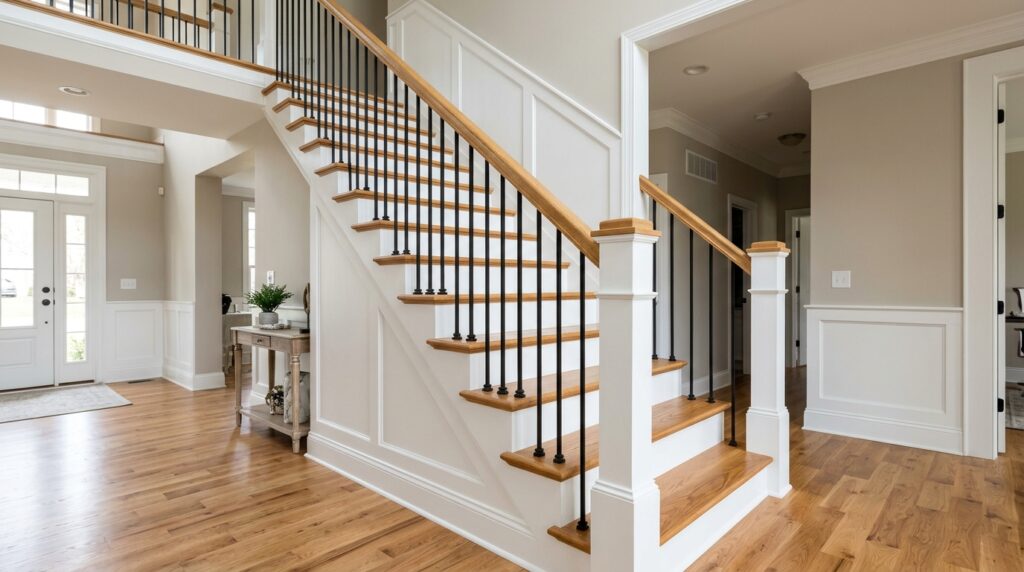
DIY stair handrail installation can be a practical option for straightforward projects when the homeowner has the right skills, tools, and understanding of the applicable requirements. It may reduce labor costs and provide greater control over design decisions.
However, stair railings are safety-critical components. Structural mounting, handrail positioning, baluster spacing, and code compliance should never be treated as minor details.
For complex installations, damaged staircases, custom railing systems, or projects involving structural modifications, professional installation is generally the more reliable approach.
Whether you choose a traditional wood handrail, modern metal railing, or a combination of materials, the goal should be the same: a staircase that looks cohesive, provides dependable support, and is installed to meet the requirements that apply to your home.
Before starting your project, evaluate the condition of the existing staircase and determine the level of work involved. Making that decision early can help you avoid unnecessary expenses and achieve a safer, better-finished result.
Planning a custom stair railing or staircase renovation? Visit renovaflooring.com to request a consultation.