
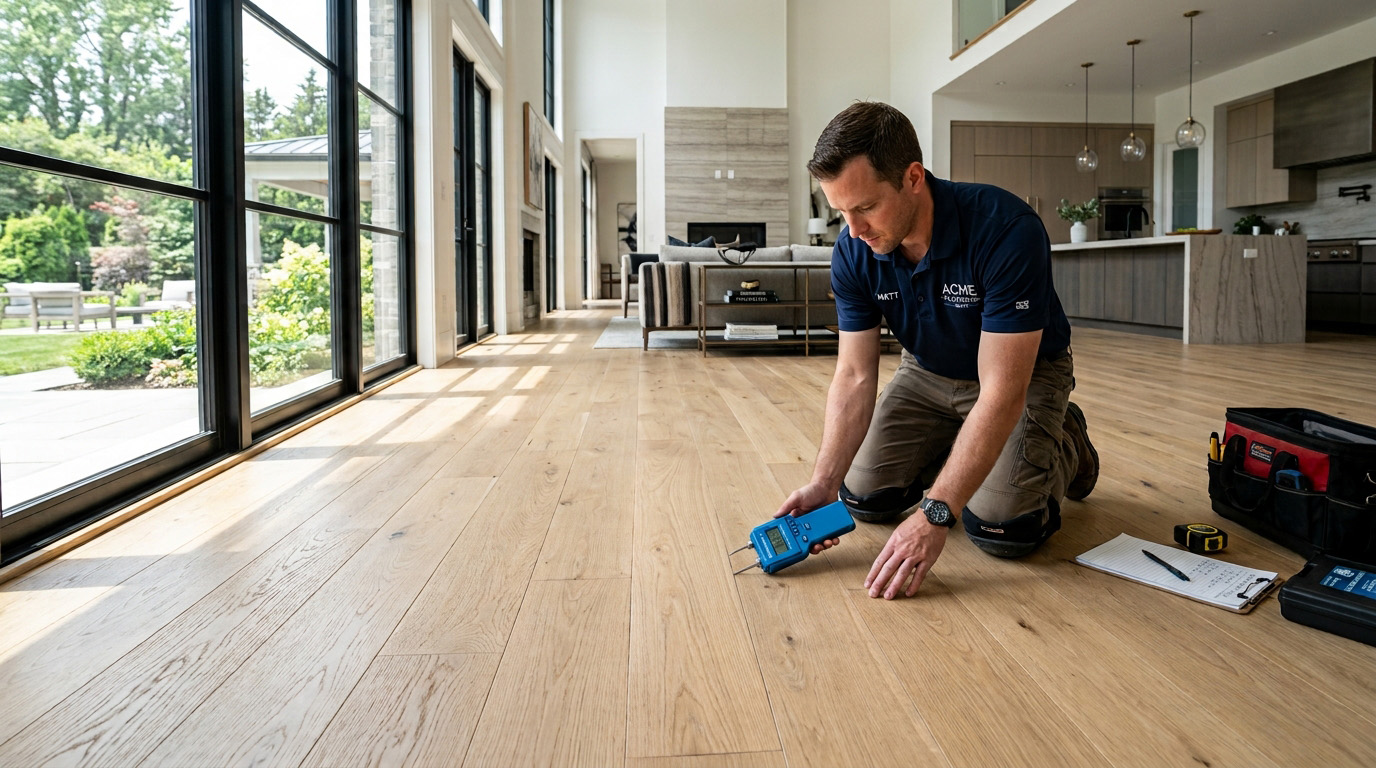
When hardwood flooring suddenly becomes uneven, moisture is often involved. But the way the boards change shape can provide important clues about what is happening beneath—or above—the floor.
Two of the most common moisture-related conditions are cupping and crowning.
They may look similar, but they describe opposite board shapes and can have very different moisture histories. Understanding the difference is important because treating the floor before identifying the cause can make the damage worse.
What Is Cupping?
What Is Hardwood Floor Cupping?
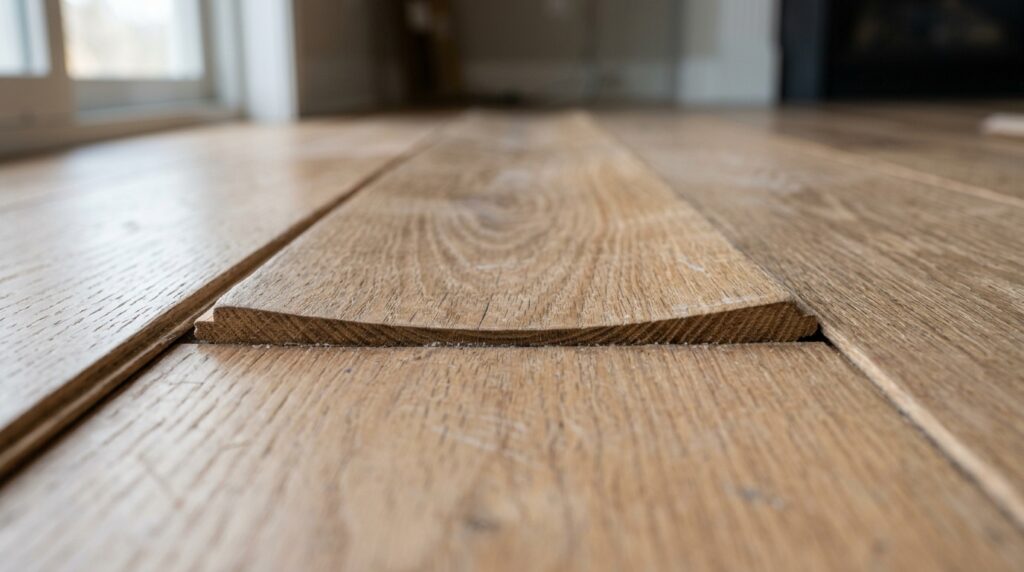
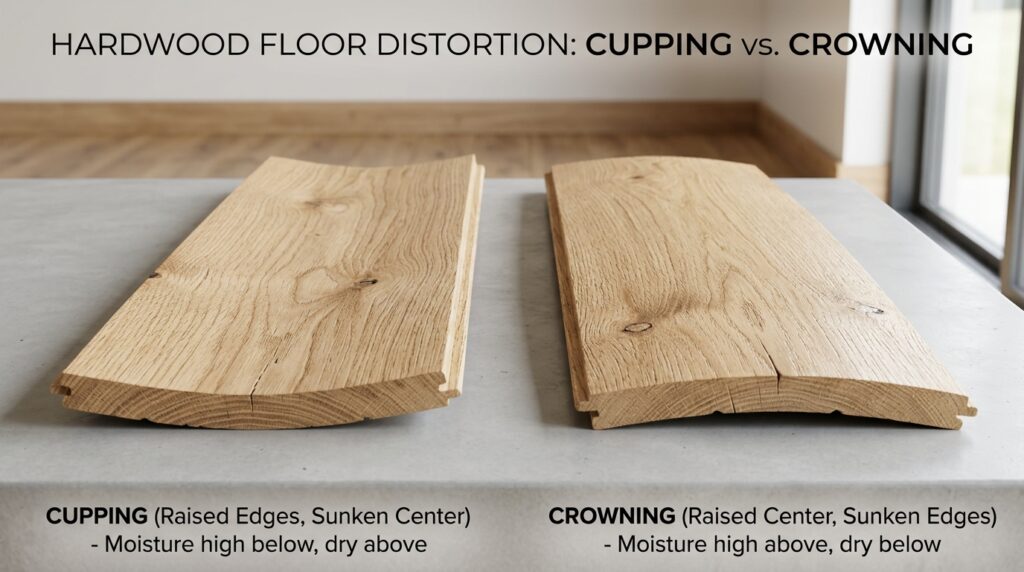
Cupping occurs when the edges of a hardwood plank are higher than the center, creating a slightly concave shape across the width of the board.
This typically happens when the bottom of the board contains more moisture than the top.
As the underside absorbs moisture and expands, the board changes shape and the edges rise.
Cupping doesn’t automatically mean the hardwood needs to be replaced. Depending on the severity and moisture source, some floors can improve significantly once conditions return to normal.
What Causes Hardwood Floors to Cup?
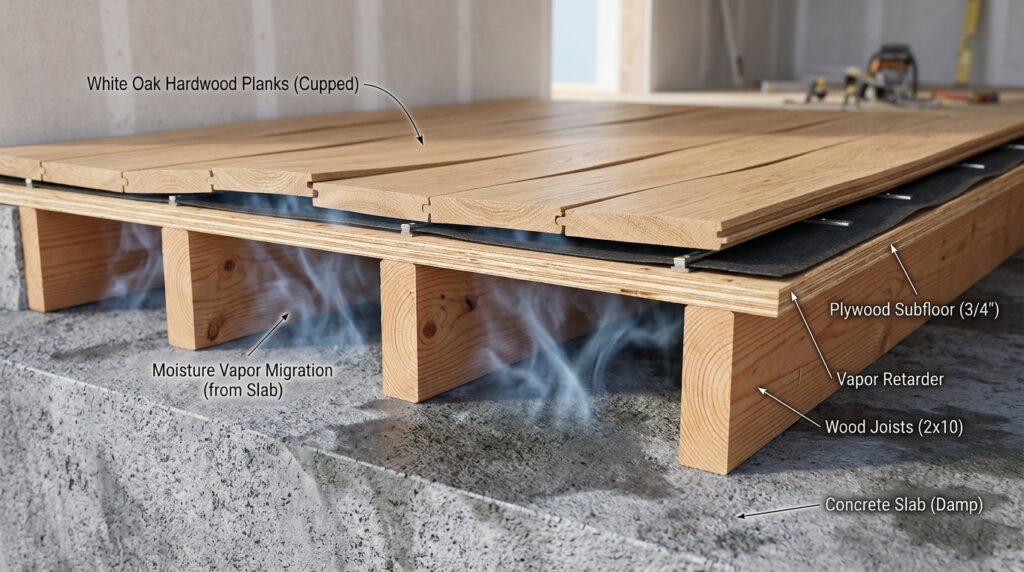
The important question isn’t simply whether moisture exists. It’s why there is more moisture affecting one side of the flooring than the other.
Possible causes include:
- Elevated moisture in a concrete or plywood subfloor
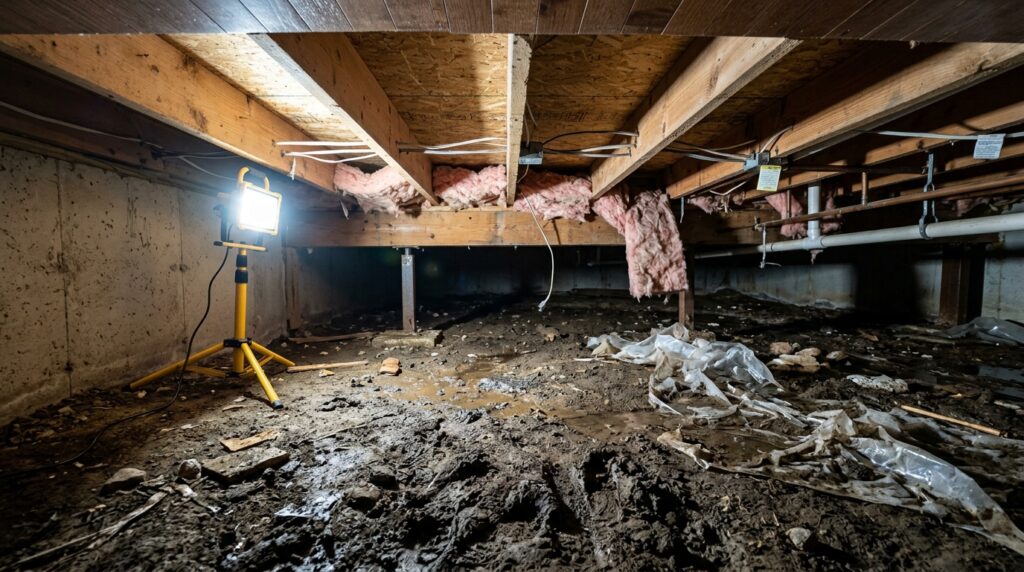
- Damp crawl spaces or basements
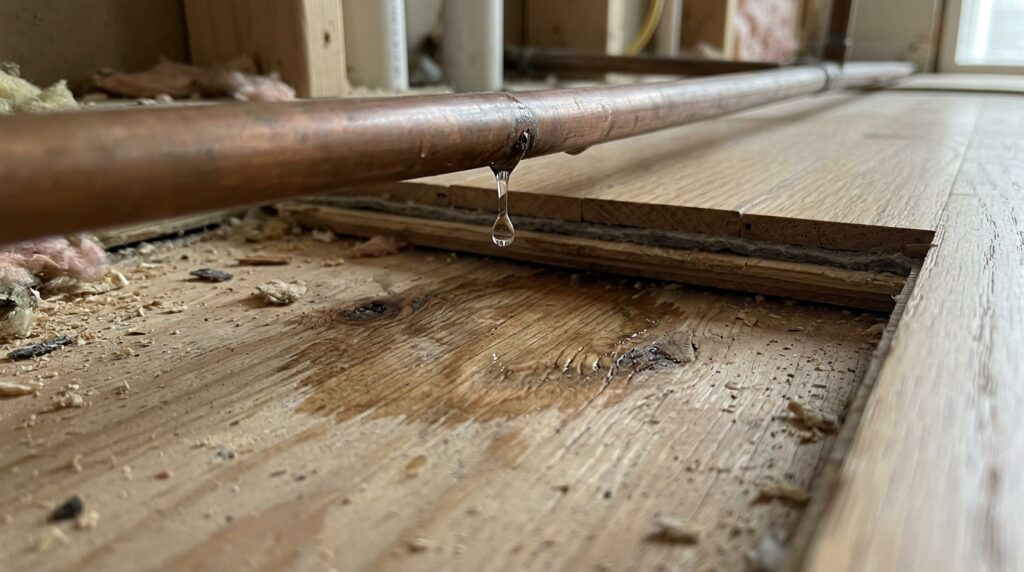
- Plumbing or appliance leaks
- Water intrusion
- Improper moisture protection over concrete
- Significant differences in humidity or moisture conditions above and below the flooring
Because several conditions can produce similar symptoms, the appearance of the floor alone usually isn’t enough to identify the exact source.
What Is Hardwood Floor Crowning?
Crowning is essentially the opposite of cupping.
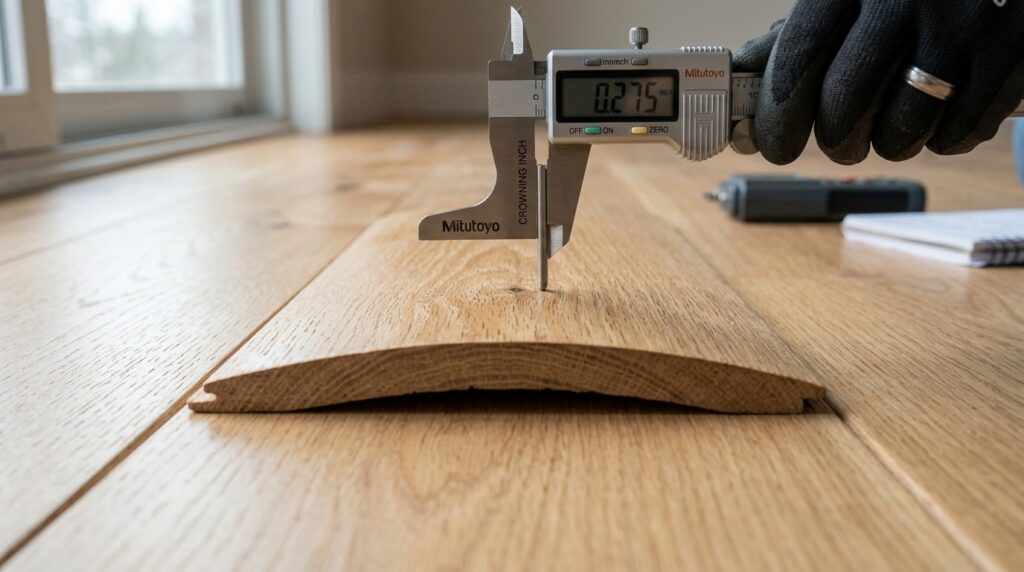
With a crowned board, the center of the plank sits higher than the edges, creating a convex shape.
Crowning can result from a moisture imbalance, but there’s another important cause homeowners should know about: sanding a cupped floor before it has fully stabilized.
Why Sanding a Cupped Floor Too Soon Can Create Crowning
When homeowners see raised edges on their hardwood, refinishing may seem like the obvious solution.
Sometimes that’s exactly what should not be done yet.
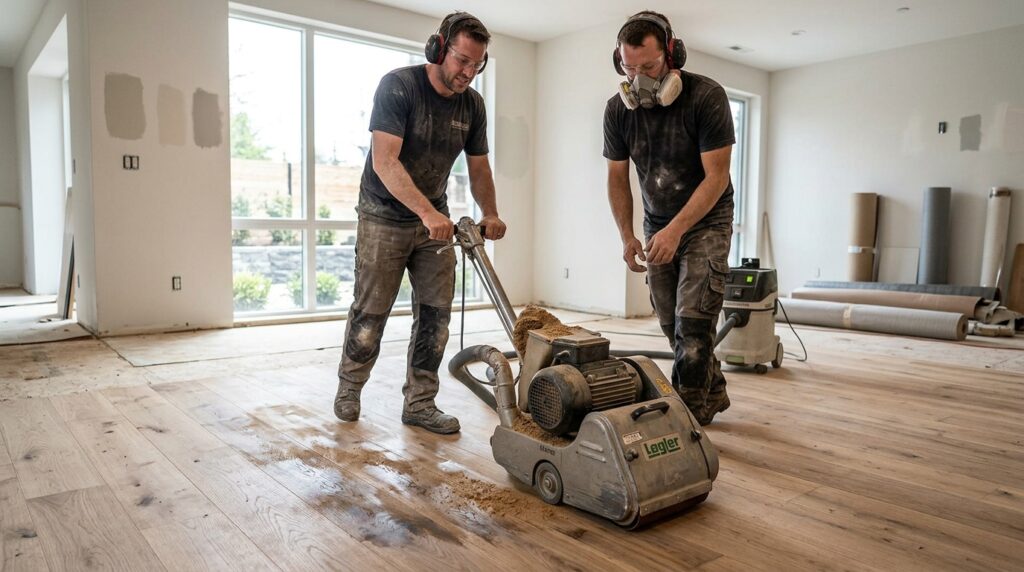
If a cupped floor is sanded while excess moisture is still present, sanding removes material from the raised edges.
As the flooring later dries and moves back toward its normal dimensions, the altered boards may end up higher in the center than at the edges.
The result can be a crowned appearance that was created or worsened by refinishing before the moisture conditions stabilized.
That’s why determining moisture conditions should come before deciding to sand a distorted hardwood floor.
Cupping vs. Crowning
| Cupping | Crowning | |
| Board shape | Edges higher than center | Center higher than edges |
| Moisture condition | Commonly associated with the underside being wetter than the surface | Can involve greater moisture exposure at the top or the drying of a previously cupped and prematurely sanded floor |
| Immediate sanding? | Generally no | Only after the cause and moisture conditions have been evaluated |
| First step | Find and correct the moisture source | Determine moisture history and current conditions |
The shape provides a clue, but it doesn’t automatically identify the exact source of the moisture.
Where Could the Moisture Be Coming From?
Moisture problems aren’t always obvious.
A hardwood floor may be affected by:
- A slow plumbing leak
- An appliance leak
- A damp basement or crawl space
- Elevated concrete slab moisture
- Water entering from an exterior wall or door
- A previous flooding event
- Improper indoor humidity control
Sometimes the visible flooring damage appears far from the original source of the moisture.
That’s why simply repairing the affected boards without investigating the surrounding conditions can lead to the same problem returning.
Why Professional Moisture Testing Matters
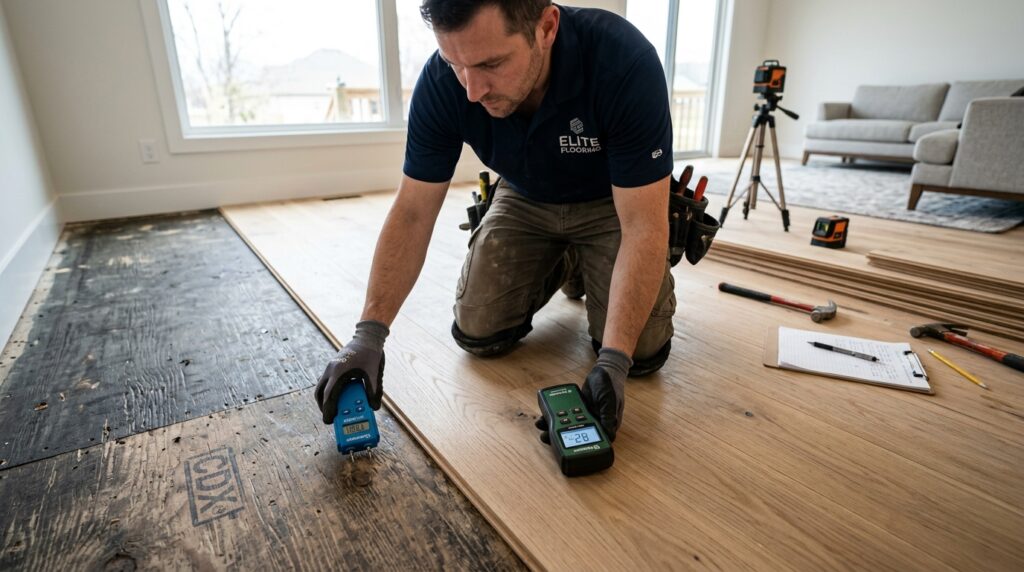
A hardwood floor can look dry while still containing elevated moisture.
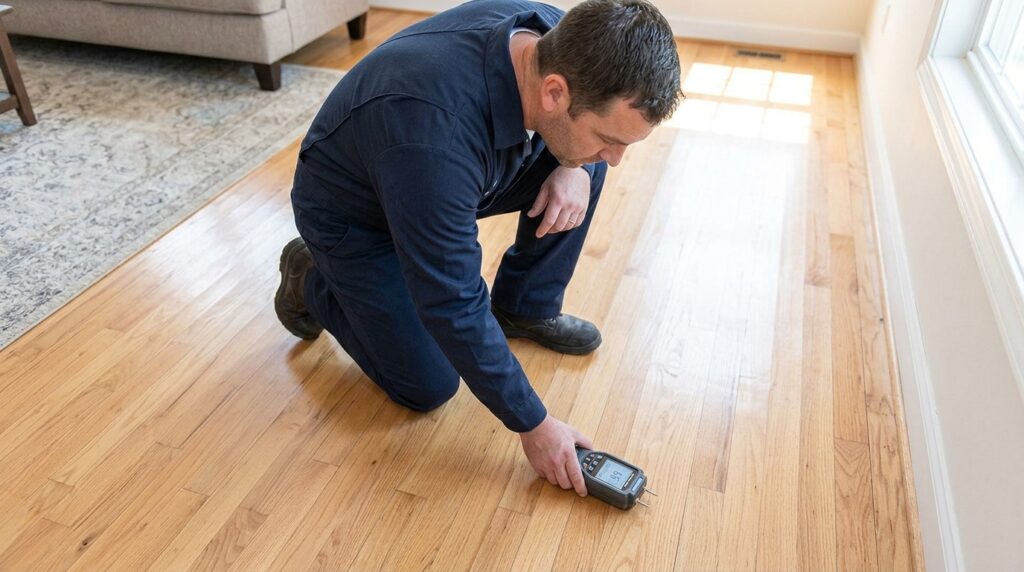
Professional evaluation may include measurements of:
- Hardwood moisture content
- Wood subfloor moisture content
- Concrete moisture conditions
- Indoor relative humidity
- Temperature and environmental conditions
Readings should be taken in multiple locations and compared with unaffected areas whenever possible.
This helps determine whether the flooring is still drying, whether moisture is continuing to enter the system, and whether conditions are stable enough to consider repairs.
Will a Cupped Hardwood Floor Flatten on Its Own?
Sometimes.
If cupping is relatively minor and the moisture source is identified and corrected quickly, the flooring may gradually move back toward its original shape as moisture levels equalize.
That process can take time.
This is one reason immediately sanding a cupped floor can be a mistake. A floor that appears badly distorted today may look very different after the moisture source has been corrected and the flooring has been given sufficient time to stabilize.
Severe or prolonged moisture exposure, however, can permanently damage boards and require replacement.
When Does the Floor Need to Be Refinished or Replaced?
There is no universal answer.
Once the moisture problem has been corrected and conditions have stabilized, the flooring should be evaluated again.
Depending on the remaining damage, the solution may involve:
- No additional repair if the boards recover sufficiently
- Sanding and refinishing
- Replacing isolated damaged boards
- Repairing damaged subfloor areas
- Partial or complete flooring replacement in severe cases
The correct repair depends on the condition of the flooring after the moisture issue has been addressed, not simply how the floor looked when the problem was first discovered.
How to Reduce the Risk of Moisture Problems
Moisture-related flooring problems are much easier to prevent than repair.
Before and after hardwood installation, important precautions include:
- Testing subfloor conditions before installation
- Following the flooring manufacturer’s moisture requirements
- Using appropriate moisture-control systems when required
- Maintaining stable indoor temperature and humidity
- Correcting plumbing or building-envelope leaks promptly
- Monitoring basements and crawl spaces for excessive moisture
- Addressing water intrusion as quickly as possible
For many hardwood products, manufacturers commonly recommend indoor relative humidity around 35% to 55%, but the specific requirements for the installed flooring should always take priority.
Final Thoughts
Cupping and crowning aren’t simply cosmetic problems. They’re clues that help tell the story of what has happened to a hardwood floor.
Cupping means the edges are higher than the center. Crowning means the center is higher than the edges.
But identifying the shape is only the beginning.
The most important step is determining why the flooring changed shape and whether the moisture conditions are still active.
Most importantly, avoid rushing to sand a cupped floor before the moisture source has been identified and the flooring has stabilized. In some situations, waiting and correcting the underlying conditions can allow the hardwood to recover naturally—and prevent a repair from making the problem worse.
Request a consultation:
renovaflooring.com
Visit our website for more inspiration and design ideas!