

A squeaky hardwood floor doesn’t necessarily mean there’s something wrong with the hardwood itself.
In many cases, the sound is caused by movement somewhere beneath the finished floor. The hardwood, subfloor, fasteners, and floor joists all work together as one system. When one layer moves against another under foot traffic, friction can create squeaks, creaks, or popping sounds.
One possible contributor is joist deflection—the slight movement of the structural framing beneath the floor.
Understanding where the movement originates is the first step toward fixing the problem correctly.
What Is Joist Deflection?
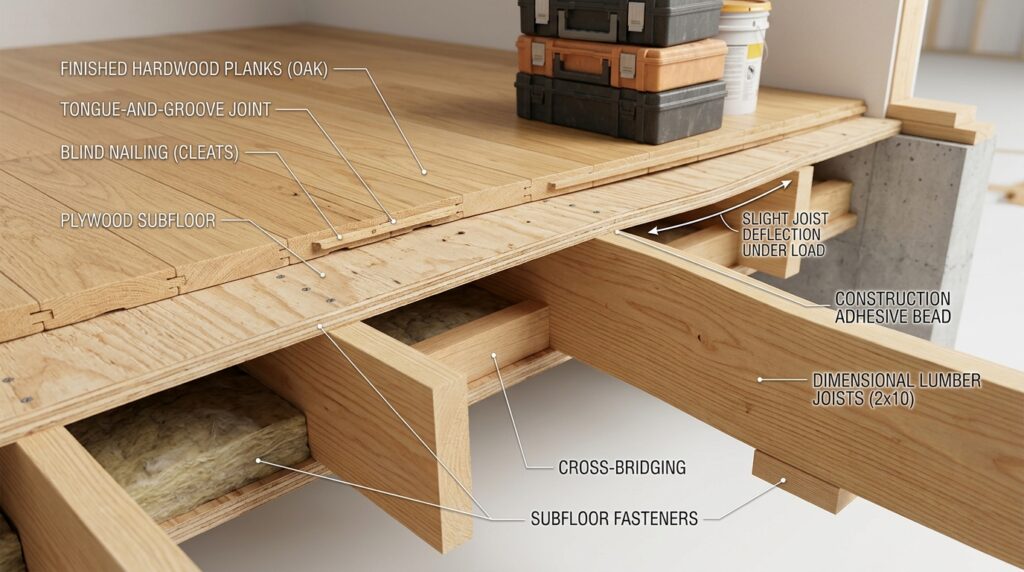
Floor joists are structural members that support the subfloor and everything above it.
All properly designed joists experience some amount of deflection when weight is applied. A small amount of movement is normal and accounted for in structural design.
Problems can develop when the floor system moves enough to create friction or separation between components.
As someone walks across the floor, movement may occur between:
- Joists and subfloor panels
- Subfloor panels and fasteners
- Hardwood and the subfloor
- Individual hardwood boards
- Adhesive connections in certain installation systems
That movement—not necessarily the hardwood itself—is what often produces the noise.
Why Does Movement Create Squeaks?
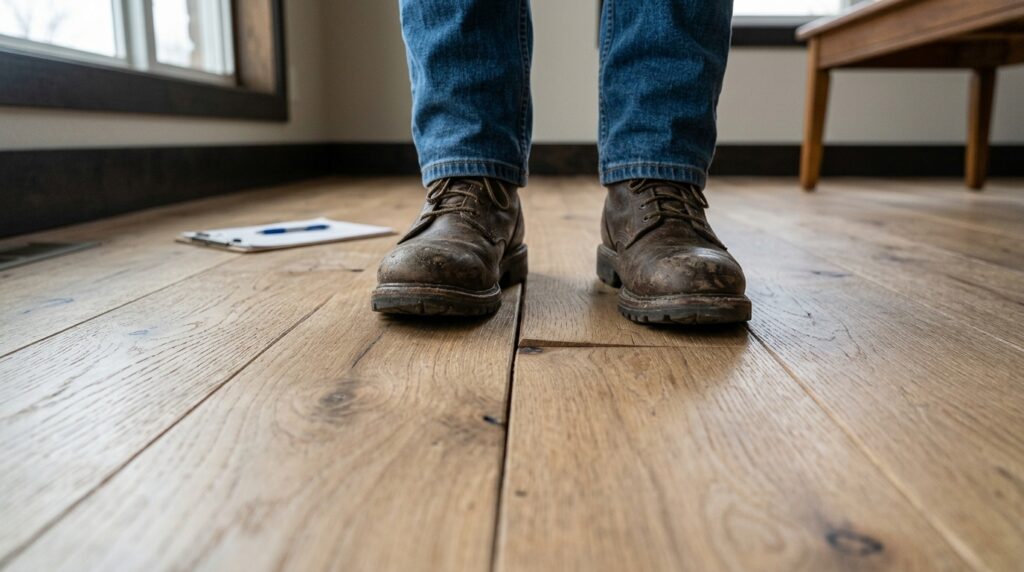
A floor squeaks when two components move against each other.
For example, a slightly loose subfloor panel may move up and down against a fastener every time someone steps nearby.
In another situation, movement in the framing may allow the subfloor to flex enough for hardwood boards to rub against each other.
The sound may come from the finished floor, but the actual source can be several layers below it.
That’s why simply treating the hardwood surface doesn’t always solve the problem.
When Joist Deflection Can Contribute to Floor Noise
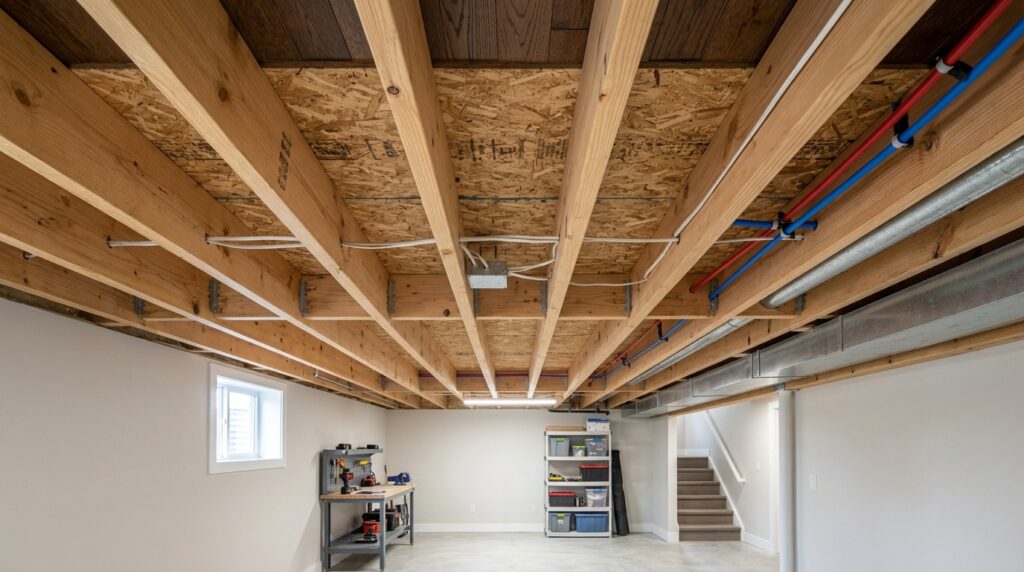
Joist deflection becomes relevant when movement in the framing is being transferred into the flooring system above.
Several conditions can contribute to excessive or noticeable movement.
Long Joist Spans
The farther a joist spans between structural supports, the more it can deflect under load.
A floor may still be structurally adequate while feeling more flexible than another floor built with shorter spans or stiffer framing.
Structural Modifications
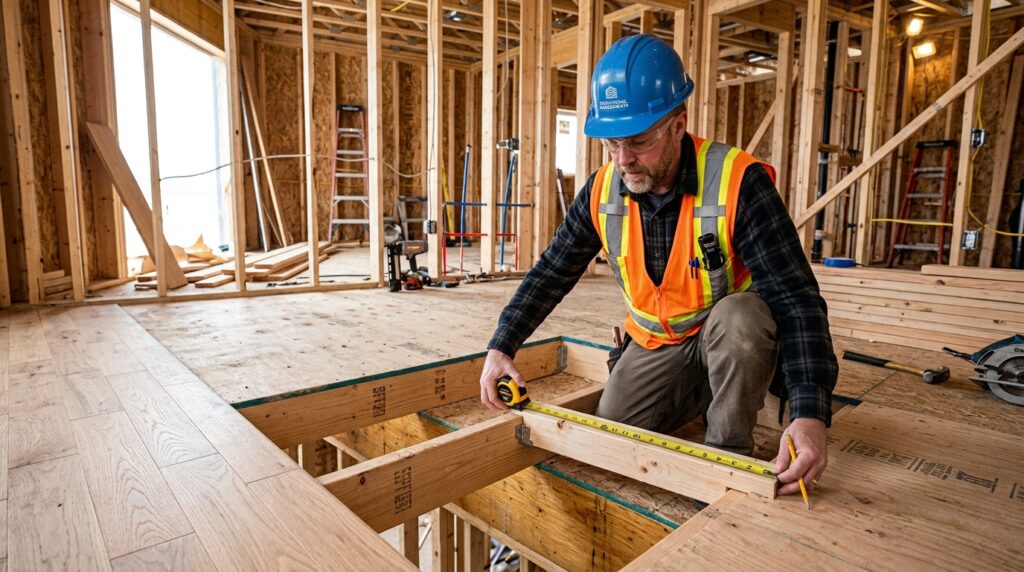
Renovations can sometimes affect the original framing.
Improperly cut or notched joists, removed supports, penetrations in inappropriate locations, or other structural modifications can change how the floor system performs.
Damage From Moisture or Other Conditions
Joists affected by prolonged moisture exposure, rot, or other deterioration may lose structural integrity.
In these situations, the squeak is secondary—the condition of the framing itself is the more important concern.
Concentrated or Changed Loads
Significant renovations or unusually heavy loads can change how an existing floor system behaves.
When noticeable floor movement begins after a major renovation, the entire assembly may need to be evaluated rather than assuming the hardwood installation is responsible.
Joist Deflection Isn’t the Only Cause of Squeaky Hardwood
This is important.
A squeaky floor does not automatically mean there’s a structural problem.
Many hardwood squeaks come from much simpler conditions.
Loose Subfloor
A subfloor panel that isn’t tightly secured to the joists can move slightly when someone walks over it.
That movement can create a squeak as the panel rubs against a nail, screw, or neighboring material.
Loose Hardwood Boards
Individual boards can sometimes develop enough movement to rub against adjacent planks or fasteners.
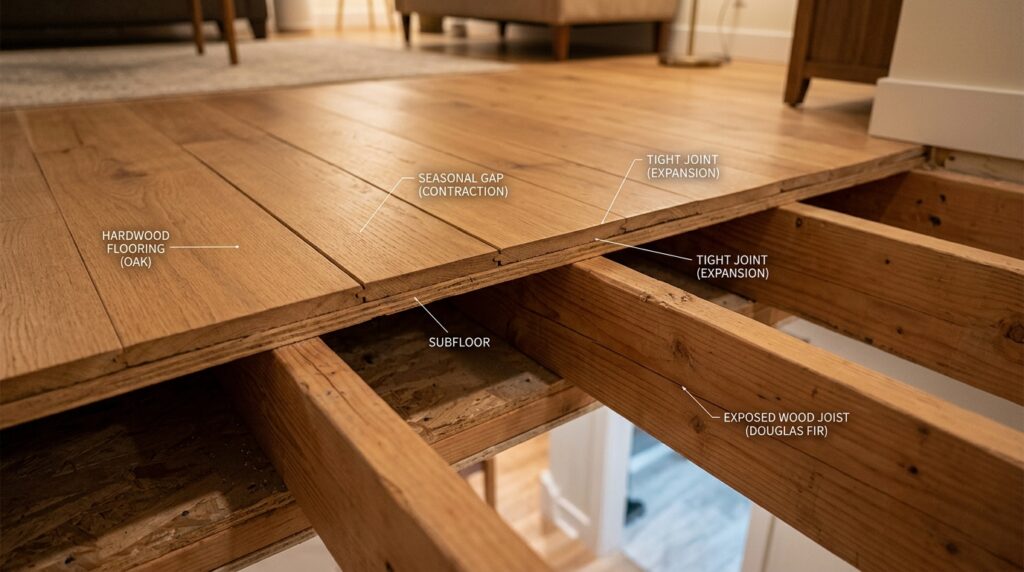
Seasonal Wood Movement
Hardwood and wood subfloors naturally expand and contract as indoor humidity changes.
This can cause squeaks that appear during certain seasons and disappear during others.
Installation Conditions
Insufficient fastening, subfloor irregularities, inadequate preparation, or other installation-related conditions can also allow unwanted movement.
The sound alone usually isn’t enough to determine the cause.
Signs the Problem May Be Deeper Than the Hardwood
A simple squeak isn’t necessarily concerning.
However, additional symptoms can indicate that the subfloor or framing should be investigated.
These include:
- A floor that feels noticeably bouncy or springy
- Visible movement when someone walks across the room
- Significant vibration
- Multiple squeaks concentrated along the same area
- Soft or sagging sections of flooring
- Cracks or movement appearing in nearby finishes
These symptoms don’t automatically confirm a structural problem, but they provide a reason to look beyond the hardwood surface.
How Professionals Find the Source of a Squeak
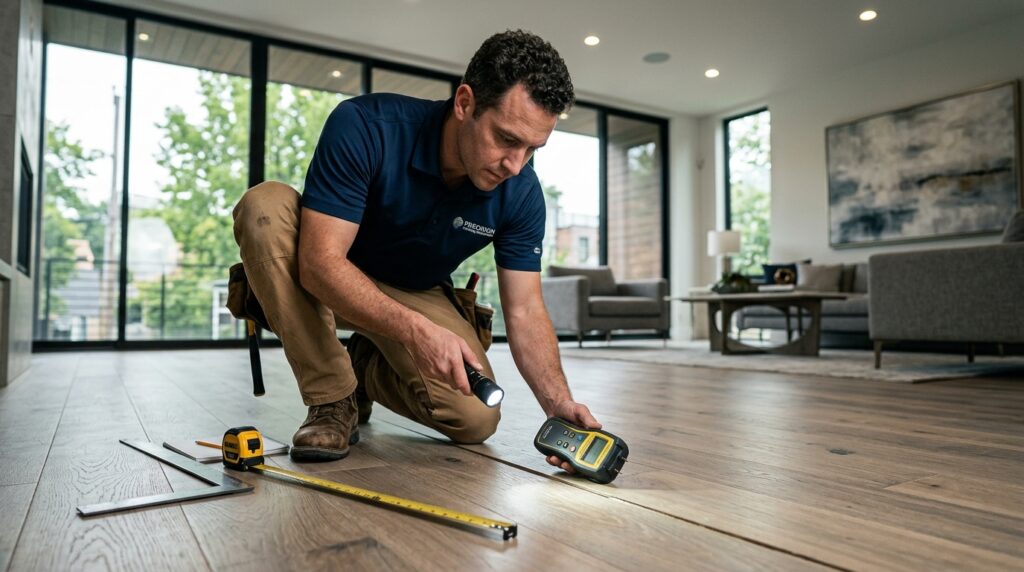
Diagnosing a noisy hardwood floor requires identifying what is actually moving.
A professional evaluation may include:
- Locating where the noise occurs
- Checking for movement in individual hardwood boards
- Evaluating subfloor attachment
- Inspecting accessible joists from a basement or crawl space
- Reviewing joist spacing and spans
- Looking for moisture damage or structural alterations
- Evaluating whether the noise changes with seasonal conditions
When access from below is available, it can be especially helpful because the movement can sometimes be observed while another person walks across the floor above.
Can a Squeaky Hardwood Floor Be Repaired?
In many cases, yes.
But the correct repair depends entirely on the source of the movement.
Possible solutions may include:
- Refastening a loose subfloor
- Securing isolated hardwood boards
- Correcting localized installation problems
- Addressing moisture conditions
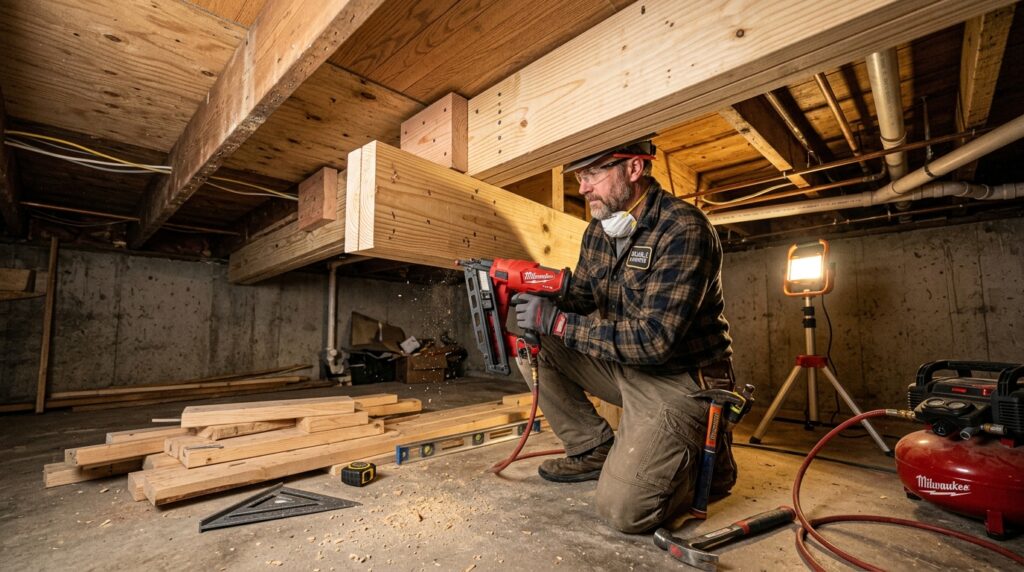
- Repairing damaged framing
- Reinforcing structural components when necessary
Structural reinforcement should be based on the actual framing condition and, when appropriate, evaluated by a qualified structural professional.
The goal isn’t simply to stop the sound. It’s to eliminate the movement creating it.

Should You Be Worried About a Squeaky Floor?
Not necessarily.
Many hardwood floors develop occasional squeaks without having a structural problem.

A squeak becomes more important when it’s accompanied by noticeable movement, sagging, softness, increasing vibration, or other changes in the floor system.
In those situations, covering up the noise without identifying its source can leave the actual problem unresolved.
Final Thoughts

A squeaky hardwood floor doesn’t automatically mean the hardwood was installed incorrectly—and it doesn’t automatically mean the joists are failing.
The sound is usually evidence that something within the flooring system is moving.
That movement could originate from the hardwood, fasteners, subfloor, moisture conditions, or structural framing beneath it.
Joist deflection is one possible contributor, particularly when the floor also feels unusually flexible or bouncy.
The most effective repair starts by identifying exactly where the movement is occurring. Once the source is understood, the problem can be corrected at its cause rather than simply masking the squeak.
Request a consultation:
renovaflooring.com
Visit our website for more inspiration and design ideas!