
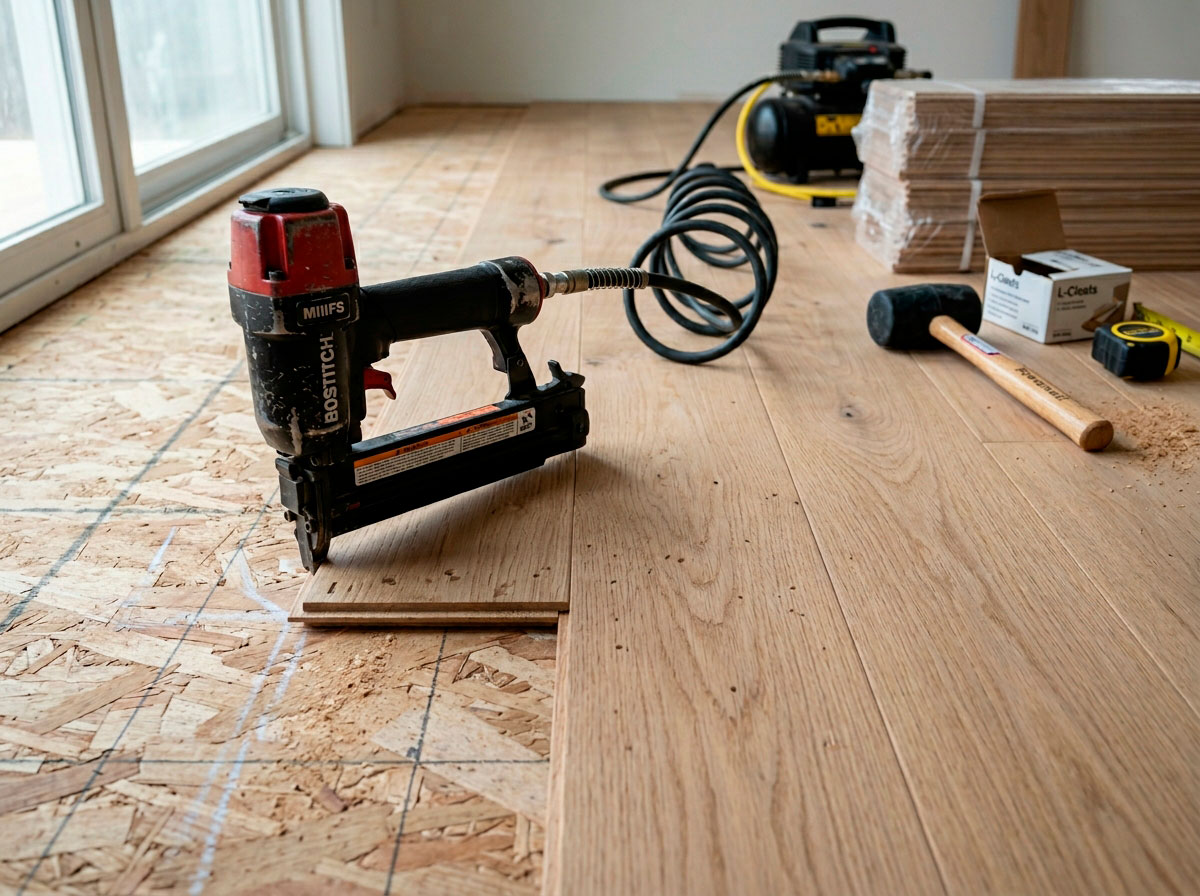
Few things are more frustrating than completing a hardwood floor installation and discovering small dents, compression marks, or surface dimples scattered across otherwise flawless boards.
During installation, these imperfections may seem minor or barely noticeable. But once lighting hits the finished floor, especially on wide plank or low-sheen surfaces, they become highly visible.
In many cases, installers initially assume the issue is caused by defective material or excessive fastening pressure. However, one of the most common causes is far simpler and frequently overlooked: the flooring nailer faceplate.
Although small, this component plays a major role in installation quality, particularly on premium flooring projects where surface consistency is critical.
What Is a Flooring Nailer Faceplate?
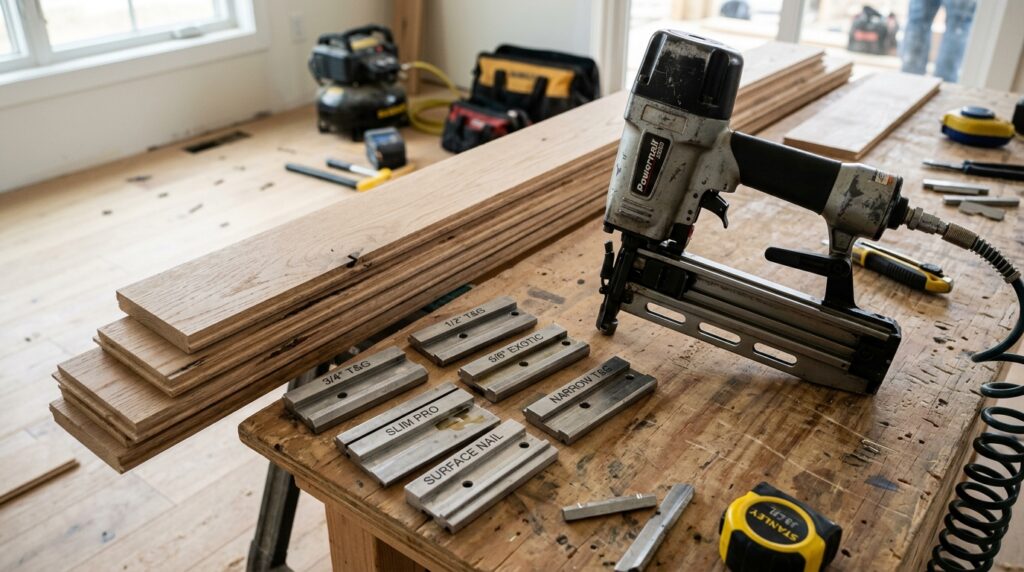
The faceplate is the portion of a flooring nailer that contacts the flooring surface while fasteners are driven into the tongue of the board.
Its purpose is to stabilize the nailer and maintain proper positioning during installation.
Different faceplates are designed for:
- Specific flooring thicknesses
- Solid versus engineered hardwood
- Prefinished versus unfinished material
- Different plank profiles and edge designs
- Softer or more delicate flooring surfaces
Using the wrong faceplate can concentrate pressure unevenly against the wood surface, creating visible compression marks during installation.
Why Surface Dimples Happen
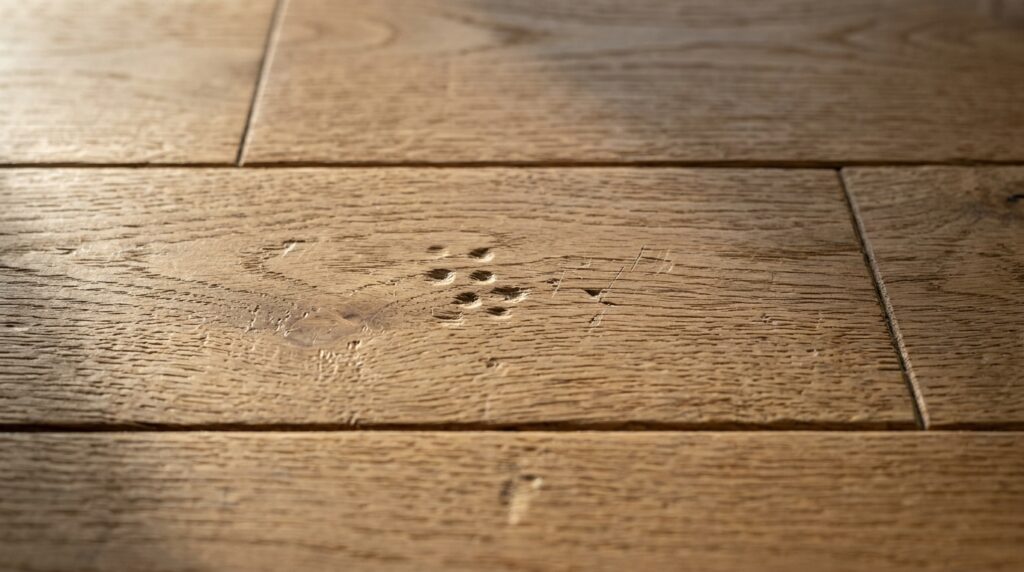
Surface dimples typically occur when installation pressure is transferred unevenly into the flooring material.
Common causes include:
- Incorrect faceplate profile
- Improper contact angle during fastening
- Excessive pneumatic pressure
- Tool instability during impact
- Mismatch between the nailer setup and flooring thickness
- Worn or damaged contact surfaces on the tool
Instead of distributing force evenly, the nailer creates localized pressure points that compress the wood fibers and leave visible marks behind.
We often see these issues become more noticeable as natural light moves across the floor or after finish application enhances surface reflection.
Why Premium Flooring Reveals Installation Flaws More Easily

High-end flooring materials tend to expose installation imperfections more clearly than standard products.
This is especially true with:
- White oak flooring
- Wide plank installations
- Matte and low-sheen finishes
- Prefinished hardwood
- Floors with minimal grain variation
Because these surfaces create a cleaner and more uniform visual field, even small compression marks become easier to detect once the project is complete.
On luxury projects, minor surface inconsistencies can significantly affect the perceived quality of the installation
The Hidden Cost of “Small” Surface Damage
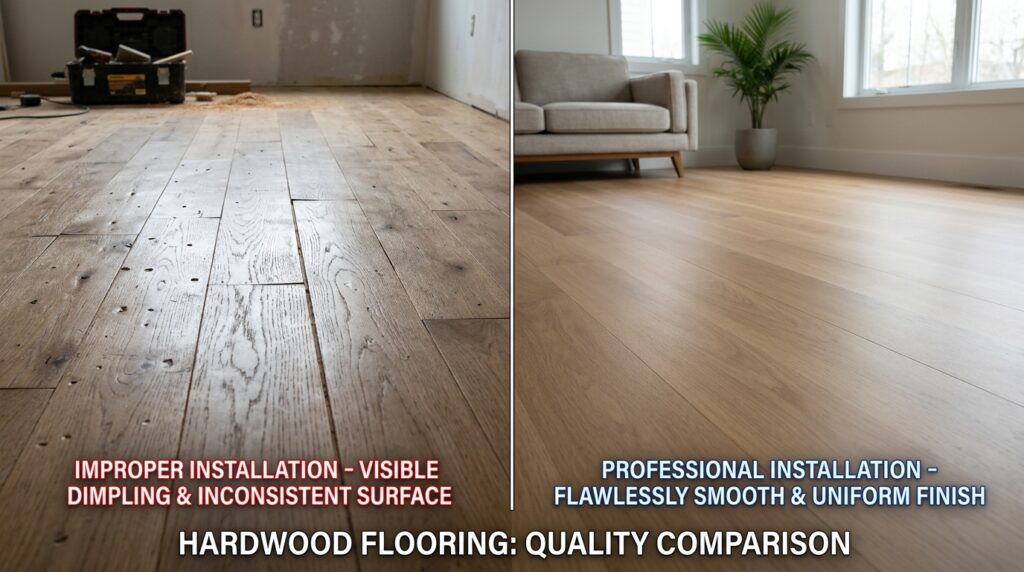
Surface dimples may appear cosmetic, but their impact often extends further than expected.
Common consequences include:
- Client dissatisfaction during final walkthroughs
- Additional board replacement and correction work
- Delays caused by reinstallation
- Reduced visual consistency across large areas
- Loss of perceived craftsmanship quality
On premium hardwood installations, correcting these issues after completion can become expensive and time-consuming.
Preventing them during installation is far more efficient than attempting to hide them later.
How the Correct Faceplate Improves Installation Quality
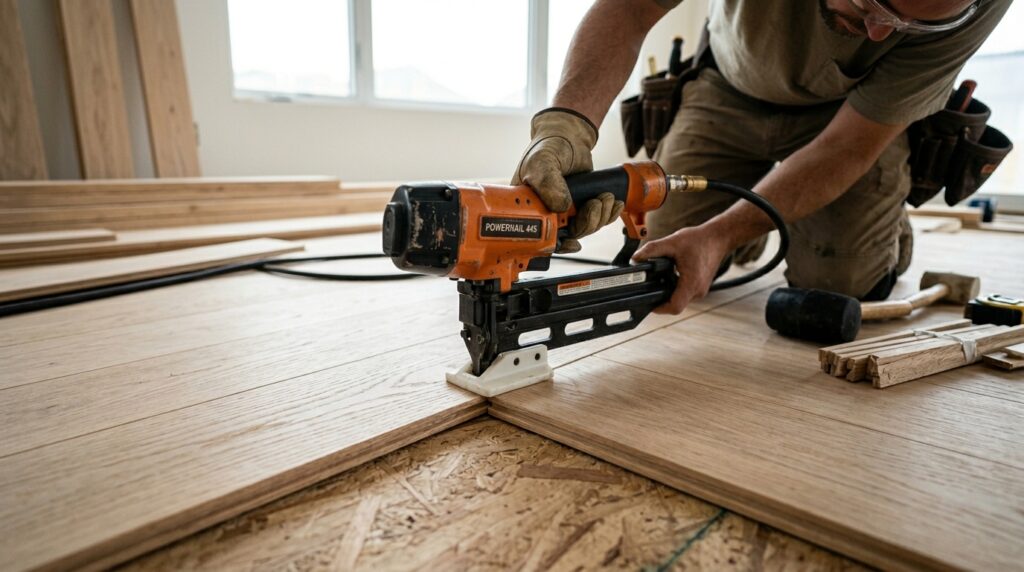
Using the correct flooring nailer faceplate helps installers:
- Distribute pressure evenly across the flooring surface
- Reduce compression and impact marks
- Protect delicate finishes and softer wood fibers
- Improve tool stability during fastening
- Maintain consistency throughout the installation
Professional installers treat faceplate selection the same way they treat blade selection, moisture testing, or fastener choice: as a technical decision that directly affects the final result.
Other Factors That Can Contribute to Surface Marks
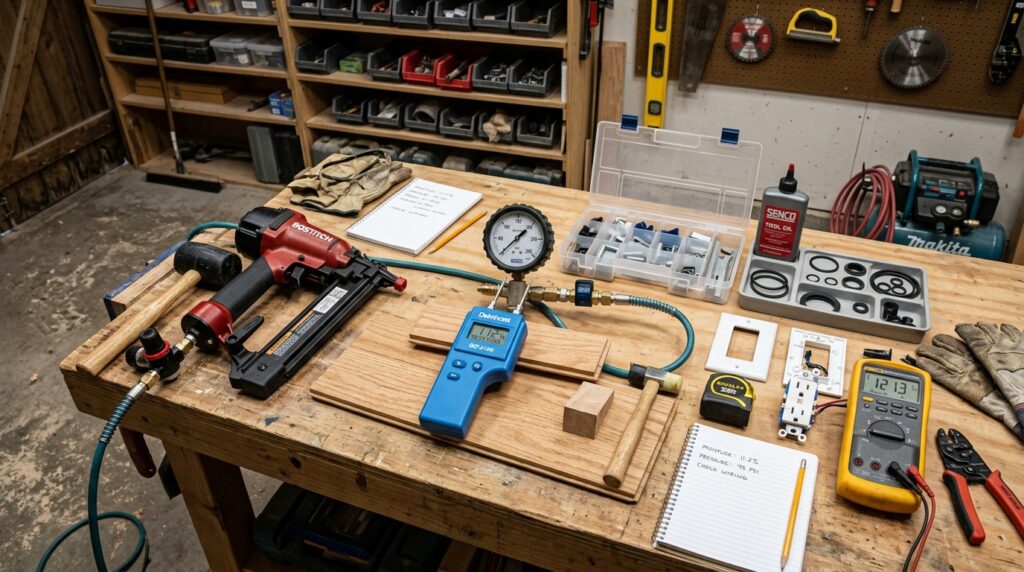
Not every surface imperfection is caused by the faceplate alone.
Additional contributing factors may include:
- Incorrect air pressure settings
- Worn nailer components
- Dirty or damaged contact surfaces
- Moisture-related wood movement
- Improper installation speed or technique
Accurately identifying the source of the issue often requires evaluating the entire installation setup rather than focusing on a single variable
Precision Installation Depends on More Than the Flooring Material

High-end hardwood flooring installation is built on precision.
Small setup decisions, especially involving tools and equipment, can create highly visible consequences once the floor is complete.
When dimples, compression marks, or recurring surface imperfections appear during installation, the issue is often not the flooring material itself, but the configuration of the installation system being used.
Because flawless floors are not defined only by the quality of the wood.
They are defined by the precision, preparation, and technical discipline behind every stage of the installation process.
Request a consultation:
renovaflooring.com
Visit our website for more inspiration and design ideas!