
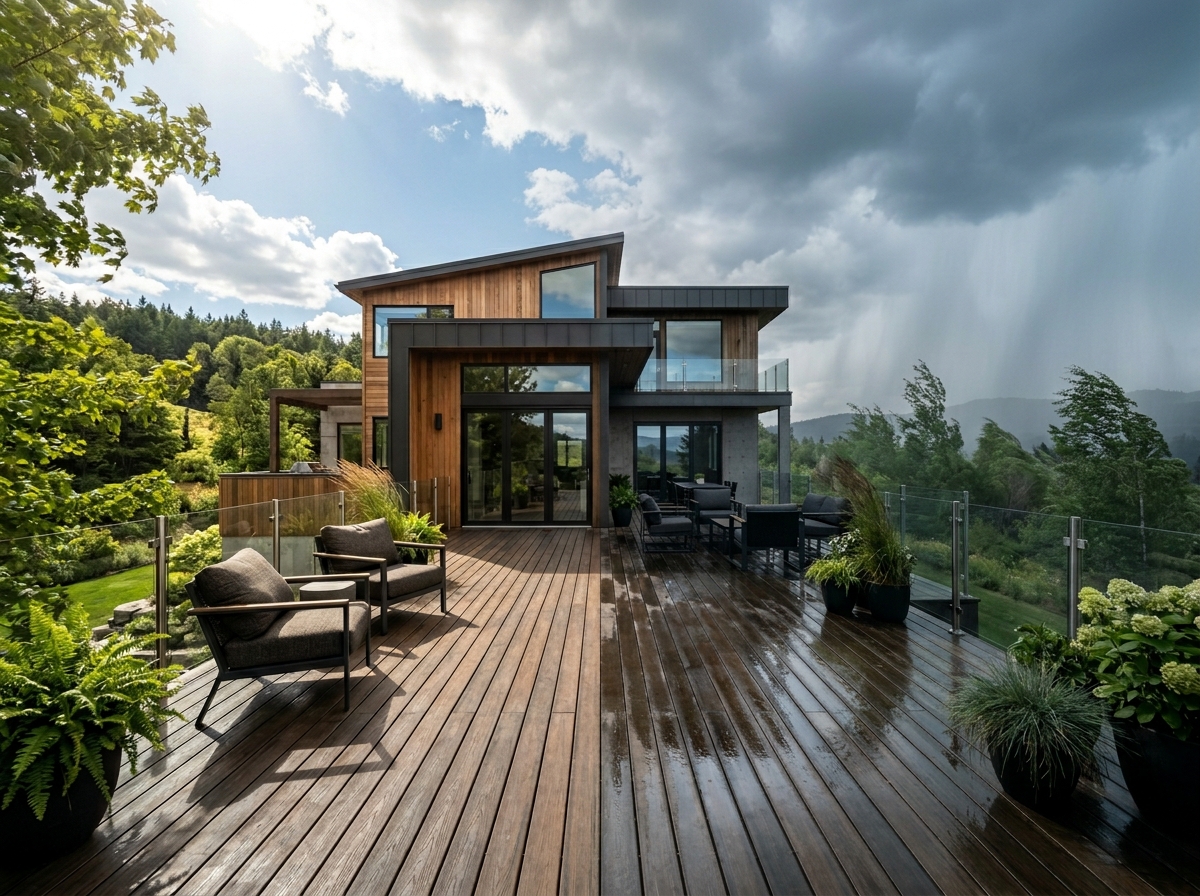
In the Mid-Atlantic region, extreme weather is not an occasional event, it is a constant cycle.
High humidity, heavy rainfall, intense sun exposure, and freezing winter conditions create continuous stress on outdoor structures. Decks are especially vulnerable, as they are directly exposed to these elements year-round.
Over time, this stress leads to movement, moisture intrusion, and structural deterioration.
The difference between a deck that lasts decades and one that fails prematurely often comes down to how well it is designed, built, and maintained to handle these conditions.
1. What Weather Actually Does to a Deck
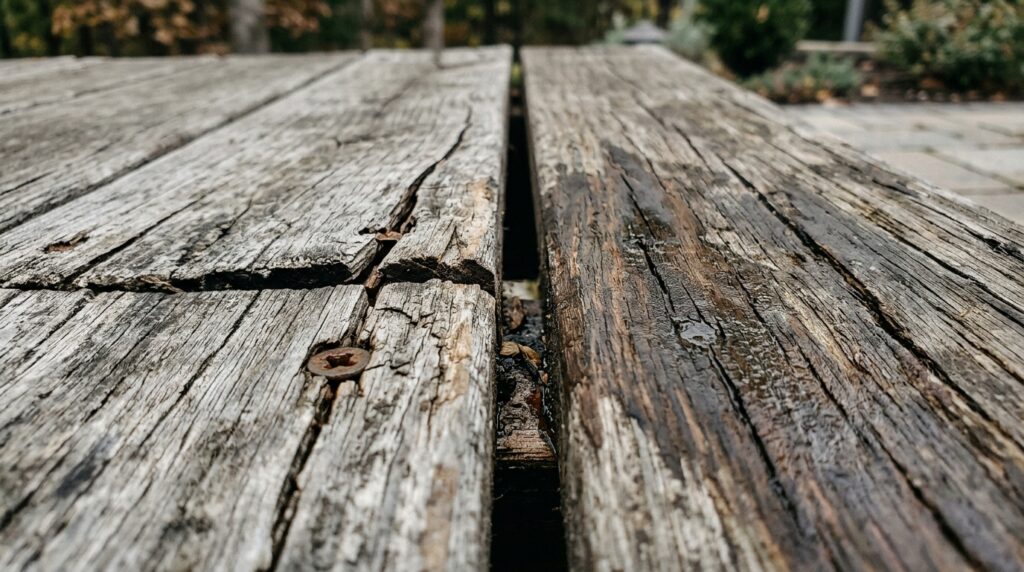
Extreme weather doesn’t damage a deck overnight. It breaks it down gradually.
In this climate:
- Heat and UV exposure dry out surfaces and degrade finishes
- Moisture causes expansion, swelling, and potential rot
- Freeze-thaw cycles introduce cracking and structural stress
- Temperature swings accelerate material fatigue
This constant expansion and contraction is the primary reason decks deteriorate over time.
2. Surface Protection Is Only Part of the Solution
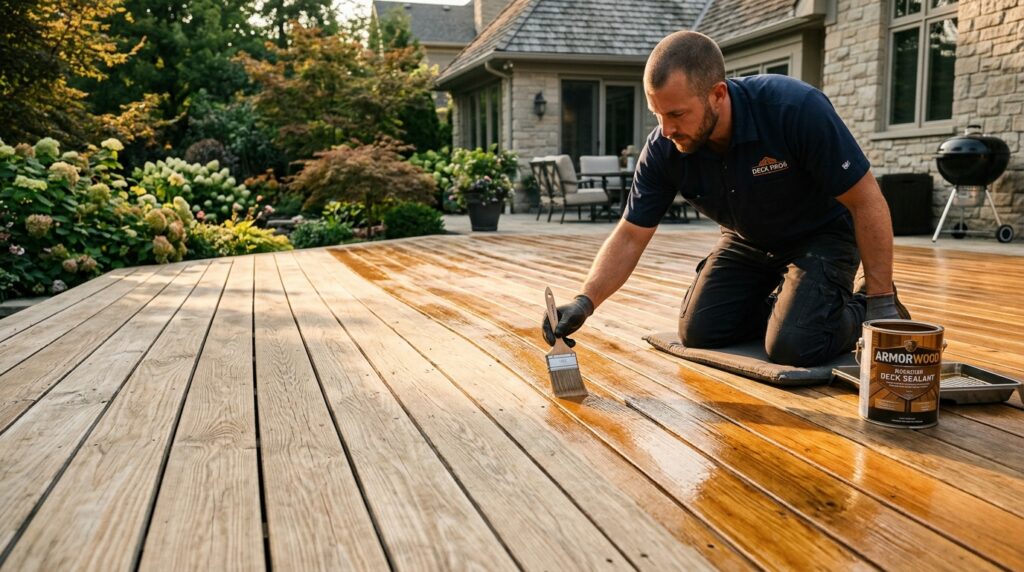
Sealing a deck is important, but it is often misunderstood.
A properly applied, high-quality finish helps:
- Reduce moisture penetration
- Protect against UV degradation
- Slow down surface wear
However, sealing alone does not solve underlying issues such as poor drainage, lack of airflow, or improper installation.
We frequently see decks that were well-maintained on the surface, but still failed due to deeper structural or moisture-related problems.
3. Moisture Management Is Critical
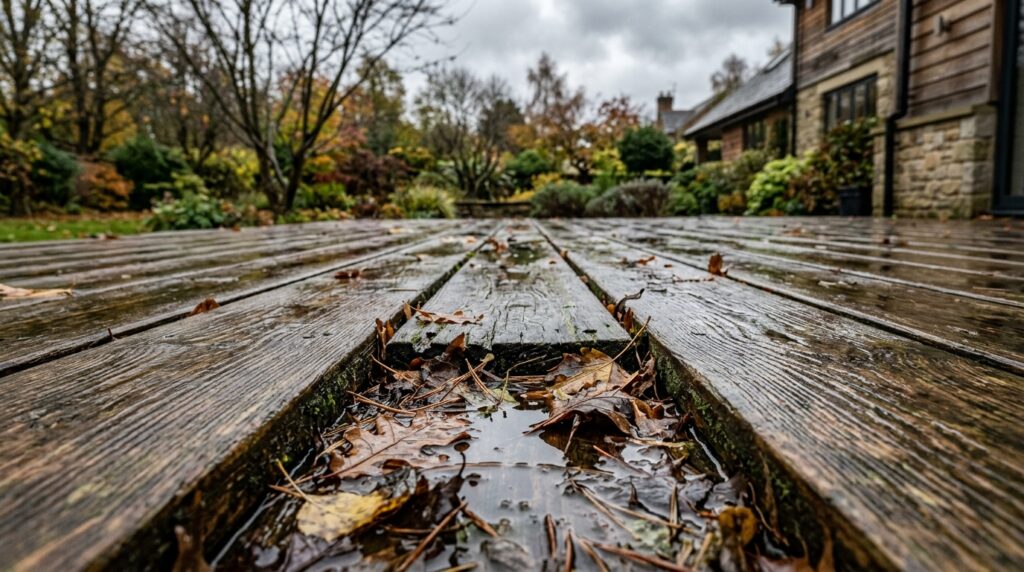
Water is the most damaging element a deck faces.
Long-term performance depends on how well moisture is controlled through:
- Proper drainage design
- Adequate spacing between boards
- Airflow beneath the structure
- Prevention of water retention at connection points
Without these factors in place, even high-end materials will deteriorate prematurely
4. Material Selection Must Match the Environment
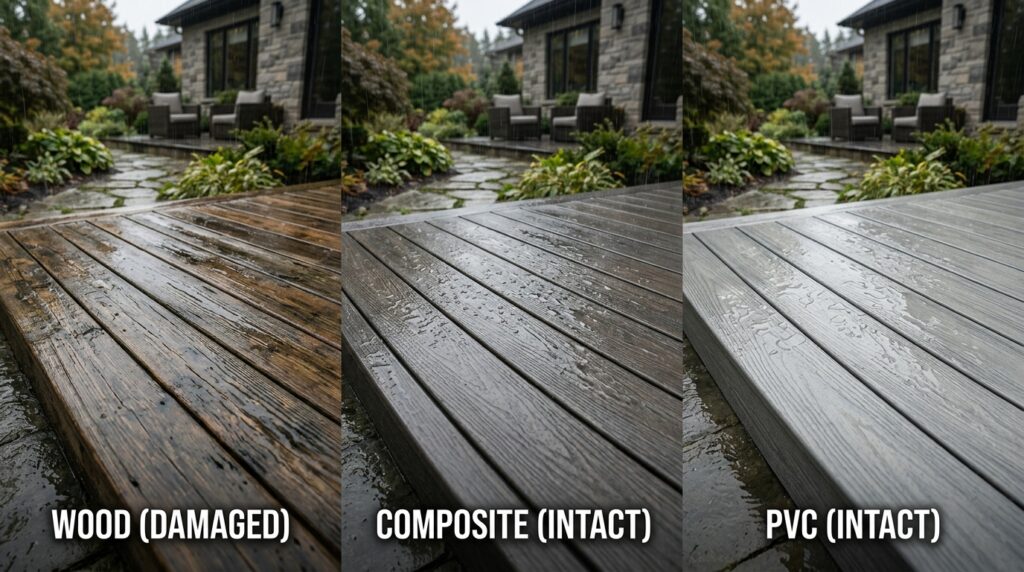
Different materials respond differently to extreme weather conditions.
Composite and PVC products offer stability and moisture resistance, while hardwood decking provides unmatched durability and natural performance when properly installed.
Exotic hardwoods such as ipe, cumaru, and teak perform exceptionally well in demanding climates, but only when the system is designed correctly to accommodate movement, ventilation, and drainage.
Material choice alone does not guarantee performance. It must be paired with proper execution.
5. Seasonal Inspection Prevents Larger Failures
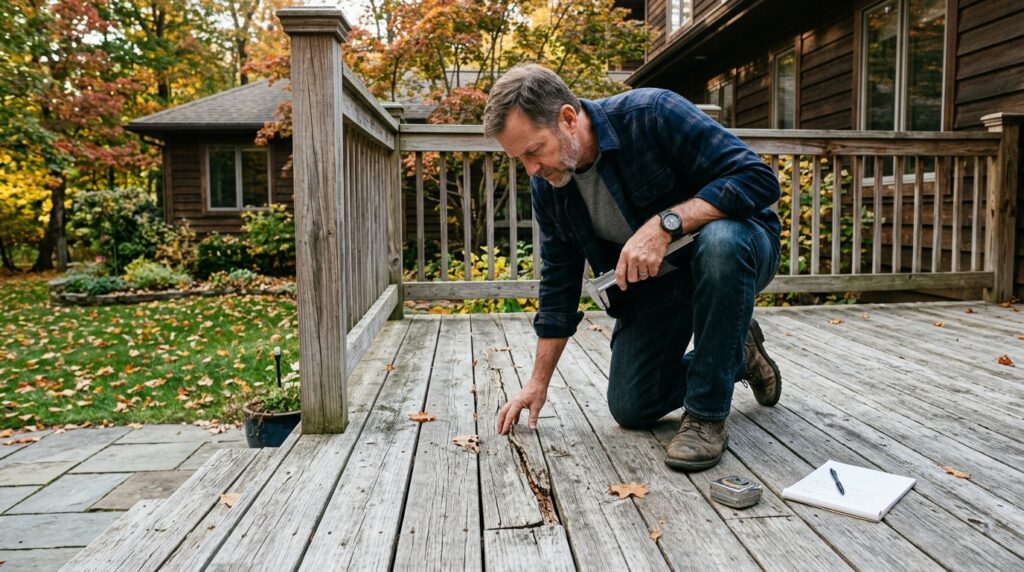
Most major deck issues start small and go unnoticed.
Regular inspection helps identify:
- Early signs of movement or cracking
- Moisture-related damage
- Fastener or connection issues
- Areas of potential structural concern
Addressing these issues early prevents them from developing into more extensive and costly repairs.
6. Winter Conditions Are Where Damage Accelerates
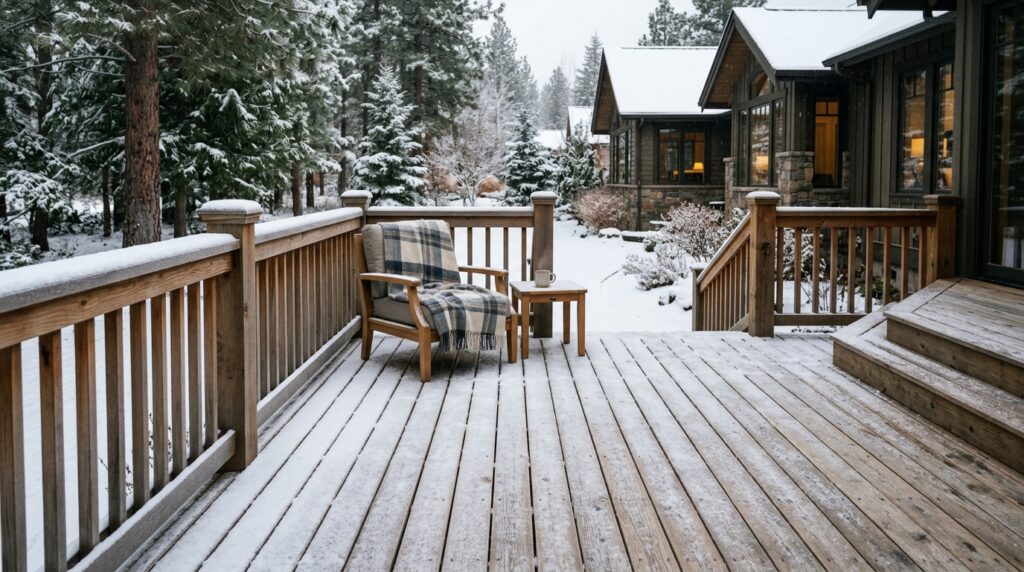
In colder months, decks are exposed to some of the most aggressive conditions.
Moisture trapped within materials expands when frozen, creating internal stress that leads to cracking and structural weakening.
Improper drainage, blocked gaps, or existing damage can significantly accelerate this process.
Preparing a deck to handle winter conditions is essential to preserving its long-term integrity.
Final Thoughts
Final Thoughts
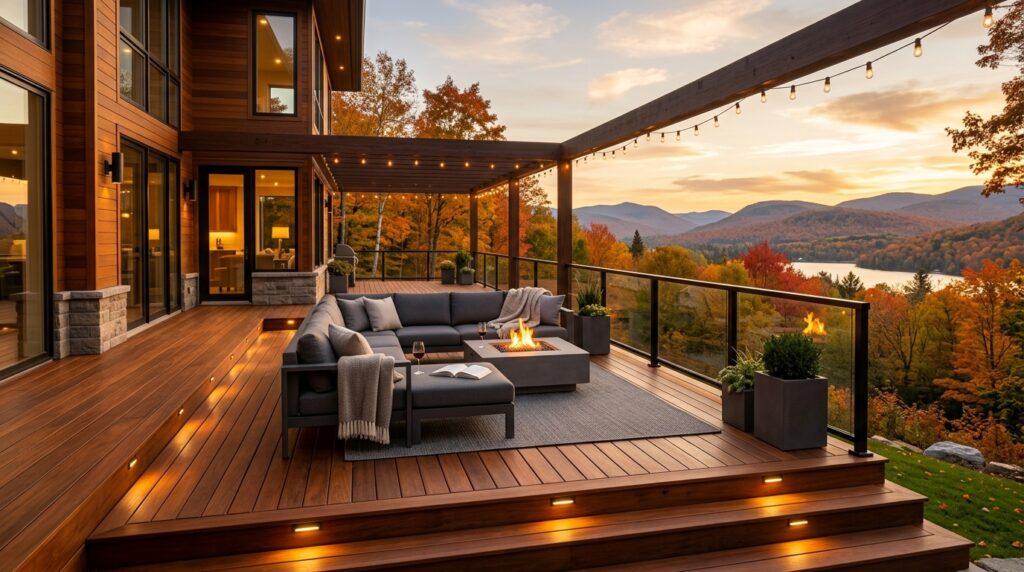
Extreme weather is unavoidable, but premature deck failure is not.
Decks that perform well over time are not just built with the right materials, they are designed and executed to handle real environmental conditions.
Surface maintenance plays a role, but long-term performance is determined by structure, drainage, and proper installation.
If your deck is showing signs of wear, movement, or moisture-related issues, a professional evaluation can determine whether preventative measures, restoration, or structural corrections are needed.
Because in environments with constant weather exposure, small issues rarely stay small.
Visit our website for more inspiration and design ideas!